Views: 0 Author: Site Editor Publish Time: 2025-12-30 Origin: Site


Refrigeration systems are essential in a wide range of industries, from food storage to pharmaceuticals and industrial processes. At the heart of any effective refrigeration system is the evaporator, a critical component responsible for absorbing heat and maintaining the desired temperature. Whether you are designing a commercial refrigeration unit or selecting an evaporator for industrial use, choosing the right evaporator for your specific needs is crucial for efficiency, performance, and energy savings.
In this guide, we will explore different types of evaporators and provide you with practical advice on how to select the right one based on your unique refrigeration requirements. By the end of this article, you will have a better understanding of how evaporators work and how to make an informed decision when it comes to choosing the right one for your system.
An evaporator is a heat exchange device used in refrigeration systems to absorb heat from the surrounding environment, thereby lowering the temperature of the air or substance being cooled. In a refrigeration cycle, the evaporator is where the refrigerant, usually in liquid form, evaporates into gas as it absorbs heat. This cooling process is vital for maintaining optimal conditions in both residential and industrial applications.
The evaporator is one of the four key components in a refrigeration system, alongside the compressor, condenser, and expansion valve. Together, these components work to transfer heat from one area to another, ensuring efficient cooling in applications such as air conditioning, food storage, and manufacturing processes.
Choosing the right evaporator for your refrigeration system is essential for achieving the desired cooling effect, ensuring system efficiency, and preventing potential breakdowns. Here are some key factors to consider when selecting an evaporator:
Efficiency: An efficient evaporator maximizes heat absorption and minimizes energy consumption. This directly impacts operating costs and energy savings.
Capacity: The capacity of the evaporator must match the size of the system and the cooling requirements of the space.
Application: Different industries have different refrigeration needs. For example, a food storage facility may need more precise temperature control compared to an industrial application.
Design and Space Constraints: The available space for installation and the system’s design requirements will affect your evaporator selection.
Maintenance: Choosing an evaporator that is easy to maintain ensures the longevity of the refrigeration system.
Evaporators are key heat exchangers in refrigeration systems, and are classified by two primary standards:
By cooling medium: Air-Cooled Evaporators, Water-Cooled Evaporators
By refrigerant feed method: Flooded Evaporators, Dry Expansion Evaporators
Note: Helical Coiled Evaporators are a coil structure design (not an independent type), which can be integrated into all the above evaporator configurations for improved space efficiency and heat transfer.
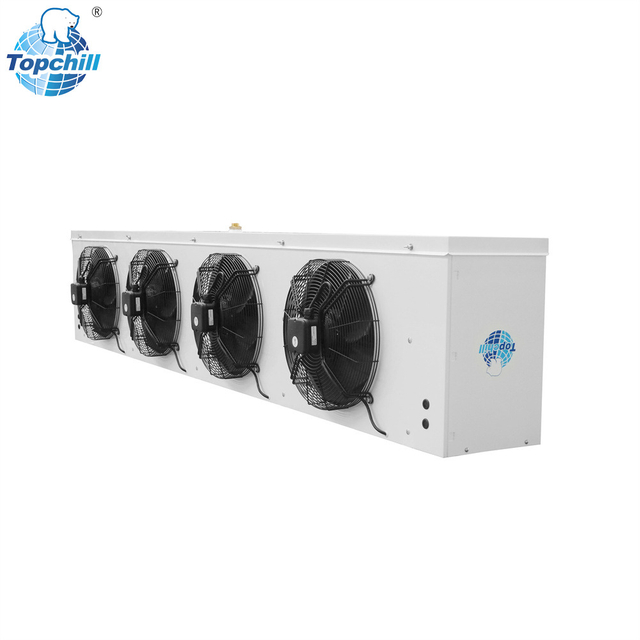
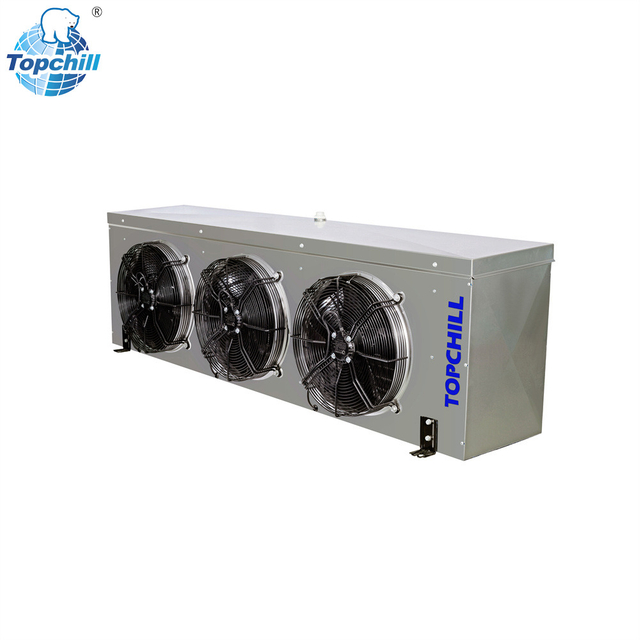
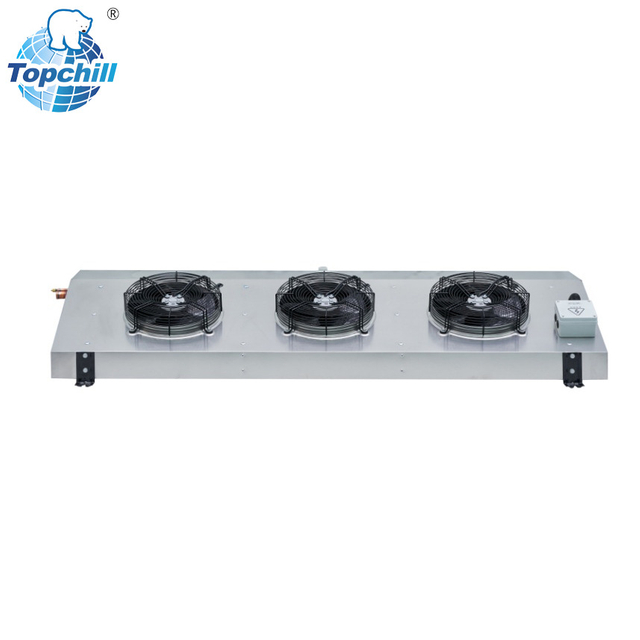
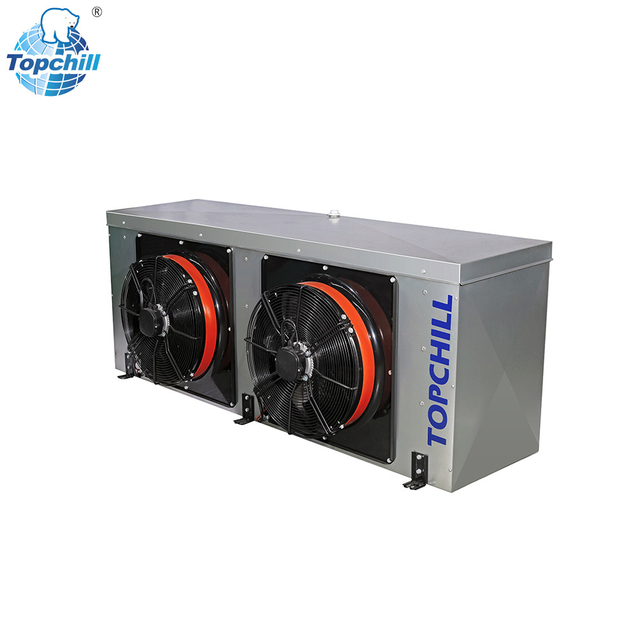
Air-cooled evaporators remove heat by blowing ambient air across evaporator coils. The refrigerant inside the coils absorbs heat from the air to achieve cooling, with fans providing forced air circulation.Best for:
Small to medium-sized refrigeration systems
Sites with limited water supply or no water-cooling conditions
Pros:
Simple structure and easy maintenance
Cost-effective for small-scale units
No water supply, cooling towers or drainage required
Cons:
Lower efficiency in high-temperature environments
Larger footprint and higher noise than water-cooled types
Water-cooled evaporators use circulating water as the cooling medium. The refrigerant absorbs heat from the water, and the heated water is discharged via a cooling tower or drainage system.Best for:
Large industrial refrigeration applications
Environments with stable and sufficient water supply
Pros:
Higher efficiency than air-cooled systems in hot climates
Lower energy consumption for large-scale systems
Cons:
Dependent on continuous water supply
Higher installation and maintenance costs
Flooded evaporators are fully filled with liquid refrigerant, with the entire heat exchange coil immersed in refrigerant. The refrigerant absorbs heat and evaporates steadily, providing consistent cooling.Best for:
Large-scale industrial systems (cold storage warehouses, food processing plants)
Applications requiring high cooling capacity and precise temperature control
Pros:
Ultra-high heat exchange efficiency
Stable temperature control for large cooling loads
Cons:
Complex structure and high upfront investment
Requires professional installation and maintenance
Dry expansion evaporators feed liquid refrigerant in metered quantities. The refrigerant fully evaporates into gas as it flows through the coils, making it the most widely used design for small systems.Best for:
Small refrigeration systems (residential AC, small commercial coolers)
Applications with moderate temperature control requirements
Pros:
Simple, compact and cost-effective design
Easy to install and operate
Cons:
Lower efficiency than flooded evaporators in large systems
Relatively less precise temperature control
Helical coiled evaporators adopt a spiral coil structure, which is a physical design feature rather than an independent evaporator type. This structure can be applied to air-cooled, water-cooled, flooded or dry expansion evaporators.Best for:
Space-constrained installations
Systems requiring compact, high-efficiency heat exchange
Pros:
Compact size and optimized heat transfer
Compatible with all mainstream evaporator types
Cons:
Higher manufacturing cost
Requires specialized installation
Now that we’ve discussed the different types of evaporators, it’s important to consider several key factors when selecting the right one for your refrigeration needs.
The refrigeration load refers to the amount of heat that needs to be removed from a space or product to maintain a desired temperature. This is a key factor in determining the capacity of the evaporator you will need. For instance, a large industrial refrigeration system may require a higher capacity evaporator than a small residential refrigerator.
The available space for installation is another crucial factor in your evaporator selection. For tight spaces, you may need to opt for compact evaporators or air-cooled systems, while larger installations may allow for flooded or water-cooled evaporators. The design of your space should be carefully considered when choosing an evaporator type.
Different types of evaporators work better in different environments. For example, if your refrigeration system will be operating in an environment with high ambient temperatures, a water-cooled evaporator may be more efficient. In contrast, air-cooled evaporators may be better suited for milder climates.
Energy consumption is a significant cost in refrigeration systems, especially in large-scale operations. Energy-efficient evaporators, such as those using LED lights or incorporating smart temperature control features, can save you money over time and reduce your carbon footprint.
The longevity and ease of maintenance of the evaporator are important factors to consider. Systems that require frequent maintenance or have a short lifespan may lead to increased costs over time. Opting for a more durable evaporator, such as a flooded or water-cooled evaporator, may have a higher upfront cost but save money in the long run.
Choosing the right evaporator for your refrigeration needs is critical to achieving efficient and reliable cooling. Whether you need an air-cooled evaporator for a small system or a water-cooled evaporator for a large industrial application, it’s important to consider factors such as space availability, refrigeration load, energy efficiency, and maintenance needs.
At Chengdu Topchill Environmental Control Technology Co., Ltd., we specialize in providing high-quality evaporators tailored to meet the diverse needs of our clients. Our products are designed to maximize efficiency, reduce energy consumption, and offer long-lasting performance. If you’re looking for expert guidance in selecting the right evaporator for your system, don’t hesitate to contact us for more information.
Q: What is the main function of an evaporator?
A: An evaporator absorbs heat from the surrounding environment, lowering the temperature and allowing the refrigerant to evaporate into a gas.
Q: How do I choose the right evaporator for my system?
A: Consider factors such as the refrigeration load, available space, operating environment, and energy efficiency when selecting an evaporator.
Q: What are the benefits of a water-cooled evaporator?
A: Water-cooled evaporators are more efficient in high-temperature environments and are suitable for large industrial systems that require high cooling capacity.
Q: Are air-cooled evaporators more cost-effective than water-cooled systems?
A: Yes, air-cooled evaporators are generally more affordable and easier to install, making them ideal for smaller refrigeration systems.