Views: 0 Author: Site Editor Publish Time: 2026-06-05 Origin: Site


Most people know the outdoor AC unit, but not where the Evaporator is. In most systems, the Evaporator is inside the indoor unit, air handler, or indoor coil section.
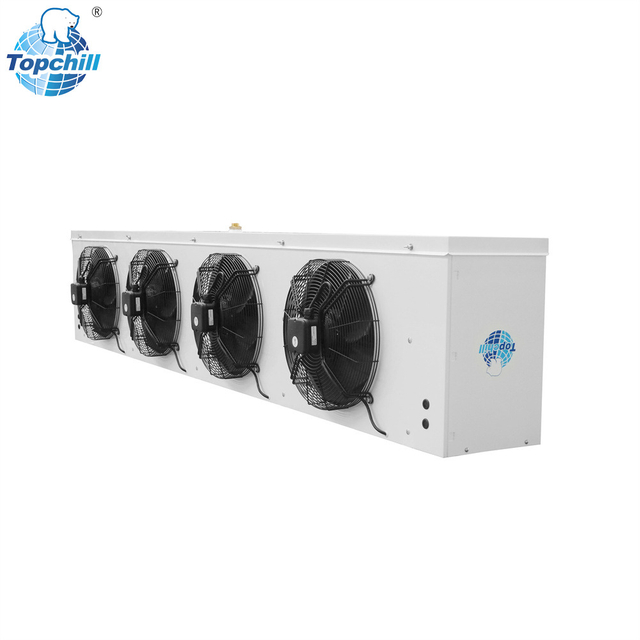
It is placed indoors because it absorbs heat from indoor air, while the outdoor unit usually contains the condenser and compressor. This article explains where the Evaporator is located and why its position matters for cooling, airflow, drainage, and maintenance.
In most air conditioning systems, the Evaporator is inside. More specifically, it is usually located inside the indoor unit, air handler, furnace cabinet, or indoor coil section. Its job is to absorb heat from indoor air, so it must be placed where warm return air can pass across the cold coil surface.
The outdoor unit usually contains the condenser coil, compressor, outdoor fan, and other components that release heat outside. This is why many people confuse the outdoor coil with the Evaporator. They are both heat exchangers, but they work on different sides of the system.
There is one important exception: packaged AC units. In a packaged unit, the Evaporator, condenser, compressor, and fans may all be inside one cabinet, often placed outdoors or on a rooftop. However, even in this design, the Evaporator is still positioned on the indoor air side of the airflow path. It still cools return air from the building, while the condenser section releases heat outdoors.
An Evaporator is a heat exchange component in an air conditioning or refrigeration system. Its main function is to absorb heat from the air or medium that needs to be cooled. In an air conditioner, the Evaporator is the part that directly cools indoor air before the air returns to the room.
Inside the Evaporator, low-temperature refrigerant flows through tubes or channels. Outside the Evaporator, warm indoor air passes across the coil surface. Heat transfers from the warm air into the refrigerant. As the refrigerant absorbs heat, it evaporates and carries that heat away from the indoor space.
The Evaporator also helps remove moisture from indoor air. When humid air passes over the cold coil surface, water vapor may condense into liquid water. This condensate collects in a drain pan and leaves through a drain line. Because of this, the Evaporator is closely connected with cooling, dehumidification, airflow, and drainage.
The Evaporator is usually inside because it needs to cool indoor air. Air conditioning is not only about producing cold air; it is about removing heat from the indoor space. To remove heat from indoor air, the Evaporator must be located where that air can pass across the coil.
In a typical cooling process, warm return air enters the indoor unit or air handler. The air passes through a filter and then moves across the Evaporator coil. The refrigerant inside the Evaporator absorbs heat from the air. After heat is removed, the cooled air is supplied back into the room through vents, louvers, or ducts.
If the Evaporator were placed only outside in a split system, it would not be able to directly absorb heat from indoor air. The outdoor side is mainly responsible for releasing the heat that has already been collected from indoors. This is why the condenser is outside and the Evaporator is usually inside.
The indoor location also supports humidity control. Since the Evaporator cools indoor air below its dew point in many conditions, moisture condenses on the coil. The indoor unit or air handler must therefore include a drain pan and condensate drain line to remove this water safely.
The Evaporator and condenser are both heat exchangers, but they perform opposite jobs. The Evaporator absorbs heat from indoor air, while the condenser releases heat to outdoor air. Understanding this difference is the easiest way to remember which component is usually inside and which one is usually outside.
Component | Usual Location | Main Function | Simple Explanation |
Evaporator | Indoor unit, air handler, or indoor coil section | Absorbs heat from indoor air | The part that cools the air you feel indoors |
Condenser | Outdoor unit | Releases heat outdoors | The part that rejects indoor heat to the outside |
Compressor | Usually outdoor unit in split systems | Compresses and circulates refrigerant | Moves refrigerant through the system |
Expansion device | Near the indoor coil or before the Evaporator | Lowers refrigerant pressure | Prepares refrigerant to absorb heat |
In simple terms, the Evaporator is the indoor cooling coil, while the condenser is the outdoor heat-releasing coil. The Evaporator handles the air that needs to be cooled. The condenser handles the heat that needs to be rejected.
In a split air conditioner, the Evaporator is inside the indoor unit. The indoor unit may be wall-mounted, ceiling-mounted, floor-mounted, or concealed in a ducted structure. The outdoor unit contains the condenser and compressor.
This system is called “split” because the indoor cooling side and outdoor heat rejection side are separated. Refrigerant lines connect the indoor Evaporator to the outdoor unit. During cooling, refrigerant absorbs heat inside the Evaporator and then carries that heat to the outdoor unit, where it is released through the condenser.
In a wall-mounted split AC, the Evaporator is usually behind the front cover and air filters. Room air enters the indoor unit, passes through the filters, moves across the Evaporator coil, and then comes out as cooled air. Because the Evaporator is hidden behind the casing, users may not see it unless the front panel is opened for cleaning or inspection.
For a manufacturer or system designer, the Evaporator in a split AC must match the indoor unit size, airflow direction, drain pan structure, and refrigerant connection position. If the coil is not properly matched, cooling performance, noise level, drainage, and maintenance access may be affected.
In a central air conditioning system, the Evaporator coil is usually located inside or near the air handler or furnace. In many systems, it is installed in the supply air plenum above or beside the furnace. In other designs, it may be inside a dedicated coil cabinet connected to the ductwork.
The central AC airflow path is usually straightforward. Warm return air enters the system, passes through the air filter, moves across the Evaporator coil, and then enters the supply duct as cooled air. The blower fan moves the air through this path.
In many central AC systems, the Evaporator is not easy to see from the outside. It may be inside a metal cabinet or behind an access panel. However, there are several clues to its location. Refrigerant lines usually enter the coil cabinet. A condensate drain line is also nearby because the Evaporator produces water during cooling. The blower section is usually close to the coil as well.
If water leaks near the indoor unit, if ice forms on the coil, or if cooling becomes weak, HVAC technicians often inspect the Evaporator area first. The issue may be related to airflow, a dirty coil, refrigerant condition, or a blocked condensate drain.
In a ductless mini-split system, the Evaporator is inside each indoor unit. A mini-split system may have one indoor unit or several indoor units connected to one outdoor unit. Each indoor unit usually contains its own Evaporator coil, blower, filter, drain pan, and drain hose.
This design allows different zones to be cooled separately. For example, one indoor unit may cool a bedroom, while another indoor unit cools a living room. Each indoor Evaporator absorbs heat from the air in its own zone.
The Evaporator in a ductless mini-split is commonly located behind the front cover and filters. Air enters the indoor unit, passes across the Evaporator coil, and exits through the louvers. Since the coil is inside the indoor unit, regular filter cleaning is important. Dirty filters can reduce airflow, weaken heat transfer, and cause coil freezing or water leakage.
For customized mini-split or compact cooling equipment, Evaporator design must consider limited space, quiet operation, airflow distribution, drainage angle, and easy access for cleaning.
In a packaged AC unit, the answer is slightly different. A packaged unit contains the Evaporator, condenser, compressor, and fans in one cabinet. This cabinet may be placed outdoors, on a rooftop, or beside a building. Because everything is inside one housing, users may think the Evaporator is outside.
However, from a functional point of view, the Evaporator is still on the indoor air side. The packaged unit has separate airflow paths. Warm return air from the building enters the unit, passes across the Evaporator coil, and returns to the building as cooled supply air. The condenser section is separated and releases heat to outdoor air.
This means the physical cabinet may be outdoors, but the Evaporator still serves the indoor cooling circuit. Its location inside the cabinet must match the return air path, blower position, drain pan, refrigerant circuit, and service access.
For rooftop packaged units and commercial systems, Evaporator location is especially important because maintenance access, drainage, and airflow must remain reliable under long operating hours.
In an automotive AC system, the Evaporator is usually inside the dashboard, within the HVAC air box. It is located near the blower fan and air distribution system. Cabin air passes across the Evaporator before entering the vehicle interior through the vents.
This design is similar in principle to building AC systems. The Evaporator must be close to the air that needs to be cooled. Since the goal is to cool cabin air, the Evaporator is placed inside the dashboard rather than in the engine compartment.
Because it is hidden inside the dashboard, an automotive Evaporator can be difficult to access. Problems such as musty odor, weak cooling, or water dripping inside the cabin may be related to the Evaporator, cabin air filter, condensate drain, or airflow path.
This article mainly focuses on building air conditioning and HVAC systems, but the same basic rule applies: the Evaporator is placed where warm air can pass across the cold coil.
The easiest way to identify the Evaporator is to follow the indoor airflow path. In a residential or commercial AC system, the Evaporator is normally close to the indoor air handler, blower fan, air filter, drain pan, and refrigerant lines.
If you see a coil inside the outdoor unit with a large outdoor fan, that is usually the condenser coil, not the Evaporator. The condenser coil releases heat outdoors. The Evaporator is usually hidden inside the indoor unit or coil cabinet.
There are also practical signs that help identify the Evaporator area. If there is a condensate drain line nearby, the coil is likely the Evaporator because the Evaporator produces water during cooling. If the coil is located in the return-to-supply indoor airflow path, it is likely the Evaporator. If the coil is connected to indoor ductwork and a blower, it is usually the Evaporator.
Users should not open sealed cabinets, touch refrigerant lines, or clean coil surfaces without proper knowledge. Evaporator fins can be sharp and delicate, and HVAC systems may contain electrical parts. For deep cleaning or repair, professional service is safer.
Evaporator location matters because cooling depends on proper airflow across the coil. The Evaporator must be installed where warm return air can pass evenly through or across the heat exchange surface. If airflow is uneven, some parts of the coil may work harder than others, and cooling performance may decrease.
Poor Evaporator location can cause weak cooling, slow temperature drop, uneven room temperature, higher energy use, or coil freezing. If the coil is too restricted by cabinet design or nearby components, air resistance may increase. If the coil is not aligned with the blower or duct path, air may bypass parts of the coil.
For OEM projects and custom AC systems, Evaporator location must be planned together with fan position, cabinet structure, air inlet, air outlet, filter placement, and service access. A good Evaporator design is not only about coil capacity; it is also about how the coil fits into the complete system.
The Evaporator often produces condensate water during cooling. When humid indoor air contacts the cold coil, moisture can condense into liquid water. This water must flow into a drain pan and leave through a condensate drain line.
Because of this, Evaporator location must support proper drainage. The coil should be positioned so water can flow downward into the drain pan. The drain pan should be placed under the coil, and the drain outlet should allow water to leave smoothly.
Poor location or poor installation angle can lead to water leakage, standing water, odor, corrosion, and microbial growth. In ceiling-mounted or concealed systems, drainage problems may also damage walls or ceilings.
For manufacturers, drainage design is an important part of Evaporator system design. Coil angle, drain pan structure, outlet position, and maintenance access should be considered at the design stage, not only during installation.
Even a high-quality Evaporator needs cleaning and inspection over time. Dust, fibers, and moisture can collect on the coil surface. If the Evaporator is hard to access, regular maintenance becomes difficult, and performance may decline.
A good Evaporator location should allow technicians to check the coil surface, air filter, drain pan, drain line, and refrigerant connections. In central systems, access panels should be arranged so the coil can be inspected without major disassembly. In mini-split systems, filters should be easy to remove, and the indoor unit should allow reasonable coil cleaning access.
Poor service access can lead to long-term problems. A dirty Evaporator may reduce airflow and heat transfer. A blocked drain pan may cause leakage. Hidden problems may remain unnoticed until cooling performance becomes poor or water damage appears.
For OEM cooling equipment, compact structure is important, but maintenance access should not be ignored. A compact Evaporator design should still allow basic cleaning, drainage inspection, and service work.
Some AC problems are directly related to poor Evaporator location or poor surrounding design. If the Evaporator is installed in a space with restricted airflow, cooling may become weak. If the coil is too close to other components, air may not distribute evenly across the surface.
If the Evaporator is installed without proper drainage slope, condensate may collect in the drain pan or leak from the unit. If the coil is difficult to access, dust may build up over time. If refrigerant connections are poorly positioned, installation and maintenance may become more complicated.
Common location-related problems include:
● Weak cooling caused by poor airflow
● Uneven air distribution across the coil
● Coil freezing due to blocked airflow
● Water leakage from poor drainage
● Difficult coil cleaning
● Blocked drain pan or drain line
● Limited service access
● Poor refrigerant line arrangement
● Reduced system efficiency
These problems show why Evaporator location is not only a question for end users. It is also an important design consideration for manufacturers, contractors, and HVAC engineers.
Different AC systems need different Evaporator structures. A wall-mounted indoor unit, central air handler, ceiling cassette, rooftop packaged unit, and custom cooling cabinet may all require different coil dimensions, connection directions, airflow paths, and drainage layouts.
A professional Evaporator manufacturer can customize coil size, tube layout, fin spacing, refrigerant circuit, connection position, drain pan compatibility, and airflow direction according to the installation requirement. This helps the Evaporator fit properly inside the system while still providing efficient heat exchange.
For compact equipment, the Evaporator may need high heat transfer efficiency in a limited space. For ducted systems, the Evaporator may need to match specific airflow volume and duct pressure. For humid environments, drainage design and corrosion resistance may be more important.
Professional design support helps reduce installation problems, airflow mismatch, drainage failure, and maintenance difficulty. For OEM and customized cooling systems, choosing the right Evaporator design can improve system reliability and long-term operating performance.
When choosing an Evaporator, the first step is to confirm the system layout. Is the system a split AC, central AC, mini-split, packaged unit, or custom cooling device? The answer determines where the Evaporator will be installed and how it should be designed.
The next step is to confirm airflow direction and air volume. The Evaporator must be located where air can pass through it evenly. If airflow is not matched with the coil, cooling performance may decrease.
Installation space is also important. The Evaporator must fit inside the indoor unit, air handler, cabinet, or packaged structure. It should not block airflow or make maintenance impossible.
Drainage direction must also be considered. Since the Evaporator often produces condensate, the coil and drain pan should be arranged so water can leave smoothly. Poor drainage design can cause leakage and long-term reliability problems.
A suitable Evaporator should match cooling capacity, refrigerant type, airflow volume, installation dimensions, drain pan structure, material requirements, and service access. For custom projects, working with a professional Evaporator manufacturer can help ensure better system matching.
In most air conditioning systems, the Evaporator is located inside the indoor unit, air handler, or indoor coil section because it needs to absorb heat from indoor air. In split, central, and mini-split systems, it is usually on the indoor side, while in packaged units it may be inside one cabinet but still works on the indoor airflow side.
The Evaporator’s location affects cooling efficiency, airflow, condensate drainage, maintenance access, and system reliability. For OEM or customized AC systems, Chengdu Topchill Environmental Control Technology Co., Ltd. can provide Evaporator solutions designed around installation space, airflow direction, refrigerant connections, and drainage requirements.
In most air conditioning systems, the Evaporator is inside the indoor unit, air handler, or indoor coil section. The outdoor unit usually contains the condenser and compressor.
No. The Evaporator absorbs heat from indoor air, while the condenser releases heat to outdoor air. They are both heat exchangers, but they work on different sides of the system.
In a central AC system, the Evaporator coil is usually located inside or near the air handler or furnace, often in the coil cabinet or supply air plenum.
The Evaporator is installed indoors because it needs to absorb heat from indoor return air. Warm air passes over the cold coil, becomes cooler, and returns to the room.
In packaged AC units, the Evaporator may be inside the same outdoor or rooftop cabinet as other components, but it is still positioned on the indoor air side of the airflow path.