Views: 0 Author: Site Editor Publish Time: 2026-05-27 Origin: Site


Most people think the compressor is the heart of an air conditioner, but the cooling effect you feel depends heavily on the AC Evaporator. As the key heat exchange component, the AC Evaporator absorbs heat from indoor air and helps the system deliver cool, comfortable airflow.
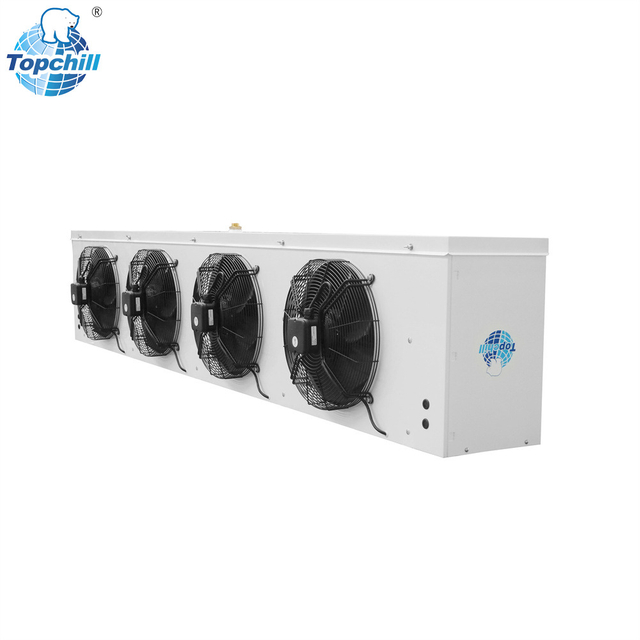
When the AC Evaporator is dirty, frozen, leaking, or poorly designed, the air conditioner may suffer from weak cooling, poor airflow, high energy use, or humidity problems. In this post, we’ll explain what an AC Evaporator is, how it works, why it matters, and how to choose the right AC Evaporator for an air conditioning system.
An AC Evaporator is a heat exchange component inside an air conditioning system. It is commonly called an Evaporator coil because it usually consists of metal tubes and fins that allow refrigerant and air to exchange heat efficiently. The AC Evaporator is normally located inside the indoor unit, air handler, or furnace cabinet in a central air conditioning system.
The main purpose of the AC Evaporator is to absorb heat from indoor air. When warm indoor air passes over the cold surface of the AC Evaporator, heat moves from the air into the refrigerant inside the coil. As the refrigerant absorbs heat, it changes from a low-pressure liquid into vapor. This process removes heat from the indoor air, and the cooled air is then delivered back into the room.
In simple words, the AC Evaporator is the part that makes cooling possible. Without the AC Evaporator, the air conditioning system could not remove indoor heat effectively. The compressor, condenser, expansion valve, fan, and refrigerant lines all play important roles, but the AC Evaporator is where indoor heat is captured.
An AC Evaporator is used in many cooling systems, including residential air conditioners, commercial HVAC systems, rooftop units, split systems, heat pumps, fan coil units, and some industrial cooling equipment. Although the structure may vary, every AC Evaporator works around the same principle: heat absorption through controlled heat exchange.
The main function of an AC Evaporator is to absorb heat from indoor air and help produce cool air. This function sounds simple, but it affects several important parts of air conditioning performance. A well-designed AC Evaporator helps the system cool faster, control humidity better, reduce energy waste, and operate more reliably.
First, the AC Evaporator removes heat. Indoor air contains heat, even when it feels only slightly warm. When the blower fan pushes indoor air across the AC Evaporator, the refrigerant inside the coil absorbs this heat. As heat is removed, the air temperature drops.
Second, the AC Evaporator helps remove moisture from the air. When warm and humid air touches the cold AC Evaporator surface, water vapor can condense into liquid water. This condensate is collected and drained away through the drain pan and drain line. As a result, the AC Evaporator helps improve indoor comfort by reducing humidity.
Third, the AC Evaporator supports refrigerant evaporation. The refrigerant enters the AC Evaporator as a cold, low-pressure mixture. After absorbing indoor heat, it evaporates into vapor. This phase change is essential for the refrigeration cycle.
Fourth, the AC Evaporator affects system energy efficiency. If the AC Evaporator has poor heat transfer, the compressor may need to work longer to reach the desired temperature. This can increase electricity consumption and reduce system life. A clean, correctly sized, and well-manufactured AC Evaporator helps the air conditioner operate more efficiently.
Function of AC Evaporator | What It Means | Why It Matters |
Heat absorption | The AC Evaporator absorbs heat from indoor air | Creates the cooling effect |
Refrigerant evaporation | Refrigerant changes from liquid to vapor inside the AC Evaporator | Supports the refrigeration cycle |
Humidity removal | Moisture condenses on the cold AC Evaporator surface | Improves indoor comfort |
Energy support | Good heat transfer reduces system workload | Helps lower energy consumption |
Air comfort | Cooled and dehumidified air returns indoors | Improves room temperature and comfort |
An AC Evaporator works through heat transfer and refrigerant phase change. In a typical air conditioning system, refrigerant flows through the system in a continuous cycle. The AC Evaporator is the part of this cycle where refrigerant absorbs indoor heat.
The process begins after refrigerant passes through the expansion valve or metering device. At this point, the refrigerant becomes cold and low-pressure. This cold refrigerant enters the AC Evaporator coil. At the same time, warm indoor air is pulled from the room and pushed across the AC Evaporator by the blower fan.
Because the refrigerant inside the AC Evaporator is colder than the indoor air, heat naturally transfers from the air into the refrigerant. As the refrigerant absorbs heat, it evaporates. The air leaving the AC Evaporator becomes cooler, and the refrigerant leaves the AC Evaporator as vapor.
After leaving the AC Evaporator, the refrigerant vapor travels to the compressor. The compressor increases its pressure and temperature, then sends it to the condenser coil. The condenser releases the heat outdoors, and the cycle continues.
This process explains why the AC Evaporator must be clean and properly matched to the system. If the AC Evaporator is blocked by dirt, dust, oil, or ice, air cannot pass through it properly. If airflow is restricted, the AC Evaporator cannot absorb heat efficiently. If refrigerant flow is incorrect, the AC Evaporator may freeze or fail to cool properly.
An AC Evaporator may look simple from the outside, but it includes several important parts. Each part supports heat transfer, refrigerant flow, drainage, and system reliability.
The coil tubes are the main refrigerant passage inside the AC Evaporator. Refrigerant flows through these tubes while absorbing heat from indoor air. Copper tubes are commonly used because copper has good thermal conductivity and is easy to form, although aluminum and other materials may also be used in some AC Evaporator designs.
The fins are thin metal sheets attached to the coil tubes. The fins increase the heat exchange surface area of the AC Evaporator. More surface area allows the AC Evaporator to absorb heat more effectively from passing air. Fin spacing, fin thickness, and fin surface condition all affect AC Evaporator performance.
The refrigerant inlet and outlet allow refrigerant to enter and leave the AC Evaporator. Proper connection design helps maintain stable refrigerant flow. Poor flow distribution may reduce AC Evaporator efficiency and cause uneven cooling.
The drain pan collects condensate that forms on the AC Evaporator surface. During normal operation, moisture from indoor air condenses on the cold AC Evaporator coil and drips into the drain pan. The drain line then removes the water from the system.
The casing or cabinet protects the AC Evaporator and helps guide airflow. In cased AC Evaporator coils, the coil is installed inside a metal cabinet. This can make installation easier and protect the coil from damage. In uncased AC Evaporator coils, the coil may be installed directly into an existing air handler or furnace cabinet.
The AC Evaporator and condenser coil are both heat exchange components, but they do opposite jobs. The AC Evaporator absorbs heat indoors, while the condenser coil releases heat outdoors. Understanding this difference helps buyers and users understand the full cooling cycle.
The AC Evaporator is located on the indoor side of the system. Its job is to remove heat from indoor air. The condenser coil is located on the outdoor side of the system. Its job is to release the absorbed heat into the outdoor environment.
In the AC Evaporator, refrigerant usually changes from liquid to vapor. In the condenser coil, refrigerant usually changes from vapor back into liquid. These two parts work together to move heat from indoors to outdoors.
Item | AC Evaporator | Condenser Coil |
Main role | Absorbs indoor heat | Releases heat outdoors |
Usual location | Indoor unit or air handler | Outdoor unit |
Refrigerant change | Liquid to vapor | Vapor to liquid |
Air effect | Cools indoor air | Discharges heat outside |
Common issue | Freezing, dirt, leakage, poor airflow | Dirt, high pressure, fan failure, heat rejection problem |
Both coils are important, but the AC Evaporator is the part most directly connected with indoor cooling comfort. If the AC Evaporator cannot absorb heat effectively, the room may remain warm even when the air conditioner is running.
There are several common AC Evaporator designs used in air conditioning systems. The right type depends on system structure, installation space, airflow direction, and cooling capacity.
An A-coil AC Evaporator is one of the most common types in central air conditioning systems. It has a shape similar to the letter “A,” which provides a large heat transfer area in a compact cabinet. This type of AC Evaporator is widely used because it offers good airflow distribution and efficient cooling performance.
A slab coil AC Evaporator has a flatter structure. It may be used in certain air handler designs or space-limited installations. A slab coil AC Evaporator can be simple and effective when matched correctly with the system.
A cased AC Evaporator comes inside a protective metal cabinet. This makes installation easier and protects the coil during handling. Many contractors prefer cased AC Evaporator coils because they can be easier to install in standard HVAC systems.
An uncased AC Evaporator does not come with a full cabinet. It may be selected when the installer needs more flexibility or when the AC Evaporator must fit into an existing space. However, proper installation is very important to avoid airflow leakage, poor drainage, or coil damage.
A custom AC Evaporator may be designed for special HVAC equipment, commercial units, heat pumps, industrial air cooling systems, or OEM applications. For manufacturers, custom AC Evaporator production may involve special tube design, fin design, material selection, coating, size, connection position, and capacity requirements.
An AC Evaporator can develop several common problems during operation. These problems may reduce cooling performance and increase energy consumption.
One common problem is a dirty AC Evaporator coil. Dust, lint, oil, and other particles can collect on the coil surface. When dirt covers the AC Evaporator, heat transfer becomes weaker. The system may run longer, cooling may become slower, and electricity bills may increase.
Another common problem is a frozen AC Evaporator. Ice can form on the AC Evaporator when airflow is too low, refrigerant level is incorrect, or the coil is dirty. A frozen AC Evaporator cannot absorb heat properly. It may also block airflow and cause water leakage after the ice melts.
Refrigerant leakage is also a serious AC Evaporator issue. Small cracks, corrosion, vibration, or manufacturing defects may cause leakage. When refrigerant leaks from the AC Evaporator, the system loses cooling capacity and may place extra stress on the compressor.
Poor airflow can also affect the AC Evaporator. Clogged filters, blocked ducts, weak fans, or improper installation can reduce airflow across the AC Evaporator. Without enough airflow, the AC Evaporator may become too cold and freeze.
Drainage problems are another common issue. Because the AC Evaporator removes moisture from indoor air, condensate must drain correctly. If the drain pan or drain line is blocked, water may overflow, causing leakage, odor, mold growth, or damage to surrounding areas.
Several signs may suggest that an AC Evaporator needs inspection. Weak cooling is one of the most obvious signs. If the air conditioner runs but does not cool the room effectively, the AC Evaporator may be dirty, frozen, leaking, or poorly matched to the system.
Warm air from the vents can also indicate an AC Evaporator problem. If the refrigerant cannot absorb heat properly inside the AC Evaporator, the air leaving the system may not be cold enough.
Ice buildup on the indoor coil is another warning sign. A frozen AC Evaporator may look like a block of ice, or it may cause reduced airflow from the vents. Ice should not be ignored because it can lead to compressor damage if the system continues running.
Water leakage around the indoor unit may also be connected to the AC Evaporator. When the AC Evaporator removes moisture from air, the water should flow into the drain pan and drain line. If the drain system is blocked or the coil freezes and melts, water may leak from the unit.
Higher electricity bills may also suggest AC Evaporator inefficiency. If the AC Evaporator cannot transfer heat well, the system may need to run longer to achieve the same cooling effect. This increases energy consumption.
Strange odors can also be related to the AC Evaporator. Moisture around the coil may support mold or bacterial growth if cleaning and drainage are poor. A dirty AC Evaporator may cause unpleasant smells when the air conditioner runs.
AC Evaporator quality matters because the coil directly affects heat transfer, cooling capacity, humidity control, energy efficiency, and system life. A low-quality AC Evaporator may look similar to a high-quality AC Evaporator, but the difference becomes clear during long-term operation.
Material selection is one of the most important quality factors. A durable AC Evaporator should use suitable tube and fin materials for the application. Copper, aluminum, and coated materials each have different advantages. The right material helps improve heat transfer, corrosion resistance, and service life.
Tube and fin design also matters. A well-designed AC Evaporator provides enough heat transfer surface without creating excessive airflow resistance. If fin spacing is too tight, dust and frost may build up more easily. If the heat transfer area is too small, the AC Evaporator may not meet cooling requirements.
Manufacturing quality is also critical. Tube expansion, brazing, welding, leak testing, pressure testing, and surface treatment all affect AC Evaporator reliability. A professional AC Evaporator manufacturer should control these production steps carefully.
For OEM buyers, contractors, and HVAC equipment manufacturers, stable AC Evaporator quality helps reduce warranty risk, installation problems, and after-sales complaints. For end users, a reliable AC Evaporator means better cooling comfort, fewer repairs, and more stable energy performance.
The AC Evaporator is becoming more important as air conditioning systems move toward higher efficiency, better refrigerant compatibility, and smarter operation. Modern HVAC equipment is no longer judged only by whether it can cool a room. Buyers also care about energy performance, environmental requirements, maintenance convenience, and long-term system reliability.
Energy efficiency is a major trend. A high-performance AC Evaporator helps improve heat transfer and reduce system workload. When the AC Evaporator absorbs heat more effectively, the compressor may operate more efficiently, and the system can maintain comfort with less wasted energy.
Refrigerant transition is another important trend. Many air conditioning systems are moving toward refrigerants with lower environmental impact. Because refrigerants have different pressure and heat transfer characteristics, the AC Evaporator must be designed to match the selected refrigerant. This makes AC Evaporator engineering and testing more important.
Heat pump growth also increases the importance of the AC Evaporator. In cooling mode, a heat pump works like an air conditioner. In heating mode, the coil functions change depending on the cycle direction. This means the AC Evaporator design must support reliable operation in different conditions.
Smart monitoring is also becoming more common. Sensors and control systems can monitor temperature, pressure, airflow, humidity, and coil performance. If the AC Evaporator becomes dirty, frozen, or inefficient, smart systems may help detect the problem earlier. This supports preventive maintenance and reduces downtime.
For AC Evaporator manufacturers, these trends mean that product design should focus on heat transfer efficiency, refrigerant compatibility, corrosion resistance, production consistency, and customization ability.
Proper maintenance helps the AC Evaporator work efficiently for a longer time. The first step is to keep air filters clean. A dirty air filter restricts airflow across the AC Evaporator, which can reduce cooling performance and increase the risk of freezing.
The AC Evaporator coil should also be inspected and cleaned regularly. Dust and dirt on the coil surface reduce heat transfer. Depending on the system and environment, cleaning may require professional tools and suitable coil cleaning solutions.
Airflow should be checked. Blocked vents, dirty ducts, weak blower motors, or poor installation can reduce airflow through the AC Evaporator. Good airflow allows the AC Evaporator to absorb heat evenly and prevents abnormal freezing.
The drain pan and drain line should also be maintained. Since the AC Evaporator removes humidity from air, water must drain correctly. A blocked drain line can cause water leakage, odor, and indoor damage.
Refrigerant level should be checked by qualified technicians. Low refrigerant may cause the AC Evaporator to freeze or cool poorly. Because refrigerant handling requires professional knowledge and equipment, users should not attempt this work without proper training.
Regular HVAC maintenance is the best way to protect the AC Evaporator. A technician can check refrigerant charge, airflow, coil condition, electrical controls, drain performance, and overall system operation.
Choosing the right AC Evaporator depends on system capacity, refrigerant type, airflow design, installation space, and operating conditions. An AC Evaporator should not be selected only by size or price. It must match the full air conditioning system.
Capacity matching is the first requirement. If the AC Evaporator is too small, it may not absorb enough heat. If it is too large or mismatched, the system may suffer from poor humidity control, incorrect refrigerant behavior, or unstable operation.
Refrigerant compatibility is also important. The AC Evaporator must be suitable for the refrigerant used in the system. Different refrigerants may require different pressure ratings, tube designs, and safety considerations.
Material selection should match the operating environment. In normal residential HVAC systems, copper and aluminum are common. In coastal, chemical, or corrosive environments, an AC Evaporator may need special coatings or corrosion-resistant materials.
Installation space should also be considered. A cased AC Evaporator may be suitable for standard installations, while an uncased or custom AC Evaporator may be needed for special equipment layouts.
Manufacturing quality should never be ignored. A reliable AC Evaporator should be produced with strict quality control, proper pressure testing, leak testing, and stable production processes. For OEM and commercial buyers, working with a professional AC Evaporator manufacturer can help ensure consistent product performance and better project support.
An AC Evaporator is the key heat exchange component in an air conditioning system. It absorbs indoor heat, helps refrigerant evaporate from liquid to vapor, and supports cooling, humidity control, energy efficiency, and stable system operation.
A clean and well-designed AC Evaporator can improve cooling performance, reduce system problems, and extend equipment service life. For buyers and HVAC equipment manufacturers, working with a reliable supplier such as Chengdu Topchill Environmental Control Technology Co., Ltd. can help ensure better Evaporator quality, stable performance, and suitable solutions for different air conditioning applications.
An AC Evaporator is a heat exchange component in an air conditioning system. Its main job is to absorb heat from indoor air and help produce cool air. It is also commonly called an Evaporator coil.
An AC Evaporator absorbs heat from indoor air, helps refrigerant evaporate from liquid to vapor, supports cooling, and helps remove moisture from the air. Without the AC Evaporator, an air conditioner cannot cool effectively.
Yes. In most air conditioning systems, the AC Evaporator is commonly called the Evaporator coil. Both terms refer to the indoor heat exchange coil that absorbs heat from indoor air.
An AC Evaporator may freeze because of poor airflow, dirty filters, dirty coil surfaces, low refrigerant level, blocked vents, or system control problems. A frozen AC Evaporator should be inspected to prevent further system damage.
To choose a good AC Evaporator, consider system capacity, refrigerant type, coil material, airflow design, installation space, corrosion resistance, and manufacturing quality. Working with a professional AC Evaporator manufacturer can help ensure better performance and reliability.


