Views: 0 Author: Site Editor Publish Time: 2026-05-25 Origin: Site


Many people know that an evaporator is an important part of a cooling system, but they are not always sure where it is actually located or why its position changes from one system to another. In an air conditioner, it may be hidden inside the indoor unit; in a refrigerator, it may sit behind the freezer panel; in a cold storage room, it may be mounted on the ceiling or wall; and in an industrial chiller, it may be built into a heat exchanger inside the equipment.
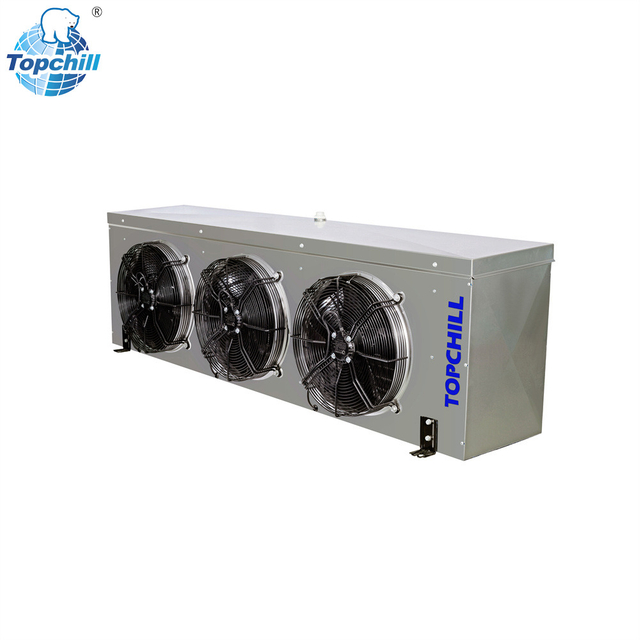
This topic is important because evaporator location is not a random design choice. The position of the evaporator directly affects cooling performance, airflow, heat transfer efficiency, frost control, energy consumption, maintenance convenience, and system reliability. If the evaporator is installed in the wrong place, the cooling system may still run, but it may cool unevenly, consume more energy, develop frost problems, or require more frequent maintenance.
In this article, we will discuss where the evaporator is located in different cooling and refrigeration systems, including air conditioners, refrigerators, cold storage rooms, chillers, HVAC systems, and industrial refrigeration equipment. You will also learn why evaporator placement matters, how different types of evaporators are installed, what problems may occur when the location is not suitable, and how a professional evaporator manufacturer can help choose the right design for specific applications.
An evaporator is a heat exchange component used in refrigeration, air conditioning, cold storage, chiller, and industrial cooling systems. Its main function is to absorb heat from air, water, liquid, or products, so the target space or material can be cooled to the required temperature. Inside the evaporator, low-pressure refrigerant absorbs heat and changes from liquid into vapor, which is why this component is called an evaporator.
A complete refrigeration cycle usually includes a compressor, condenser, expansion valve, and evaporator. The compressor raises the pressure and temperature of the refrigerant, the condenser releases heat to the outside environment, the expansion valve reduces refrigerant pressure, and the evaporator absorbs heat from the cooling area. Among these components, the evaporator is the part that directly creates the cooling effect felt by users or required by industrial processes.
Because the evaporator is responsible for heat absorption, its location must be close to the area, air stream, water loop, or product that needs to be cooled. This is why the evaporator is usually located inside the indoor unit of an air conditioner, inside or near the freezer area of a refrigerator, inside a cold room, or inside a heat exchanger in a chiller system.
The location of the evaporator matters because cooling efficiency depends on how well heat can reach the evaporator surface. If warm air or liquid cannot flow smoothly across the evaporator, heat exchange becomes weak, and the system must work harder to achieve the same cooling result. This can increase electricity consumption, reduce equipment life, and make the cooling process less stable.
Evaporator placement also affects temperature uniformity. In a cold storage room, for example, if the evaporator is installed too close to one side or blocked by stored products, some areas may become very cold while other areas remain too warm. In an air conditioner, if airflow across the evaporator coil is restricted by dirty filters or poor installation, indoor cooling performance may decline significantly.
Maintenance is another important reason why evaporator location should be planned carefully. The evaporator needs cleaning, inspection, defrosting, drainage checking, and sometimes repair. If it is installed in a position that is difficult to access, regular maintenance becomes inconvenient, and small problems may remain unnoticed until they affect the entire system.
In most residential split air conditioners, the evaporator is located inside the indoor unit. It is usually positioned behind the front panel and air filter, close to the blower fan. When warm indoor air enters the indoor unit, it passes through the evaporator coil, where heat is absorbed by the refrigerant, and the cooled air is then blown back into the room.
In a wall-mounted split air conditioner, the evaporator is hidden inside the wall-mounted indoor unit, while the condenser and compressor are located in the outdoor unit. In a ceiling cassette air conditioner, the evaporator is inside the ceiling-mounted indoor body. In a ducted air conditioning system, the evaporator is usually located inside the air handling unit or duct system, where it cools air before the air is distributed through ducts.
This location is chosen because the evaporator must be placed where indoor air can pass through it continuously. The blower fan, filter, and evaporator coil work together to remove heat from the room. If the evaporator coil becomes dirty or the air filter is blocked, airflow is reduced, and the air conditioner may cool slowly, freeze up, or consume more energy than normal.
In most refrigerators, the evaporator is located inside or behind the freezer compartment. In many modern frost-free refrigerators, the evaporator is hidden behind the rear panel of the freezer section, and a fan circulates cold air from the evaporator to the freezer and fresh food compartments. This hidden design protects the evaporator, improves airflow control, and helps maintain a cleaner interior appearance.
In older refrigerators or some direct-cooling models, the evaporator may be visible as a cooling plate or coil inside the freezer or refrigerator compartment. These systems often rely more on natural convection, which means cold air moves through the compartment without as much fan assistance. Although the structure is simpler, temperature distribution may be less even than in modern fan-assisted systems.
The evaporator is usually placed near the freezer because the freezer requires the lowest temperature in the refrigerator. Once the evaporator creates cold air, that cold air can be distributed to other compartments through vents and circulation channels. If the evaporator is blocked by frost, dust, or damaged fan components, the refrigerator may show symptoms such as weak cooling, uneven temperature, food spoilage, or excessive ice buildup.
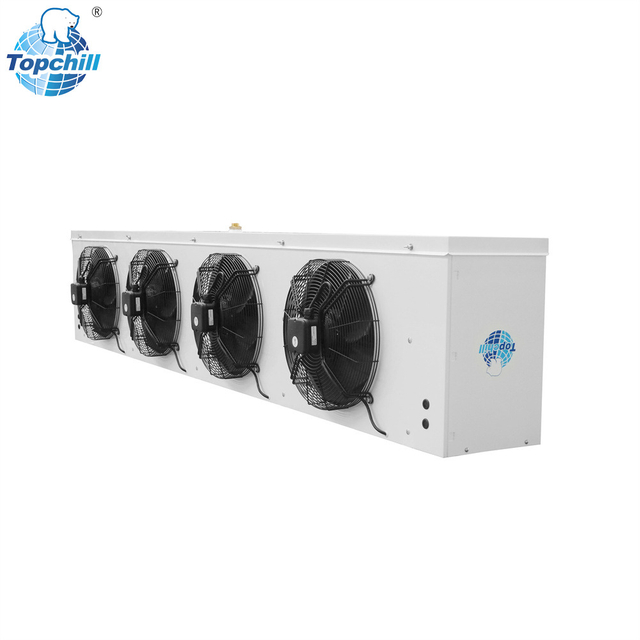
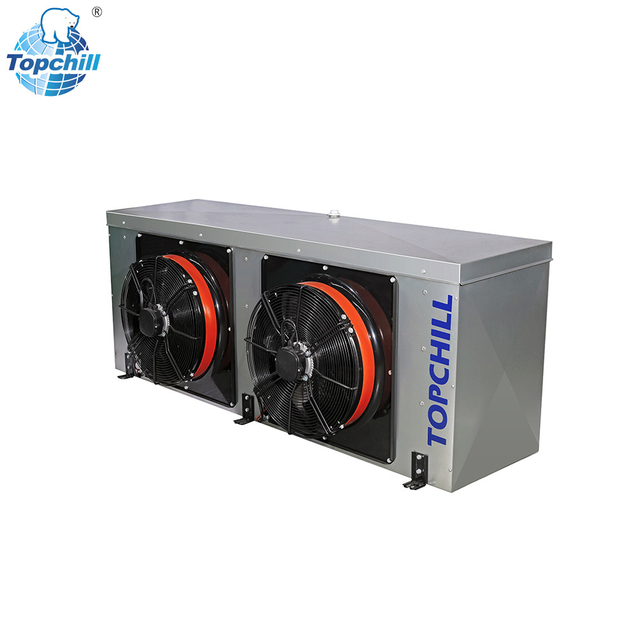
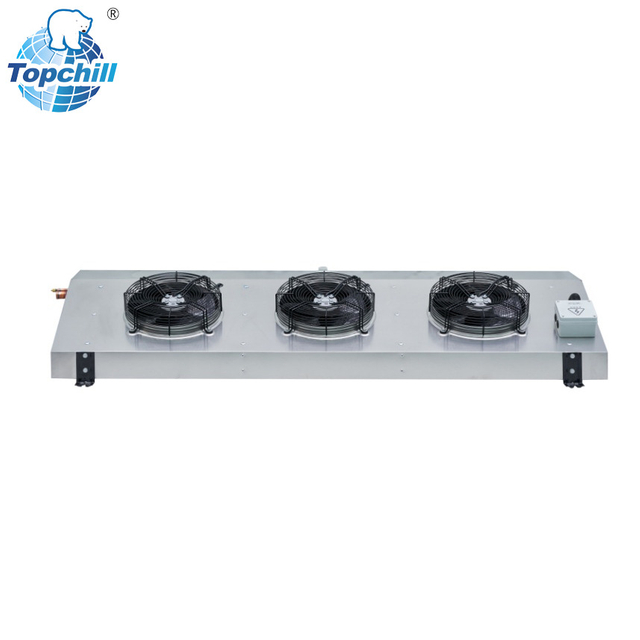
In cold storage rooms and freezer rooms, the evaporator is commonly installed as a ceiling-mounted or wall-mounted unit cooler. It is usually positioned in the upper area of the cold room because this allows cold air to circulate across the room without taking up valuable floor space. Fans inside the evaporator unit push cold air across stored products and help maintain stable temperature distribution.
The exact evaporator location in a cold storage room depends on room size, storage layout, product type, door position, airflow direction, and required temperature. For small cold rooms, one wall-mounted or ceiling-mounted evaporator may be enough. For larger cold rooms or freezer warehouses, multiple evaporators may be installed at different positions to ensure uniform cooling.
Cold storage evaporator placement must also consider defrost drainage and maintenance access. During operation, frost may form on the evaporator coil, especially in low-temperature and high-humidity environments. The system may need electric defrost, hot gas defrost, or air defrost depending on the application. If the evaporator is installed without proper drainage, melted frost can cause water leakage, ice buildup, or floor safety problems.
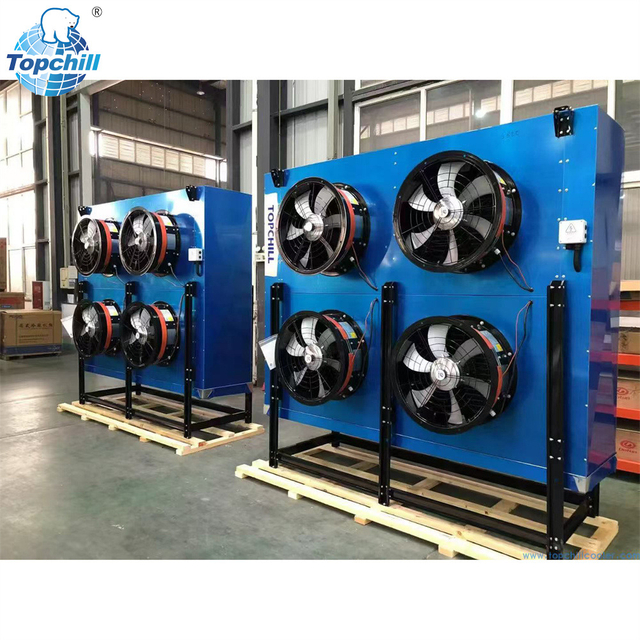
In industrial refrigeration systems, the evaporator location varies widely because different industries require different cooling methods. Industrial evaporators may be installed inside cooling tunnels, freezing rooms, process tanks, heat exchangers, circulation loops, air coolers, or product processing equipment. The location is always determined by the heat source that needs to be removed.
In food processing plants, the evaporator may be located inside freezing tunnels, cold storage rooms, or air-cooling chambers where products need rapid temperature reduction. In beverage and dairy production, the evaporator may be part of a liquid cooling system that chills water, milk, juice, or other process fluids. In chemical and pharmaceutical industries, the evaporator may be integrated into a temperature-controlled process loop to maintain stable production conditions.
Industrial evaporators often need customized design because cooling load, product sensitivity, hygiene standards, humidity, airflow, and operating temperature can differ greatly from one project to another. For this reason, evaporator location in industrial systems is usually planned by engineers according to process requirements rather than selected from a general rule.
In water chillers and industrial chillers, the evaporator is typically located inside the chiller unit as a heat exchanger. Instead of directly cooling room air, the evaporator cools circulating water or glycol. The chilled liquid is then pumped to air handling units, fan coil units, molds, production equipment, or industrial processes that require temperature control.
Common chiller evaporator types include shell-and-tube evaporators, plate evaporators, flooded evaporators, and dry expansion evaporators. In a shell-and-tube evaporator, refrigerant and water exchange heat through tube walls or shell-side flow arrangements. In a plate evaporator, heat exchange occurs through compact metal plates, which makes the design suitable for systems that need high efficiency in limited space.
The evaporator is placed inside the chiller because it must connect directly with the refrigerant circuit and the chilled water circuit. Proper internal location and piping arrangement help maintain stable water flow, good refrigerant distribution, easy maintenance, and reliable heat transfer performance.
The evaporator is always used for heat absorption, but its physical location changes according to the cooling target and system structure. The table below summarizes common evaporator locations in different applications.
System Type | Typical Evaporator Location | Main Cooling Target | Key Installation Purpose |
Split air conditioner | Indoor unit behind air filter | Indoor air | Cool room air through forced airflow |
Central HVAC system | Air handling unit or duct system | Building air supply | Cool large indoor spaces through ducted airflow |
Refrigerator | Freezer compartment or rear freezer panel | Food storage compartments | Produce cold air for freezer and refrigerator sections |
Cold storage room | Ceiling or upper wall-mounted unit cooler | Stored products | Maintain stable room temperature and airflow |
Industrial refrigeration system | Processing equipment, cooling loop, or air cooler | Products, fluids, or process equipment | Provide process-specific cooling |
Water chiller | Inside chiller heat exchanger | Circulating water or glycol | Cool liquid for HVAC or industrial use |
This comparison shows that the evaporator is usually located as close as possible to the medium that needs cooling, whether that medium is indoor air, stored food, cold room air, chilled water, or industrial process fluid.
Evaporator location affects cooling efficiency mainly through airflow, heat transfer area, refrigerant distribution, and maintenance accessibility. When the evaporator is correctly positioned, warm air or liquid can contact the heat exchange surface effectively, allowing the refrigerant to absorb heat efficiently. When the position is poor, the same system may need longer running time to reach the target temperature.
In air cooling applications, airflow is especially important. If the evaporator is blocked by products, walls, dirty filters, or poor duct design, the cooling effect becomes uneven. Some areas may receive too much cold air while others receive too little, which can be a serious issue in food storage, pharmaceutical storage, and precision temperature control applications.
In liquid cooling applications, such as chillers and process cooling systems, evaporator location and piping design affect water flow and heat transfer stability. Poor flow distribution may reduce cooling efficiency and cause unstable outlet temperature. This is why industrial evaporator installation often requires careful engineering calculation.
A common evaporator installation problem is blocked airflow. This can happen when products are stacked too close to a cold room evaporator, when filters are dirty in an air conditioner, or when duct design does not allow smooth air movement. Blocked airflow reduces cooling capacity and may cause frost formation on the coil surface.
Another common issue is poor drainage. In air conditioners and cold storage systems, condensation or defrost water must be drained properly. If the evaporator is installed without correct drainage slope, water may leak, freeze, or cause corrosion around the unit. In low-temperature environments, poor drainage can also create ice buildup and safety hazards.
Limited maintenance space is also a frequent problem. If the evaporator is installed too close to walls, ceiling structures, stored products, or other equipment, technicians may find it difficult to clean coils, replace parts, check sensors, or inspect piping. This can increase maintenance cost and reduce system reliability over time.
Choosing the correct evaporator location requires more than selecting a convenient installation point. Engineers and buyers should consider cooling load, room size, product type, operating temperature, humidity, airflow path, refrigerant type, defrost method, drainage design, and maintenance access. These factors determine whether the evaporator can perform efficiently in real working conditions.
For cold storage applications, product arrangement is especially important because stored goods can block airflow if the evaporator is not positioned correctly. For HVAC systems, air distribution and duct design must be considered because the evaporator must cool air evenly before it reaches indoor spaces. For industrial systems, process stability and heat load variation are often more important than simple installation convenience.
A professional evaporator manufacturer should evaluate the full cooling requirement before recommending a model or installation position. This helps avoid common problems such as insufficient cooling, excessive frost, high energy use, difficult maintenance, and uneven temperature distribution.
Different evaporator types are designed for different applications, so their typical installation locations also vary. Finned tube evaporators are widely used in air conditioners, cold rooms, and refrigeration units because they provide a large heat transfer surface for air cooling. They are usually installed where air can be blown across the fins by a fan.
Plate evaporators are common in compact refrigeration systems and liquid cooling applications. They are usually installed inside equipment cabinets or refrigeration units where space is limited but heat transfer efficiency must be high. Shell-and-tube evaporators are often used in chillers and industrial process cooling systems because they can handle larger water flow and heavy-duty operation.
Air cooler evaporators are usually installed in cold storage rooms, freezer warehouses, and food processing areas. Flooded evaporators and dry expansion evaporators are more common in industrial or commercial systems where refrigerant control and cooling load requirements are more complex.
Evaporator Type | Common Location | Typical Application |
Finned tube evaporator | Indoor unit, cold room, refrigeration cabinet | Air cooling and cold storage |
Plate evaporator | Inside compact cooling equipment | Liquid cooling and compact refrigeration |
Shell-and-tube evaporator | Inside chiller or industrial system | Water chilling and process cooling |
Air cooler evaporator | Ceiling or wall of cold room | Cold storage and freezer rooms |
Flooded evaporator | Industrial refrigeration system | High-capacity cooling |
Dry expansion evaporator | Commercial HVAC or refrigeration unit | Controlled refrigerant expansion cooling |
Modern cooling systems increasingly focus on energy efficiency, compact design, intelligent control, and easier maintenance. As a result, evaporator placement is no longer considered only from a mechanical installation perspective. Designers now pay more attention to airflow simulation, fan efficiency, refrigerant distribution, defrost control, sensor placement, and service access.
In HVAC systems, better evaporator placement can improve comfort while reducing energy use. In cold storage systems, optimized evaporator position can reduce temperature variation and protect product quality. In industrial refrigeration systems, improved evaporator layout can help stabilize production processes and reduce operational cost.
Automation and smart monitoring are also becoming more common. Some systems monitor evaporator temperature, coil frosting, fan performance, refrigerant pressure, and operating time. These data can help maintenance teams identify problems earlier and improve long-term system reliability.
If the evaporator location or performance is poor, the system often shows visible symptoms. Weak cooling is one of the most common signs, especially when the compressor runs for a long time but the target temperature is still not reached. Uneven temperature is another sign, especially in cold rooms or large HVAC spaces where some areas feel cold while others remain warm.
Frost buildup can also indicate poor airflow, incorrect refrigerant flow, dirty coil surfaces, or unsuitable evaporator placement. Water leakage may indicate drainage problems near the evaporator. High energy consumption may occur when the evaporator cannot absorb heat efficiently and the system must run longer than expected.
When these problems appear, the solution is not always replacing the evaporator immediately. It may be necessary to check installation position, airflow blockage, fan operation, refrigerant charge, coil cleanliness, drainage, and system control settings before deciding on repair or replacement.
A professional evaporator manufacturer can help buyers choose the correct evaporator type, size, and installation layout according to actual application needs. This is especially important for industrial refrigeration, cold storage, HVAC projects, food processing, beverage production, pharmaceutical storage, and process cooling systems.
The manufacturer should understand the cooling load, operating temperature, product characteristics, room dimensions, humidity level, refrigerant type, airflow requirement, defrost method, and maintenance conditions. Based on these details, the manufacturer can recommend a suitable evaporator design and installation position.
For buyers, working with a professional manufacturer reduces the risk of selecting an evaporator that is too small, too large, difficult to maintain, or poorly matched to the system. Correct selection improves cooling efficiency, extends service life, and supports stable long-term operation.
The evaporator is located in different places depending on the cooling system and application. In split air conditioners, it is usually located inside the indoor unit behind the air filter. In refrigerators, it is often located behind the freezer panel or inside the freezer compartment. In cold storage rooms, it is commonly mounted on the ceiling or upper wall, while in chillers and industrial refrigeration systems, it may be integrated into a heat exchanger, cooling loop, or processing system.
Correct evaporator location is essential because it affects cooling efficiency, airflow, temperature stability, frost control, drainage, energy consumption, and maintenance convenience. A well-positioned evaporator helps the entire system operate more efficiently and reliably, while poor placement can cause uneven cooling, higher operating cost, and frequent service problems.
For buyers, engineers, and project planners, understanding where the evaporator is located is not only a basic technical question but also an important part of system selection and installation planning. Choosing the right evaporator design and location with support from a professional manufacturer can improve refrigeration performance and create long-term value for HVAC, cold storage, industrial cooling, and process refrigeration applications.
In most split air conditioners, the evaporator is located inside the indoor unit behind the air filter and near the blower fan, where warm indoor air passes through the coil and is cooled before being supplied back into the room.
In most modern refrigerators, the evaporator is commonly located behind the freezer panel or inside the freezer compartment, where it produces cold air that is circulated through the freezer and fresh food sections.
Evaporator location is important because it affects airflow, heat exchange efficiency, temperature distribution, frost control, drainage, maintenance access, and overall energy consumption of the cooling system.
Yes, poor evaporator location can cause weak cooling, uneven temperature, restricted airflow, frost buildup, water leakage, higher electricity use, and reduced refrigeration system reliability.
To choose the correct evaporator location, you should consider cooling load, room size, product type, operating temperature, humidity, airflow direction, refrigerant type, defrost method, drainage design, and maintenance access.