Views: 0 Author: Site Editor Publish Time: 2026-06-08 Origin: Site


An air conditioner, refrigerator, freezer, or cold room may still turn on even when the Evaporator fan stops working, but that does not mean the system is cooling correctly. Without the fan, air cannot move properly across the Evaporator coil, so the system may run while the space stays warm, unevenly cooled, or unstable.
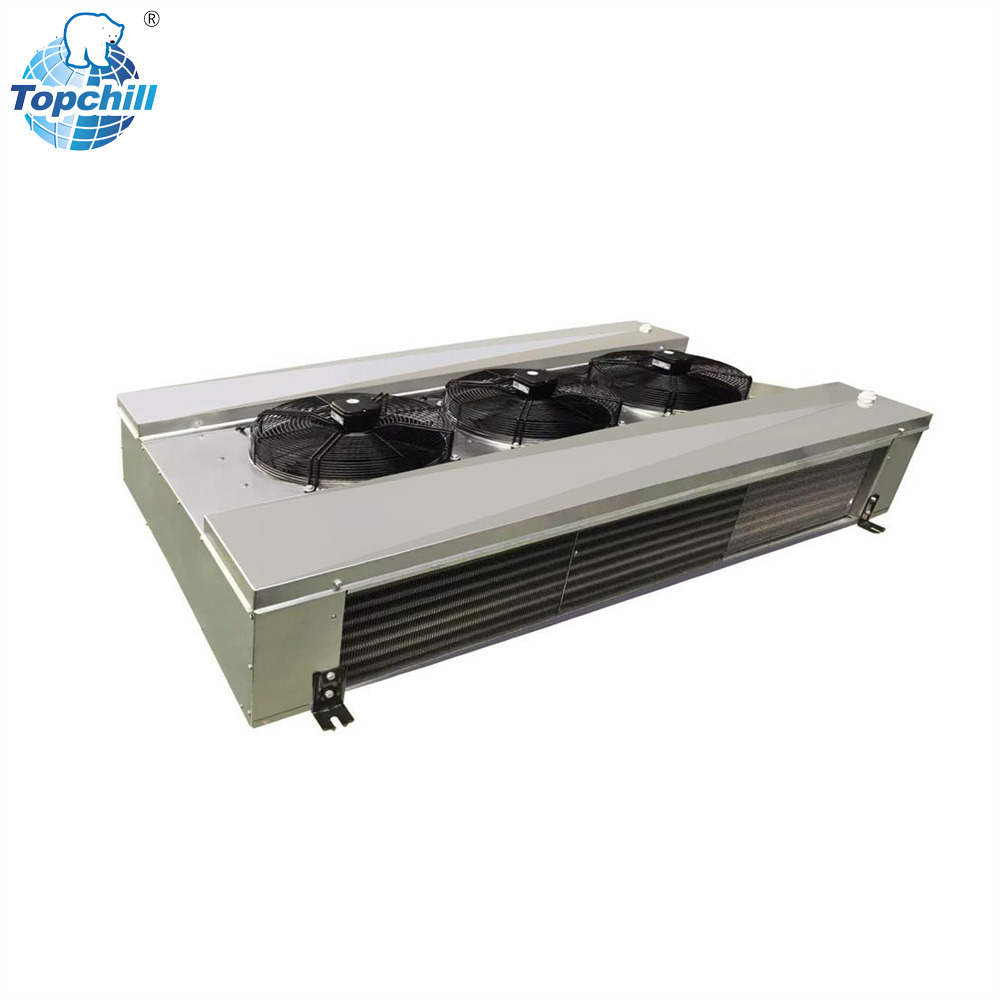
The key problem is airflow. The Evaporator coil needs moving air to absorb heat effectively, and the fan is the part that keeps this air moving. When the Evaporator fan stops, cooling performance drops, frost or ice may form, and the compressor may run longer than normal.
In this post, we’ll discuss what happens if the Evaporator fan stops working, how to recognize the signs, why the coil may freeze, what causes fan failure, and what you should do next. You will also learn why the Evaporator fan and coil must work together for stable cooling performance.
The Evaporator fan moves air across the Evaporator coil. The coil is responsible for absorbing heat, but it cannot do this efficiently if air is not passing over its surface. The fan creates airflow so warm air can reach the coil, lose heat, and return to the room, cabinet, freezer, or cold room as cooled air.
In an air conditioning system, the Evaporator fan is usually located in the indoor unit or air handler. It pulls warm indoor air across the Evaporator coil and then pushes cooled air back into the space. In a refrigerator or freezer, the fan circulates cold air through the cabinet so temperature stays even. In a cold room or commercial refrigeration system, the fan helps distribute cooled air across stored goods.
The Evaporator fan does not create cold air by itself. Its job is to support heat exchange. The Evaporator coil removes heat, and the fan makes sure air reaches the coil and spreads cooling throughout the system.
When the Evaporator fan stops working, airflow across the Evaporator coil becomes weak or stops completely. The refrigerant inside the coil may still be cold, and the compressor may still run, but the system cannot move cooled air properly.
The first thing users usually notice is poor cooling. In an AC system, air from the vents may become weak or warm. In a refrigerator or freezer, some areas may stay cold while other areas become too warm. In a cold room, temperature distribution may become uneven, which can affect stored products.
At the same time, the Evaporator coil may become too cold because not enough warm air is passing over it. Without enough heat transfer, moisture on the coil can freeze. Once ice forms, airflow becomes even worse, and cooling performance drops further.
Cooling performance depends on steady airflow. The Evaporator coil absorbs heat from the air, but the air must first reach the coil surface. If the fan stops, the coil cannot remove heat from the space effectively.
The system may still sound like it is running because the compressor or other components may continue operating. However, the cooling effect will be poor because air is not circulating. This is why a system with a failed Evaporator fan may run for a long time without reaching the target temperature.
In air conditioning, this can make the room feel warm, humid, or unevenly cooled. In refrigeration, stored products may be affected because cold air is not distributed properly. The longer the fan remains stopped, the greater the risk of unstable temperature and system stress.
One of the most common results of Evaporator fan failure is coil freezing. The Evaporator coil is designed to absorb heat from moving air. When the fan stops, warm air no longer passes across the coil in the right amount.
As a result, the coil temperature may drop below freezing. Moisture on the coil surface can turn into ice. At first, the frost may be light, but as the system continues running, the ice can become thicker and cover more of the coil.
This creates a cycle:
Problem Stage | What Happens | Result |
Fan stops | Airflow across the Evaporator coil decreases | Heat transfer becomes weak |
Coil gets too cold | Not enough warm air reaches the coil | Moisture begins to freeze |
Ice forms | Frost blocks the coil surface | Airflow becomes even worse |
System keeps running | Compressor works longer | Cooling becomes unstable and energy use increases |
Ice melts later | Water collects around the coil or drain pan | Leakage may occur |
This is why users should not ignore a stopped Evaporator fan. A simple airflow problem can quickly become a frozen coil and water leakage problem.
A failed Evaporator fan usually creates clear warning signs. Some signs appear suddenly, while others develop slowly as the fan motor weakens or the airflow becomes restricted.
Common signs include:
● Weak or no airflow from the vents
● System running but cooling is poor
● Warm air coming from the indoor unit
● Ice or frost on the Evaporator coil
● Uneven temperature in a room, cabinet, freezer, or cold room
● Strange humming, grinding, clicking, or rattling noise
● Fan blade not spinning
● Compressor running longer than normal
● Water leakage after ice melts
● Higher energy consumption
The table below explains the most common symptoms and what they usually mean.
Symptom | Possible Meaning | Why It Matters |
No airflow | Evaporator fan may have stopped completely | Cooled air cannot circulate |
Weak airflow | Fan may be slow, blocked, or failing | Cooling becomes inefficient |
Ice on coil | Airflow is too low around the Evaporator | Coil may freeze and block air movement |
Warm space | Cooling is not being distributed | Temperature target may not be reached |
Long compressor operation | Thermostat keeps calling for cooling | Energy use and compressor stress increase |
Water leakage | Ice may have melted or drain pan may overflow | Water damage may occur |
Strange noise | Fan motor, blade, or bearing may be damaged | Fan may fail completely soon |
If several of these signs appear together, the Evaporator fan should be inspected as soon as possible.
In an air conditioning system, the Evaporator fan is usually part of the indoor unit or air handler. If the fan stops, warm indoor air cannot move across the Evaporator coil properly. The room may stop cooling even though the outdoor unit is still running.
The coil may become very cold because refrigerant continues absorbing heat, but there is not enough warm air flowing across the coil. This can cause ice to form on the Evaporator coil. Once the coil freezes, airflow becomes even weaker.
If the system continues running, the thermostat may keep calling for cooling because the room temperature does not drop. This can make the compressor run longer, increasing energy consumption and system stress. When the ice melts, water may leak from the indoor unit or drain pan.
In a refrigerator or freezer, the Evaporator fan circulates cold air inside the cabinet. If the fan stops, the Evaporator coil may still become cold, but cold air will not move evenly through the storage space.
This can create uneven temperatures. Food near the coil may remain cold, while food farther away may become too warm. In a freezer, products may soften or develop frost problems. In a refrigerator, food may spoil faster because the cabinet temperature is no longer stable.
A failed Evaporator fan may also make the compressor run longer because the temperature sensor does not detect enough cooling in the right area. This increases energy use and may reduce system reliability.
In a cold room or commercial refrigeration system, Evaporator fan failure can cause serious temperature control problems. These systems rely on air circulation to keep the entire storage space at a stable temperature.
If the fan stops, cold air may stay near the Evaporator area instead of circulating through the room. Products farther from the coil may become too warm. This can affect food safety, product freshness, medicine storage, or industrial process stability.
Commercial systems often run for long hours, so a failed Evaporator fan can also increase compressor workload. If the problem is not repaired quickly, the system may consume more energy while still failing to maintain proper temperature.
A system may still turn on when the Evaporator fan stops, but it should not run for long without proper airflow. Running without the fan can cause coil freezing, poor cooling, compressor stress, water leakage, and unstable temperature control.
If there is no airflow, visible ice, abnormal noise, or poor cooling, it is better to turn off the system and arrange inspection. Continuing to run the system may make the coil freeze more severely. Once the coil is covered with ice, the system may need time to thaw before the real problem can be repaired.
In refrigeration systems storing food, medicine, or temperature-sensitive products, quick action is especially important. A fan failure can cause uneven temperatures even if some parts of the system still seem cold.
The Evaporator fan may stop working for electrical, mechanical, or maintenance-related reasons. One common cause is fan motor failure. Over time, the motor can wear out, overheat, or fail because of long operating hours.
A faulty capacitor may also prevent the fan motor from starting. In some systems, loose wiring, a failed control board, or a sensor problem can stop the fan from receiving power. These issues usually require professional diagnosis.
Mechanical problems are also possible. The fan blade may be damaged, loose, or blocked by debris. Bearings may wear out and create noise before the fan stops. In refrigeration systems, ice buildup may physically block the fan blade.
Common causes include:
● Fan motor failure
● Faulty capacitor
● Damaged fan blade
● Ice blocking the fan
● Dirt or debris around the fan
● Loose wiring
● Failed control board
● Sensor or thermostat problem
● Bearing wear
● Long-term lack of maintenance
Because many of these causes involve electrical parts, users should not force the fan or touch wiring while the system is powered.
If you suspect the Evaporator fan has stopped working, first turn off the system if there is no airflow, ice formation, water leakage, or abnormal noise. This helps prevent further coil freezing and reduces stress on the compressor.
Next, check simple external issues. Make sure air vents are not blocked. Check whether filters are dirty if they are accessible. Look for visible frost or ice on the Evaporator coil area. Listen for humming, clicking, or grinding sounds.
Do not force the fan blade while the system is powered. Do not scrape ice from the Evaporator coil, because coil fins and tubing are delicate. If ice has formed, allow it to melt naturally after the system is turned off.
For motor, capacitor, wiring, or control problems, contact a qualified technician. Replacing an Evaporator fan motor or electrical component should be handled with proper tools and safety procedures.
Preventing Evaporator fan failure depends on regular maintenance. Clean or replace air filters regularly so airflow remains stable. Dirty filters reduce airflow and can contribute to coil freezing.
Keep the Evaporator coil clean. Dust, oil, and debris on the coil surface increase air resistance and reduce heat transfer. A dirty coil makes the fan and cooling system work harder.
Listen for unusual fan noise. Grinding, rattling, or humming may indicate bearing wear, blade contact, or motor problems. Early inspection can prevent complete fan failure.
For commercial refrigeration and cold room systems, fan inspection should be included in routine maintenance. Technicians should check motor condition, fan blade condition, wiring connections, defrost operation, and airflow across the Evaporator coil.
The Evaporator fan and Evaporator coil must work as a matched system. The fan must provide enough airflow for the coil, and the coil must be designed with suitable fin spacing, surface area, and air resistance.
If airflow is too low, the coil may freeze. If airflow is uneven, some parts of the coil may be too cold while other areas do not exchange heat effectively. If the coil has too much air resistance, the fan may work harder and airflow may decline over time.
For OEM and customized cooling systems, the Evaporator and fan should be considered together during design. Coil size, fan position, airflow direction, installation space, drain pan structure, and maintenance access all affect system reliability.
Chengdu Topchill Environmental Control Technology Co., Ltd. provides Evaporator solutions that can be developed according to cooling capacity, airflow direction, installation space, refrigerant connections, and drainage requirements. For customized systems, proper Evaporator and fan matching helps support stable cooling, efficient heat exchange, and long-term operation.
If the Evaporator fan stops working, airflow across the Evaporator coil becomes weak or stops completely. Cooling performance drops, temperature becomes uneven, and the Evaporator coil may freeze because there is not enough warm air moving across the cold surface.
The system may still run, but it cannot cool properly without fan operation. A failed Evaporator fan can also cause water leakage after ice melts, higher energy use, compressor stress, and poor storage or comfort conditions.
If you notice no airflow, weak cooling, ice on the coil, strange fan noise, or water leakage, the system should be inspected quickly. Regular filter cleaning, coil maintenance, fan inspection, and proper Evaporator-fan matching can help prevent these problems and support reliable cooling performance.
When the Evaporator fan stops working, air cannot move properly across the Evaporator coil. Cooling becomes weak, temperature may become uneven, and the coil may freeze.
The AC may still turn on, but it should not run for long without the Evaporator fan. Poor airflow can cause coil freezing, compressor stress, water leakage, and poor cooling.
The coil freezes because warm air is no longer moving across it. Without enough heat transfer, the coil temperature drops too low, and moisture freezes on the surface.
Common signs include weak airflow, no airflow, warm air, uneven cooling, ice on the coil, strange fan noise, or a fan blade that does not spin.
It depends on the cause. A technician may repair wiring, replace a capacitor, remove ice blockage, or replace the fan motor if it is damaged or worn.