Views: 0 Author: Site Editor Publish Time: 2026-06-01 Origin: Site


A refrigeration system does not simply “create cold.” In fact, its real job is to remove heat from the space, product, or liquid that needs to stay cold. The Evaporator is the component where this useful cooling effect actually happens.
Many people know that a refrigeration system includes a compressor and condenser, but they often overlook the Evaporator. However, if the Evaporator cannot absorb heat effectively, the entire system will struggle to maintain the required temperature, even if the compressor is still running.
In this post, we will explain what the Evaporator does in a refrigeration system, how it works with refrigerant, why it affects temperature stability, and what factors influence its performance. You will also learn how Evaporator design, airflow, refrigerant flow, frost control, and maintenance affect real refrigeration results.
An Evaporator is a heat exchanger installed on the low-pressure side of a refrigeration system. Its main function is to absorb heat from the refrigerated space, air, water, brine, or process medium. As the refrigerant absorbs this heat inside the Evaporator, it changes from a low-pressure liquid or liquid-vapor mixture into vapor.
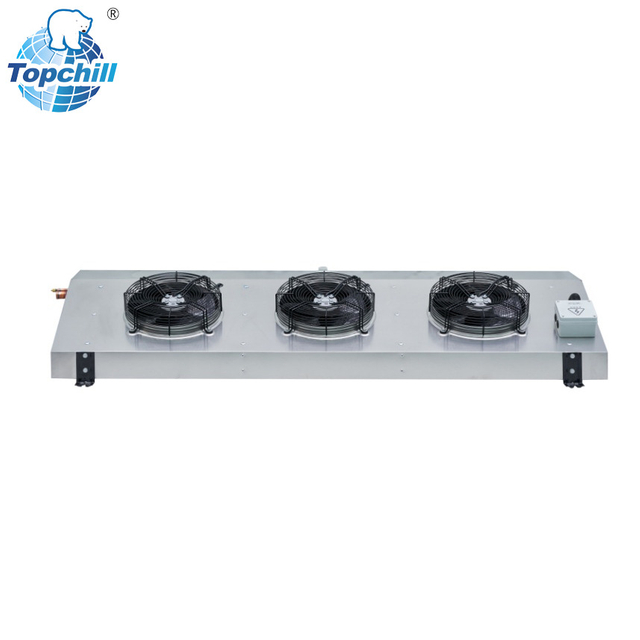
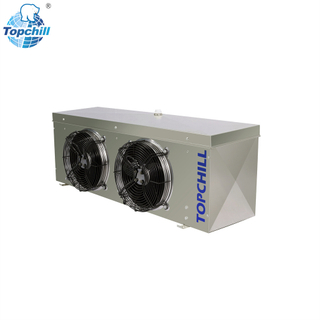
In a cold room, freezer, display cabinet, chiller, or industrial refrigeration unit, the Evaporator is usually the part closest to the cooling target. If the system is designed to cool air, the Evaporator may appear as an air cooler with fins and tubes. If the system is designed to cool liquid, the Evaporator may be a plate heat exchanger, shell-and-tube heat exchanger, or another liquid-cooling structure.
Although the structure may vary, the basic purpose remains the same. The Evaporator provides a cold heat exchange surface so heat can move from the medium being cooled into the refrigerant. This is why the Evaporator is often considered the working end of the refrigeration cycle.
The Evaporator performs three core functions in a refrigeration system. First, it absorbs heat from the refrigerated space or cooling medium. Second, it allows the refrigerant to evaporate by absorbing that heat. Third, it helps maintain the required low temperature by continuously removing heat from the system.
When refrigerant enters the Evaporator, it is already at a low temperature and low pressure after passing through the expansion device. The refrigerated air or liquid around the Evaporator is warmer than the refrigerant. Because heat naturally moves from warmer areas to colder areas, heat transfers from the refrigerated space into the refrigerant inside the Evaporator.
As the refrigerant absorbs heat, it evaporates. This phase change is important because evaporation allows the refrigerant to carry a large amount of heat away from the refrigerated space. After the refrigerant leaves the Evaporator as vapor, it moves toward the compressor, and the refrigeration cycle continues.
Without the Evaporator, a refrigeration system would not have a place to absorb heat from the refrigerated area. The compressor may circulate refrigerant, and the condenser may reject heat, but useful cooling cannot happen without effective heat absorption inside the Evaporator.
The Evaporator works through heat transfer and refrigerant evaporation. Before the refrigerant reaches the Evaporator, it passes through an expansion valve or capillary tube. This reduces the refrigerant pressure and temperature. After this pressure drop, the refrigerant enters the Evaporator in a cold state, ready to absorb heat.
When air or liquid passes across the Evaporator surface, heat moves into the refrigerant. In an air cooling system, a fan moves warm air from the refrigerated space across the Evaporator coil. In a liquid cooling system, water, glycol, brine, or another process fluid flows through or around the Evaporator. In both cases, the Evaporator transfers heat from the cooling medium to the refrigerant.
As the refrigerant absorbs heat, it boils or evaporates at a low temperature. This is why the component is called an Evaporator. The refrigerant leaves the Evaporator as low-pressure vapor and then enters the compressor. The compressor raises the pressure and temperature of the vapor, preparing it for heat rejection in the condenser.
The basic working process can be summarized below:
Step | What Happens in the Refrigeration System | Role of the Evaporator |
1 | Refrigerant passes through the expansion device | The refrigerant becomes low-pressure and low-temperature |
2 | Refrigerant enters the Evaporator | The Evaporator receives cold refrigerant ready to absorb heat |
3 | Air or liquid contacts the Evaporator surface | Heat transfers from the medium into the refrigerant |
4 | Refrigerant evaporates inside the Evaporator | Heat is absorbed and carried away from the refrigerated space |
5 | Vapor refrigerant leaves the Evaporator | The system continues the refrigeration cycle through the compressor |
A basic vapor-compression refrigeration system includes four major components: compressor, condenser, expansion device, and Evaporator. Each component has a different job, but the Evaporator is the part where the refrigerated space actually loses heat.
The compressor moves refrigerant through the system and increases refrigerant pressure. The condenser rejects heat to the outside environment and turns refrigerant vapor into liquid. The expansion device reduces refrigerant pressure and temperature. The Evaporator then absorbs heat from the refrigerated space and turns the refrigerant into vapor again.
In simple terms, the condenser releases heat, while the Evaporator absorbs heat. The compressor and expansion device help create the pressure and temperature conditions needed for this heat transfer process. If the Evaporator does not absorb heat properly, the refrigeration cycle becomes inefficient and unstable.
This is especially important in cold storage, freezers, commercial refrigeration cabinets, process cooling systems, and chillers. In these systems, temperature control depends on how steadily the Evaporator can remove heat from the target space or medium.
The Evaporator directly affects how quickly a refrigeration system can reduce temperature and how steadily it can maintain the required setpoint. If the Evaporator has enough heat exchange capacity, the system can remove heat at the required rate. If the Evaporator is undersized, dirty, frosted, or poorly matched, the temperature may drop slowly or fluctuate during operation.
In food storage, unstable temperature can affect product quality and shelf life. In medical or pharmaceutical refrigeration, temperature instability may affect storage safety. In industrial process cooling, poor Evaporator performance can interrupt production or reduce product consistency.
The Evaporator also affects temperature uniformity. In an air cooler Evaporator, airflow distribution must be suitable for the cold room or cabinet. If airflow is weak or uneven, some areas may become colder while others remain too warm. This is why Evaporator placement, fan selection, coil design, and air circulation are important parts of refrigeration system design.
The Evaporator affects energy efficiency because it determines how easily heat can be absorbed from the refrigerated space. When the Evaporator transfers heat efficiently, the compressor does not need to work as hard or run as long to maintain the target temperature.
A clean and properly designed Evaporator can help maintain a suitable evaporating temperature. If the Evaporator is too small, blocked by frost, or covered with dirt, the evaporating temperature may drop too low. This can increase compressor workload and reduce system efficiency.
Good Evaporator design considers heat exchange area, tube layout, fin spacing, refrigerant distribution, airflow, liquid flow rate, and material thermal conductivity. These details decide whether the Evaporator can absorb heat smoothly under real operating conditions.
For modern refrigeration systems, efficiency is becoming even more important because users want lower energy consumption and more stable operation. At the same time, the refrigeration industry is moving toward refrigerants with lower global warming potential. This trend makes proper Evaporator design and refrigerant compatibility more important, because different refrigerants may have different pressure, temperature, and heat transfer characteristics.
In many refrigeration systems, especially low-temperature systems, frost can form on the Evaporator surface. Frost forms when moisture in the air contacts the cold Evaporator coil and freezes. A small amount of frost may be normal, but excessive frost can reduce performance.
Frost creates a thermal barrier between the air and the Evaporator surface. It also blocks airflow through the coil. When frost becomes too thick, the Evaporator cannot absorb heat effectively. The system may run longer, consume more energy, and fail to maintain the required temperature.
Defrost control is therefore an important part of refrigeration system operation. Depending on the application, defrost methods may include electric defrost, hot gas defrost, off-cycle defrost, or water defrost. The goal is to remove frost from the Evaporator surface before it causes serious heat transfer and airflow problems.
Evaporator design can also help reduce frost-related issues. Suitable fin spacing, correct airflow, good drainage, and proper coil surface design can help the system manage frost more effectively.
Different refrigeration systems may use different Evaporator structures. The right type depends on the cooling medium, capacity, working temperature, installation space, and application requirements.
Evaporator Type | Common Use | Main Feature |
Air cooler Evaporator | Cold rooms, freezers, display cabinets | Uses fans to move air across the coil |
Fin-and-tube Evaporator | Commercial refrigeration and HVAC-related cooling | Provides large air-side heat exchange area |
Plate Evaporator | Liquid cooling, chillers, process cooling | Compact structure with high heat transfer efficiency |
Shell-and-tube Evaporator | Industrial chillers and larger refrigeration systems | Suitable for larger liquid cooling capacity |
Customized Evaporator | OEM refrigeration equipment and special applications | Designed according to capacity, refrigerant, space, and operating conditions |
An air cooler Evaporator is common in cold rooms and freezers because it cools air directly. A fin-and-tube Evaporator is widely used because the fins increase the heat exchange area. A plate Evaporator is often used when the system needs compact and efficient liquid cooling. A shell-and-tube Evaporator is suitable for larger systems where durability and serviceability are important.
For special refrigeration equipment, a customized Evaporator may be needed. Custom design can match specific refrigerant requirements, installation dimensions, airflow direction, pressure rating, material needs, and drainage conditions.
When the Evaporator does not perform well, the refrigeration system usually shows clear symptoms. One common problem is weak cooling. The temperature may fall slowly, or the system may fail to reach the required setpoint. This can happen when the Evaporator is dirty, frosted, undersized, or has poor refrigerant distribution.
Another common problem is excessive frost or ice. If airflow is poor, humidity is high, defrost control is incorrect, or refrigerant flow is abnormal, frost may build up quickly on the Evaporator surface. Once the frost becomes thick, heat transfer decreases and airflow becomes restricted.
Water leakage may occur after defrosting if drainage is poor. During defrost, ice on the Evaporator melts into water. This water must flow away through the drain pan and drain line. If the drain is blocked or poorly designed, water may overflow or freeze again.
The compressor may also run longer than normal when the Evaporator is not absorbing enough heat. Longer compressor operation increases energy consumption and may shorten system life. In some cases, unstable Evaporator performance can also lead to refrigerant return problems or poor system balance.
Common signs of Evaporator-related problems include slow cooling, uneven temperature, excessive frost, reduced airflow, water leakage, abnormal compressor running time, high energy use, and poor product storage quality.
Evaporator performance depends on several important factors. The first is refrigerant flow. The Evaporator must receive the correct amount of refrigerant for the system load. Too little refrigerant may cause poor cooling and uneven coil use. Too much refrigerant or poor superheat control may create unstable operation.
The second factor is airflow or liquid flow. For an air cooler Evaporator, fans must move enough air across the coil. For a liquid Evaporator, the fluid flow rate must be suitable for heat transfer. Poor flow reduces the amount of heat that can reach the Evaporator surface.
The third factor is surface condition. Dirt, oil, dust, ice, and frost all reduce heat transfer. A dirty Evaporator acts like an insulated surface, making it harder for heat to move into the refrigerant.
The fourth factor is sizing. The Evaporator must match the refrigeration load. If it is too small, it may not absorb enough heat. If it is too large or poorly matched, system control may become unstable.
The fifth factor is manufacturing quality. Tube material, fin material, welding quality, pressure resistance, leak testing, and corrosion protection all affect Evaporator reliability. For refrigeration systems that operate for long hours, manufacturing quality is essential for stable long-term performance.
Choosing the right Evaporator starts with understanding the refrigeration requirement. The required cooling capacity, target temperature, inlet temperature, humidity level, refrigerant type, airflow or liquid flow rate, and installation space should all be considered.
For air cooling systems, the Evaporator should be selected according to room size, product load, door opening frequency, air circulation needs, and frost conditions. Fin spacing is especially important in low-temperature or high-humidity applications because tight fin spacing may frost quickly.
For liquid cooling systems, the Evaporator should match the liquid type, flow rate, inlet and outlet temperature, pressure drop, and corrosion requirements. Plate and shell-and-tube designs may be selected depending on capacity, maintenance needs, and installation space.
Material selection is also important. Copper, aluminum, stainless steel, and coated materials may be used depending on the application. In food, chemical, marine, or corrosive environments, corrosion resistance should be considered carefully.
A professional Evaporator manufacturer can help match the design to the actual working conditions. For OEM or customized refrigeration equipment, engineering support can reduce mismatch risks and improve system performance.
Regular maintenance helps the Evaporator keep stable heat exchange performance. The coil surface should be checked for dust, oil, ice, and frost. If the Evaporator surface is blocked, heat transfer will decrease and system energy consumption may rise.
Air filters, fans, and air passages should be inspected in air cooler systems. Poor airflow can cause uneven cooling and frost formation. Fan operation should be stable, and the air path should not be blocked by stored products or packaging.
Drainage should also be checked regularly. During defrost, melted water must leave the system smoothly. If the drain pan or drain line is blocked, water may leak or freeze again near the Evaporator.
Refrigerant condition should be checked by qualified technicians when the system shows poor cooling, abnormal frost, or unstable operation. Correct refrigerant charge and proper expansion valve operation are important for Evaporator performance.
A professional Evaporator manufacturer does more than supply a coil. The manufacturer should understand cooling capacity, refrigerant type, working temperature, airflow, liquid flow, pressure requirements, installation space, and application environment.
For refrigeration systems, Evaporator quality affects heat transfer efficiency, temperature stability, frost control, drainage, leakage prevention, and service life. Poor manufacturing quality may lead to refrigerant leakage, reduced performance, corrosion, or early failure.
Chengdu Topchill Environmental Control Technology Co., Ltd. focuses on reliable Evaporator solutions for refrigeration and environmental control applications. For customers who need customized refrigeration Evaporator products, professional design and manufacturing support can help improve heat exchange efficiency, system reliability, and long-term operating performance.
The Evaporator in a refrigeration system absorbs heat from the refrigerated space or cooling medium. As the refrigerant inside the Evaporator absorbs heat, it evaporates and carries that heat away from the cooled area. This is the core process that allows a refrigeration system to maintain low temperature.
The Evaporator also affects temperature stability, energy efficiency, frost formation, airflow, drainage, and product storage quality. If the Evaporator is clean, correctly sized, properly matched, and well manufactured, the refrigeration system can operate more efficiently and reliably.
For cold rooms, freezers, display cabinets, chillers, process cooling equipment, and customized refrigeration systems, choosing the right Evaporator is essential. A well-designed Evaporator helps the system remove heat effectively, maintain stable cooling, reduce energy waste, and support long-term refrigeration performance.
The main function of the Evaporator is to absorb heat from the refrigerated space or cooling medium. This heat causes the refrigerant inside the Evaporator to evaporate and carry heat away from the cooled area.
It is called an Evaporator because the refrigerant evaporates inside it. As the refrigerant absorbs heat, it changes from a low-pressure liquid or liquid-vapor mixture into vapor.
The Evaporator does not create cold directly. It removes heat from the refrigerated space. When heat is removed, the air, liquid, or product temperature decreases.
Frost forms when moisture in the air contacts the cold Evaporator surface and freezes. Excessive frost can block airflow, reduce heat transfer, increase energy use, and cause unstable temperature.
To choose the right Evaporator, consider cooling capacity, refrigerant type, working temperature, airflow or liquid flow, installation space, frost and defrost needs, drainage design, material quality, and whether a customized design is required.