Views: 0 Author: Site Editor Publish Time: 2026-09-08 Origin: Site


Thermal loads in cold chain logistics rarely remain static. Inventory turnover, seasonal ambient temperature shifts, and frequent door activity create highly dynamic cooling requirements inside any facility. An inability to dynamically match cooling capacity to real-time thermal loads leads directly to two failures. First, compressors begin short-cycling, causing premature equipment failure and massive energy waste. Second, temperature excursions occur, resulting in immediate product spoilage and strict compliance violations. Modern refrigeration systems utilize sophisticated engineering mechanisms to solve these exact problems. This evaluation explores how a purpose-built Chiller modulates capacity, manages part-load conditions, and maintains strict temperature tolerances during continuous operational fluctuations.
Capacity Modulation is Critical: Modern systems rely on Variable Frequency Drives (VFDs) and compressor staging to adjust cooling output to match real-time demand, preventing energy waste during low-load periods.
Part-Load Efficiency Dictates ROI: Evaluating a chiller based on Integrated Part Load Value (IPLV) is more indicative of real-world performance than full-load design metrics, as cold storage facilities rarely operate at peak capacity 100% of the time.
Configuration Impacts Stability: The choice between an air cooled cold storage chiller and a water cooled system fundamentally changes how the facility handles ambient temperature spikes alongside internal load changes.
Control Systems Drive Predictability: Advanced PLCs and Electronic Expansion Valves (EEVs) are required to anticipate load shifts, maintain HACCP compliance, and prevent thermal lag during sudden inventory intake.
Off-Peak Energy Optimization: Intelligent load management allows systems to drastically scale back energy consumption during nighttime operations or periods of low inventory movement without compromising the thermal envelope.
A fluctuating load represents the constant variance in thermal energy entering a refrigerated space. Facility managers must combat these continuous heat gains to protect inventory. The baseline success criterion for any commercial refrigeration environment is absolute thermal stability. The system must maintain a strict temperature setpoint regardless of external weather variables or internal operational chaos. Any deviation from this setpoint compromises product integrity and wastes mechanical effort. When you walk into a high-volume refrigerated warehouse, you immediately notice that the cooling demand changes minute by minute. The refrigeration plant must react to these changes instantly.
Thermal loads originate from multiple distinct sources. Each source alters the total cooling demand at different rates and intensities. Understanding these sources is the first step in managing them effectively. We categorize these loads to engineer the correct mechanical response.
Product Intake and Inventory Rotation (Pull-down loads): New inventory introduces massive amounts of field heat. When a facility loads warm pallets into a cold room, the system must extract that thermal energy rapidly. Inventory rotation practices like First-In, First-Out (FIFO) create localized thermal hotspots that the system must neutralize. A truckload of fresh produce arriving at 70°F requires immense immediate cooling capacity to bring it down to a 34°F holding temperature.
Transmission Loads and Envelope Integrity: Heat constantly transfers through walls, ceilings, and floors. The specific rate of temperature change depends heavily on room size, insulation R-value, and external weather conditions. A sunny summer afternoon pushes significantly more heat through the roof than a cool autumn night. Solar radiation on a flat warehouse roof can increase the surface temperature to 140°F, driving heat through the insulation panels.
Infiltration Loads: Warm, moisture-laden air rushes in whenever loading dock doors or personnel entryways open. This infiltration introduces both sensible heat (temperature) and latent heat (humidity). The system must work harder to condense and remove the moisture. Latent heat is particularly taxing because it forms frost on the evaporator coils, forcing the system into energy-heavy defrost cycles.
Internal Heat Gains: Operational equipment generates heat. Forklifts driving through the aisles, high-intensity LED lighting, and even the evaporator fan motors themselves add thermal energy to the space. A standard electric forklift can reject thousands of BTUs per hour into the refrigerated space just from battery discharge and hydraulic friction.
Nighttime vs. Daytime Operational Shifts: Cooling demand drops drastically during off-peak hours. Door activity ceases, forklifts park, lights turn off, and ambient outdoor temperatures fall. A system running at full capacity during these hours wastes massive amounts of energy.
Rigid refrigeration systems that cannot adapt to these fluctuations carry severe mechanical and financial penalties. When a system oversized for peak demand operates during a low-load period, the compressor turns on, rapidly cools the space, and immediately shuts off. This phenomenon is known as short-cycling. Short-cycling strips oil from the compressor, accelerates mechanical wear on contactors, and dramatically shortens the equipment's lifespan. Compressors are designed to run continuously, not to start and stop every five minutes.
Furthermore, poor load management creates temperature volatility. Fluctuating room temperatures put the facility at high risk of failing Hazard Analysis Critical Control Point (HACCP) audits. Regulatory bodies require strict temperature logs. If a rigid system allows the room to swing five degrees above setpoint before the compressor engages, you risk regulatory fines and destroyed inventory.
Modern chillers rely on advanced hardware to scale their cooling output up or down seamlessly. Compressor staging provides the first layer of capacity control. Engineers design systems with multiple compressors on a single refrigeration circuit. The control system turns these compressors on or off sequentially to meet incremental load additions. If the load is low, only one compressor runs. As the load increases, the second and third compressors engage. This prevents a massive 100-horsepower compressor from firing up just to handle a minor temperature bump.
Variable Frequency Drives (VFDs) offer an even more precise method of capacity modulation. A VFD alters the electrical frequency (Hz) supplied to the compressor motor. Instead of a binary on/off operation, the VFD allows the compressor to speed up or slow down smoothly. This continuous modulation matches the exact cooling demand of the space, eliminating short-cycling and maintaining a perfectly flat temperature curve. When the room reaches the setpoint, the VFD slows the compressor down to a crawl, maintaining the temperature with minimal electrical draw.
Managing refrigerant flow is just as critical as managing compressor speed. Traditional thermostatic expansion valves (TXVs) use a mechanical bulb to sense temperature and adjust flow. They are prone to hunting and surging during rapid load changes. The mechanical bulb takes time to react to temperature changes in the suction line, causing the valve to overfeed or underfeed the evaporator.
Electronic Expansion Valves (EEVs) solve this problem completely. EEVs utilize a precise stepper motor to open and close the valve orifice in microscopic increments. The valve receives real-time superheat data from digital temperature and pressure sensors located at the evaporator outlet. This allows the EEV to make rapid, micro-adjustments to the refrigerant flow. When a sudden load drop occurs, the EEV instantly restricts flow, optimizing the evaporator's performance and preventing liquid refrigerant from flooding back to the compressor.
Programmable logic controllers (PLCs) serve as the brain of the refrigeration plant. The PLC aggregates continuous data streams from temperature sensors, pressure transducers, door switches, and VFD outputs. It processes this data using Proportional-Integral-Derivative (PID) loops to make instantaneous operational decisions.
Inlet temperature monitoring is a primary function of the PLC. By measuring the entering fluid or air temperatures, the controller calculates real-time load deltas. It knows exactly how much heat is entering the system. Advanced predictive load management algorithms take this a step further. If the PLC detects a loading dock door opening and a sudden spike in inlet temperature, it ramps up compressor capacity before the room temperature actually rises. This proactive approach prevents thermal lag and keeps the product perfectly safe.
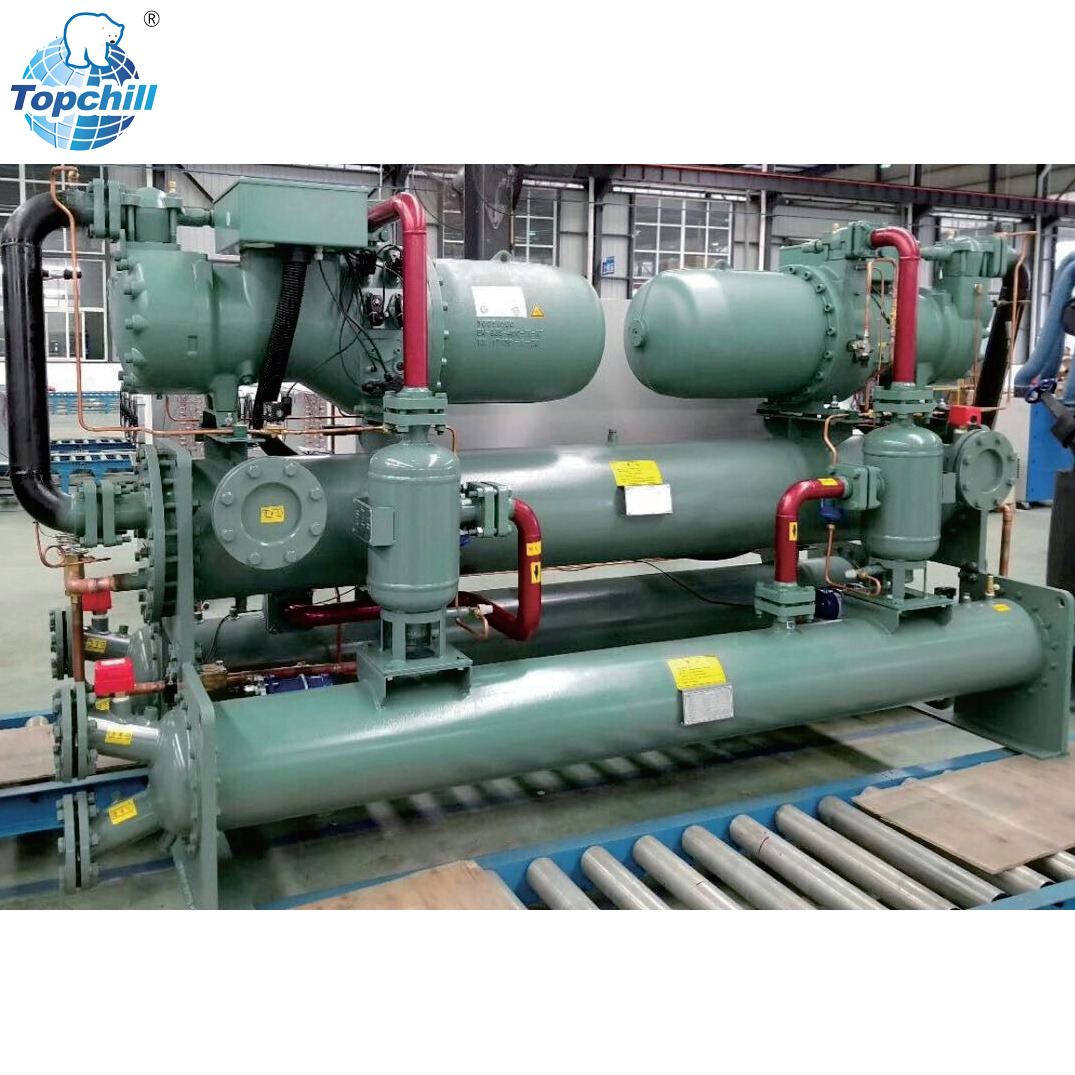
Facilities must evaluate how different system architectures handle capacity shifts based on their specific environmental dependencies. An air cooled cold storage chiller rejects heat directly to the ambient outdoor air. These units use large condenser coils and fans to blow ambient air across the hot refrigerant. They are highly popular because they do not require a water source or complex plumbing.
The primary load management challenge for air-cooled systems occurs during summer months. The system must manage high internal product pull-down loads simultaneously with peak summer ambient temperatures. Rejecting heat into 100°F air is difficult and reduces overall capacity. To combat this, modern air-cooled units utilize variable speed condenser fans and floating head pressure controls. These features allow the system to maintain stable operation even when ambient conditions fluctuate wildly. By slowing down the condenser fans during cold winter nights, the system prevents the head pressure from dropping too low, which would otherwise starve the expansion valves.
A water cooled cold storage chiller uses a dedicated cooling tower and a water loop for heat rejection. Instead of relying on ambient air, the system rejects heat into a steady stream of water. Water has a much higher heat transfer coefficient than air, making these systems incredibly efficient.
These systems offer superior stability and efficiency in high-capacity, heavy-fluctuation environments. Because the entering condenser water temperature remains relatively stable compared to ambient air, the chiller can handle massive internal load spikes without losing efficiency. The trade-off involves higher maintenance complexity. Facility managers must maintain water treatment protocols, clean cooling tower fill, and manage water consumption rates. You must also monitor the cooling tower for biological growth and scale buildup, which can insulate the heat exchanger tubes and destroy efficiency.
Deep-freeze storage and blast freezing applications require specialized equipment. A low temperature chiller operates at extreme setpoints, often between -20°F and -40°F. Managing loads at these temperatures presents unique physical challenges. Standard compressors cannot handle the compression ratios required to move heat from a -40°F room to a 90°F outdoor environment.
Extreme temperature deltas require multi-stage or cascade refrigeration cycles. A single compressor cannot efficiently pump refrigerant across that massive temperature gap. Cascade systems use two separate refrigerant loops to bridge this gap. The low stage cools the room and rejects its heat into the high stage, which then rejects the heat outdoors. Furthermore, load management in low-temperature environments must account for aggressive defrost cycles. Evaporator coils accumulate frost rapidly. The control system must manage hot gas or electric defrost cycles seamlessly, ensuring the ice melts without disrupting the baseline product temperature in the room.
System Type | Heat Rejection Method | Dynamic Load Handling | Ideal Application Environment |
|---|---|---|---|
Air Cooled | Ambient Air via Condenser Fans | Relies on VFD fans; capacity drops during high ambient heat. | Facilities with limited water access and moderate ambient climates. |
Water Cooled | Cooling Tower Water Loop | Highly stable under heavy load spikes; consistent condensing temps. | Large-scale industrial storage with heavy inventory turnover. |
Low Temperature | Cascade or Multi-Stage Compression | Manages extreme deltas; requires complex defrost integration. | Blast freezers, plasma storage, and deep-freeze logistics. |
One of the most common engineering mistakes in refrigeration design is sizing a system solely for the absolute peak load. Engineers often calculate the maximum possible heat gain on the hottest day of the year with maximum product intake. While the system must handle this peak, it will likely only experience these conditions for a few hours a year. Sizing solely for this peak ignores part-load operational realities.
Integrated Part Load Value (IPLV) and Non-Standard Part Load Value (NPLV) are mandatory metrics for evaluating equipment. They measure the efficiency of a chiller across various load capacities. A system that operates highly efficiently at 50% or 75% capacity yields a significantly better long-term return on investment than one optimized only for 100% capacity. Because a cold storage chiller spends the vast majority of its operational life at part-load conditions, prioritizing IPLV ensures minimal energy waste.
Operating Capacity | Percentage of Annual Operating Hours (AHRI Standard) | Operational Reality in Cold Storage |
|---|---|---|
100% Load | 1% | Peak summer afternoons during heavy product intake. |
75% Load | 42% | Standard daytime operations with active loading docks. |
50% Load | 45% | Evening operations, reduced door activity, cooler ambient temps. |
25% Load | 12% | Overnight hours, zero door activity, winter conditions. |
Facility throughput rarely remains static over a decade. As a business grows, warehouse throughput increases, bringing higher thermal loads. Installing modular chillers provides a distinct strategic advantage for growing operations. You do not want to buy a massive system today for capacity you might need five years from now.
Modular designs allow facilities to scale up cooling capacity incrementally. Instead of overhauling and replacing an entire central refrigeration plant, managers simply pipe an additional chiller module into the existing header. The master PLC automatically recognizes the new module and integrates it into the staging sequence. This prevents massive upfront capital expenditures and ensures the system remains perfectly sized for the current load. Isolation valves allow technicians to service one module while the rest of the plant continues to cool the facility.
Modern logistics often demand multi-use facilities. Third-party logistics providers frequently change room temperatures based on client contracts. A room holding fresh produce at 36°F today might need to store frozen seafood at -10°F next year. Flexible compressor staging and advanced computer controls allow a facility to adapt to these future temperature changes.
With VFDs and EEVs, the system can adjust its suction pressure and flow rates to accommodate different setpoints without requiring entirely new infrastructure. While converting a standard cold room into a deep freeze does require verifying the insulation envelope and potentially adjusting the refrigerant charge, the core variable-capacity machinery is inherently adaptable to shifting operational profiles. The PLC simply requires a setpoint adjustment and a tuning of the PID loop to handle the new thermal dynamics.
Deploying variable-capacity refrigeration systems introduces specific integration friction points. The primary risk is a disconnected system. If the chiller operates independently of the Warehouse Management System (WMS), it reacts to temperature changes rather than anticipating them. Reactive cooling leads to temperature spikes during heavy loading events. By the time the room sensor detects the heat from a new pallet of goods, the thermal energy has already begun affecting adjacent inventory.
Mitigation requires robust communication protocols. Facilities must utilize BACnet IP or Modbus RTU protocols to tie the chiller PLCs directly into the central WMS. This creates holistic facility monitoring. When the WMS schedules a massive inbound shipment of warm product, it signals the chiller PLC. The chiller preemptively lowers the room temperature by two degrees, creating a thermal buffer in the concrete floor and racking before the dock doors even open.
Variable-capacity systems are mechanically and electrically complex. The increased complexity of VFDs, EEV stepper motors, and PLC microprocessors requires specialized technician knowledge. A catastrophic failure of a VFD can halt capacity modulation entirely, forcing the compressor into a rigid on/off cycle or shutting it down completely. Dust buildup on VFD cooling fans can cause the drive to overheat and trip on high temperature.
Mitigating this risk demands strict predictive maintenance schedules. Technicians must perform routine vibration analysis on variable-speed compressors to detect bearing wear early. Thermal imaging of VFD electrical panels identifies loose connections before they arc and fail. Furthermore, facility managers must maintain a critical spare parts inventory on-site, including replacement EEV stators, pressure transducers, and pre-programmed PLC modules, to minimize downtime.
Rapid temperature pull-downs and continuous capacity modulation can sometimes mask localized temperature anomalies. The risk here involves data logging gaps. If the central sensor reads the correct temperature, but a corner of the room lags due to poor airflow during a load shift, the facility risks compliance failure. VFD-driven evaporator fans slow down during low-load periods, which can reduce air throw and create warm pockets in the back of the racking.
Mitigation requires redundant temperature mapping. Facilities must deploy independent data loggers throughout the storage racks. These loggers verify that the chiller's load management translates to actual product core temperature stability across the entire space. Regular thermal mapping exercises ensure that the variable airflow from VFD-driven evaporator fans reaches every pallet, maintaining strict HACCP compliance regardless of the current system load.
Mastering thermal load fluctuations requires proactive system management, precise equipment selection, and rigorous maintenance protocols. Implement these immediate next steps to stabilize your facility's cooling profile:
Audit your current compressor cycle times to identify short-cycling events during off-peak night shifts.
Evaluate your facility's IPLV requirements based on historical seasonal temperature data rather than just peak summer design days.
Integrate your refrigeration PLC with your WMS using BACnet to enable predictive cooling prior to large inventory intake events.
Establish a predictive maintenance routine specifically targeting VFD electrical panels and EEV stepper motors to prevent modulation failure.
Deploy independent data loggers across your racking system to verify airflow and temperature stability during low-load VFD operation.
A: Short-cycling occurs when a system is oversized for the current thermal load. The compressor turns on, cools the space too rapidly, and shuts off immediately. This happens frequently in rigid systems during nighttime operations or low-inventory periods when cooling demand is minimal.
A: A Variable Frequency Drive (VFD) saves energy by slowing down the compressor motor to match the exact cooling demand. Instead of running at 100% power and shutting off, it runs continuously at lower, highly efficient speeds, drastically reducing electrical draw.
A: Electronic Expansion Valves (EEVs) use digital sensors and a stepper motor to make microscopic adjustments to refrigerant flow. Thermostatic Expansion Valves (TXVs) use mechanical bulbs that react slowly and often surge or hunt during rapid load changes, making EEVs far superior for dynamic environments.
A: Integrated Part Load Value (IPLV) is a metric that calculates equipment efficiency across various capacity levels (100%, 75%, 50%, 25%). It matters because refrigeration systems operate at part-load conditions for the vast majority of their lifespan, making IPLV a true indicator of operational costs.
A: Yes, if you utilize a modular design. Modular systems allow you to pipe additional units into the existing header. The control system automatically integrates the new module, allowing you to scale capacity as your warehouse throughput increases.
A: Open loading dock doors introduce massive infiltration loads. Warm, humid ambient air rushes into the cold space. The system must expend significant energy not only to lower the temperature of this air but also to condense and remove the introduced moisture.


