Views: 0 Author: Site Editor Publish Time: 2026-04-11 Origin: Site


Commercial kitchens constantly face a major operational bottleneck. You must cool large batches of food safely. You cannot halt ongoing production or degrade product quality. Traditional passive cold storage no longer meets today's rigorous demands. Consumer demand for ready-to-eat meals drives a massive shift toward active cooling processes. Strict food safety regulations also force this rapid evolution across the industry.
Modern kitchens require systems built specifically for aggressive temperature reduction. Comparing a blast chiller to a standard freezer involves much more than measuring simple temperature drops. You are looking at a fundamental difference in equipment purpose. One handles active food processing. The other handles long-term passive storage. Understanding this vital distinction changes how you operate your commercial kitchen.
We will break down the exact performance metrics between these two technologies. You will learn the science behind cellular food preservation. We will also explore how rapid cooling fundamentally transforms labor scheduling and profitability.
Blast chillers reduce food core temperatures from ~160°F to 41°F in 90 minutes or less, bypassing the bacterial "danger zone" exponentially faster than the 12–24 hours a standard freezer requires.
Rapid cooling prevents macro-ice crystal formation, preserving cellular integrity, moisture, and yielding a 30% higher nutrient retention rate.
While CAPEX is higher for blast technology, operational savings (OPEX) are realized through up to 40% less food waste and optimized "cook-chill" labor scheduling.
Blast chillers are for 24–48 hour transitional processing; commercial freezers remain necessary for long-term inventory holding.
Kitchen operators often try to cut corners. The baseline problem starts when staff place hot food directly into a standard freezer. This action raises the internal ambient temperature rapidly. It risks the safety of existing frozen inventory. It also severely overworks the refrigeration compressor. Standard freezers rely entirely on passive ambient air. They take 12 to 24 hours to freeze dense batches of cooked food properly.
Engineers design blast chillers strictly for speed. This equipment serves as the ultimate benchmark for rapid cooling. It adheres to strict HACCP standards without fail. A dedicated blast unit drops core food temperatures from 160°F (70°C) to 41°F (3°C) in under 90 minutes. This speed completely revolutionizes prep cycles.
Some applications require deep freezing rather than just chilling. A rapid-cooling blast freezer handles this task perfectly. It drops core temperatures from 160°F to -10°F in 240 minutes or less. This extreme speed locks in freshness instantly.
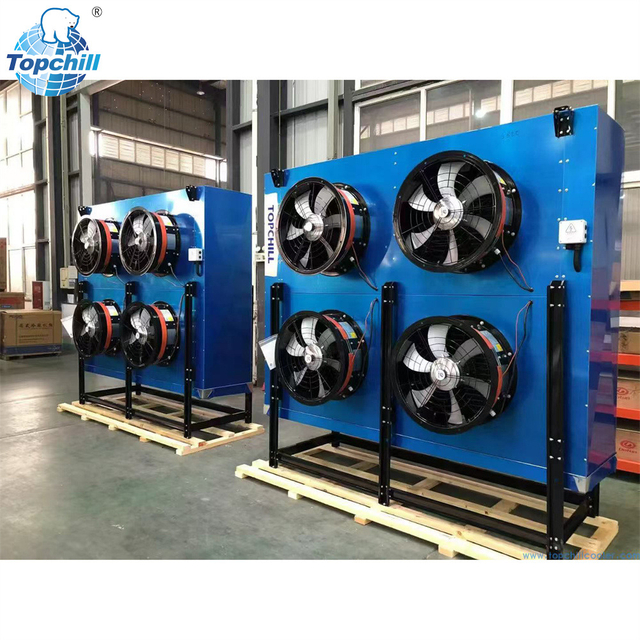
When you evaluate a commercial Rapid-Cooling Blast Freezer Air Cooler TIF model, look closely at the specifications. The primary metric of success is the CFM (Cubic Feet per Minute) rating of the air cooler. High CFM drives the accelerated cooling timeline. It dictates how violently the system pulls heat away from the food mass.
Cooling Phase | Standard Commercial Freezer | Commercial Blast Chiller | Blast Freezer Unit |
|---|---|---|---|
160°F to 41°F (Chilling) | 6 to 12 Hours | Under 90 Minutes | Under 90 Minutes |
160°F to -10°F (Freezing) | 12 to 24 Hours | N/A (Chills Only) | Under 240 Minutes |
Airflow Mechanism | Passive Ambient Air | High-Velocity Active Airflow | High-Velocity Active Airflow |
Standard freezers provide excellent long-term storage. Manufacturers design them to maintain a stable environment. They hold already-frozen goods efficiently for months. However, they lack directional airflow. They cannot quickly extract radiant heat from steaming hot pans.
Blast chillers function as active processing tools. They utilize high-velocity fans and specialized internal routing. This engineering aggressively pulls heat away from food. It works like a convection oven operating in reverse.
Cellular impact acts as the ultimate quality differentiator. The speed of your temperature drop dictates the final texture of your ingredients.
Slow freezing destroys ingredient quality. It allows water molecules to expand slowly. They form large, jagged ice crystals. These macro-crystals puncture delicate cell walls. This damage causes severe "drip loss" upon thawing. You lose crucial natural juices and flavor. The food becomes mushy and unappetizing.
Rapid cooling forces immediate micro-crystallization. Fast temperature drops keep ice crystals microscopic. Cell walls remain completely intact. You preserve texture and vibrant color. You also maintain structural integrity for delicate items like pastries and raw seafood.
Portion Correctly: Spread hot foods thinly in shallow hotel pans (2 inches deep maximum). This maximizes surface area exposure to the cold air.
Do Not Cover Immediately: Leave pans uncovered during the initial blast cycle. Lids trap radiant heat and create condensation.
Use Probe Thermometers: Always insert the core temperature probe into the thickest part of your protein.
Transfer Promptly: Move chilled food into standard holding refrigerators immediately after the blast cycle completes.
The danger zone is a serious reality for every kitchen operator. The FDA defines the bacterial danger zone explicitly. It spans from 40°F to 140°F (5°C to 60°C). Bacteria populations can double every 20 minutes within this range. Slow cooling creates massive compliance risks and endangers public health.
Time-to-safety metrics dictate your operational liability. Blast chillers cross this dangerous temperature zone in under 90 minutes. You achieve up to a 95% reduction in potential bacterial contamination compared to standard cooling methods. You simply outrun the bacteria reproduction cycle.
Regulatory alignment protects your business license. Rapid cooling systems automatically generate internal time and temperature logs. These digital logs satisfy strict HACCP requirements flawlessly. The Food Safety Modernization Act (FSMA) mandates this precise documentation. Automated logging drastically reduces your audit risks during surprise health inspections.
Stacking Hot Pans: Placing hot pans directly on top of one another blocks necessary airflow. It creates dangerous hot spots in the center.
Overloading the Unit: Stuffing the cabinet beyond its rated poundage capacity severely slows down the cooling fan CFM efficiency.
Ignoring Maintenance: Failing to clean the condenser coils restricts the refrigeration system. This leads to longer, unsafe cooling times.
Initial CAPEX differs drastically from lifecycle OPEX. Blast chillers require a higher initial capital investment. Standard freezers cost far less upfront. However, you generate massive ROI through process efficiency. You do not buy a blast chiller for basic storage utility.
The "cook-chill" advantage completely transforms scheduling. Kitchens prep bulk batches during off-peak hours. Cooks par-cook items, blast chill them, and hold them safely. You can keep these prepped items securely for 3 to 5 days. This strategy reduces peak-service labor costs. It eliminates frantic mid-service kitchen bottlenecks.
Waste reduction offers immediate financial returns. Faster cooling halts the cooking process immediately. Food does not overcook from its own residual heat. You extend ingredient shelf life significantly. Kitchens often report up to a 40% reduction in weekly food waste.
Energy considerations also favor this two-step approach. Using a Rapid-Cooling Blast Freezer Air Cooler TIF brings food safely to temperature first. You then transfer the chilled food to a standard freezer. This method reduces the heavy electrical load on your main freezer. It saves serious wear-and-tear on expensive standard compressors over time.
You must assess your production volume and frequency carefully. High-volume prep kitchens need dedicated blast chillers. Caterers and commercial bakeries rely heavily on this active processing. Small, cook-to-order diners might skip this investment entirely. They may only need reliable standard refrigeration.
Menu diversity requirements dictate your specific equipment needs. Menus heavily reliant on par-baked goods justify the higher cost. Frozen desserts and delicate proteins need rapid cooling. You cannot compromise product texture on high-ticket culinary items.
Hybrid solutions offer excellent flexibility. Tight spatial footprints demand smart, compact equipment choices. Consider dual-function combo units. These combine blast chilling for short-term prep and shock freezing for long-term preservation. They occupy one compact footprint in your crowded kitchen.
The thermalizer loop completes the production cycle. Adopting blast freezing requires proper re-thermalization equipment. Specialized thermalizers safely bring food from -10°F back to 165°F. They do this rapidly in under 60 minutes. This rapid reheating prevents quality degradation right before plating.
Kitchen Type | Primary Need | Recommended Solution |
|---|---|---|
Small Cook-to-Order Diner | Holding raw ingredients safely | Standard Commercial Refrigeration |
High-Volume Catering | Batch prep and safe transportation | Dedicated Blast Chiller |
Artisan Bakery / Pastry | Setting delicate mousses and doughs | Blast Chiller / Shock Freezer Combo |
Central Commissary | Long-term mass frozen distribution | Industrial Rapid-Cooling Blast Freezer |
A blast chiller operates exponentially faster than traditional equipment. It cuts cooling times from stressful days to manageable minutes. However, it does not replace your standard freezer. They remain distinct tools built for completely different phases of the food lifecycle.
Kitchen stakeholders should audit their current cooling timelines immediately. You need to calculate your weekly food waste percentages accurately. Map your peak labor hours against your prep schedules. This data reveals the exact ROI timeline for integrating rapid-cooling technology into your daily workflow.
A: No. Blast chillers function as processing units designed for rapid temperature drops over 90-240 minutes. They consume too much energy for static use. They also lack the internal spatial design required for cost-effective, long-term inventory storage.
A: It is highly discouraged. Hot food raises the internal ambient temperature of the freezer drastically. This compromises surrounding food safety and risks FDA violations. It also forces the compressor into overdrive, which shortens the equipment's lifespan considerably.
A: It depends entirely on your operating model. If a small restaurant relies on prep-heavy menus, batch-cooking, or suffers from high food spoilage, you need one. The labor and waste savings often offset the initial cost within 12 to 18 months.
A: Because it freezes food up to 10 times faster, it creates microscopic ice crystals instead of large ones. This rapid transition prevents cell walls from bursting. As a result, meats retain their natural juices and vegetables keep their crunch when thawed.