Views: 0 Author: Site Editor Publish Time: 2026-04-14 Origin: Site


Picture this high-stress commercial scenario. You walk into your busy kitchen or storage warehouse. You glance at the walk-in thermometer. It flashes a steady 44°F. A sinking feeling hits you immediately. Is this temperature cold enough to safely store your perishable food? We must give you a definitive, immediate answer. No. Keeping perishable food at 44°F directly violates basic health codes. It poses a severe safety hazard for your customers. This minor temperature bump actually signals a major operational crisis. Our guide will help you navigate this exact emergency. We diagnose the serious risks of a 44°F storage environment. We show you how to triage your current inventory. Finally, we establish a proven evaluation framework for commercial refrigeration upgrades. You will learn exactly how to prevent future system failures. Your business reputation depends on maintaining safe temperatures.
The Hard Limit: The regulatory safety threshold for cold food storage is strictly below 40°F (typically 34°F–38°F for operational safety).
Immediate Action Required: Time spent at 44°F dictates whether high-risk inventory (meat, dairy, prepared foods) must be discarded to avoid foodborne illness.
Equipment Reality: Chronic temperature creep (hovering at 42°F–45°F) usually signals failing infrastructure, undersized evaporators, or incorrect equipment specification.
The Upgrade Path: Investing in a purpose-built food-grade air cooler for medium temperature applications is critical for long-term compliance, energy efficiency, and inventory protection.
Every commercial kitchen operator must understand regulatory temperature limits. The FDA and USDA clearly define the "Danger Zone" for food storage. This zone spans from 40°F to 140°F. Inside this window, dangerous bacterial growth accelerates exponentially. A walk-in cooler reading 44°F sits squarely inside this high-risk zone.
You might wonder why 44°F feels adequately cold. It feels cold to the human touch because our body temperature hovers around 98.6°F. Stepping into a 44°F room shocks our system. However, this temperature acts as an incubator for serious pathogens. Bacteria like Salmonella, E. coli, and Listeria thrive here. They can double their populations in just twenty minutes. You cannot rely on physical sensation to judge food safety.
Health inspectors actively hunt for these temperature violations. An auditor logging a 44°F reading brings severe consequences. They rarely issue simple warnings for this infraction. You face immediate, heavy citations. Inspectors often demand an immediate operational shutdown until you fix the unit. Furthermore, they will mandate forced inventory disposal. Throwing away thousands of dollars in ruined product hurts your bottom line immensely. Operating at 44°F is an unacceptable gamble.
Calibrate your digital thermometers weekly.
Log temperatures manually at least twice a day.
Install automated temperature alarms for off-hours monitoring.
Discovering a 44°F reading demands instant action. You cannot wait and hope the temperature drops. You must apply strict food safety protocols immediately. The widely accepted standard is the 2-Hour/4-Hour Rule. This framework dictates how you handle exposed food.
If food sits at 44°F for under two hours, you must cool it down quickly. Move it to a functioning refrigerator or freezer. If food remains in this Danger Zone for over two hours, you face harsh choices. You must separate high-risk items from low-risk items.
Inventory Category | Examples | Required Action |
|---|---|---|
High-Risk Proteins | Raw chicken, beef, seafood, tofu | Discard immediately. Do not risk cross-contamination. |
Dairy & Eggs | Milk, soft cheeses, cracked eggs | Discard immediately. Spoilage occurs rapidly. |
Prepared Foods | Cooked leftovers, cut melons, deli meats | Discard immediately. High moisture promotes bacteria. |
Low-Risk Produce | Whole apples, uncut carrots, hard squash | Context-Dependent/Safe. Monitor for quality changes. |
Condiments | Vinegar-based sauces, mustard, ketchup | Usually Safe. High acidity prevents rapid bacterial growth. |
You must initiate an immediate operational pause. Halt the intake of any new inventory. Do not put fresh deliveries into a struggling cooler. You will only warm the room further. Stop all prep work relying on this specific cooler. Focus entirely on diagnosing the mechanical root cause. Stabilize the environment before resuming standard kitchen operations.
Refrigeration systems rarely fail overnight. They usually suffer from chronic temperature creep. The thermometer slowly inches from 38°F to 41°F, then settles at 44°F. Recognizing the root causes helps you prevent total system breakdowns. We must differentiate between system aging and capacity mismatch.
System aging involves wearing mechanical parts. An older compressor loses pumping efficiency over time. Worn seals allow warm air to leak inside continuously. On the other hand, capacity mismatch happens with newer equipment. A contractor might install a unit improperly sized for your daily heat load. They might ignore high product volume. They might underestimate how often staff open the cooler doors. An undersized unit runs constantly but never reaches safe temperatures.
Airflow issues represent another common culprit. Poor circulation creates dangerous warm pockets. Boxes stacked too high block the evaporator fans. Iced-over evaporator coils artificially raise ambient temperatures. When ice blocks the fins, the unit cannot absorb heat. The room temperature quickly rises to the mid-40s.
Inspect the coils: Look for thick ice buildup on the evaporator fins.
Check the door gaskets: Feel for cold air escaping around the seals.
Evaluate airflow: Ensure inventory sits at least six inches away from fans.
Monitor cycles: Listen to see if the compressor short-cycles or runs non-stop.
Ignoring minor temperature fluctuations carries hidden costs. Deferring maintenance always backfires. A struggling motor draws excessive electricity. Utility bills skyrocket. Eventually, the overworked compressor fails completely. A catastrophic unit failure forces emergency weekend repair rates. It also guarantees massive food waste.
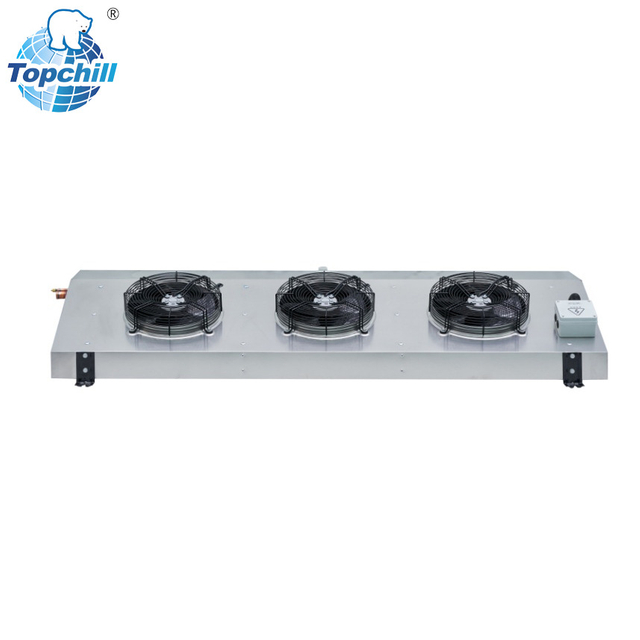
Fixing chronic temperature issues often requires a complete equipment upgrade. You must define your exact cooling requirements clearly. You need equipment specifically engineered to handle heavy commercial loads. A Food-Grade Air Cooler Medium Temperature unit is designed for this exact purpose. It holds ambient temperatures consistently between 34°F and 38°F. It recovers quickly after door openings.
Evaluating new equipment involves several key dimensions. You cannot just buy the cheapest model available. You must match the specifications to your unique facility.
Capacity & Sizing (BTU/hr): You must match the cooling power to your room's cubic footage. You also must account for product ingress temperature. Warm produce deliveries require higher BTU extraction.
Airflow Distribution (CFM): High Cubic Feet per Minute (CFM) ratings ensure even cooling. Proper airflow eliminates warm pockets. These blind spots cause localized 44°F zones.
Defrost Efficiency: Understand the difference between air-defrost and electric defrost. Medium temperature applications often rely on off-cycle air defrost. Electric defrost helps in higher humidity environments. Good defrost cycles maintain continuous operation.
Materials & Compliance: Food storage creates harsh environments. Acidic foods release corrosive vapors. You must specify stainless steel housings. Coated aluminum fins resist corrosion much better than bare metal.
You must also consider implementation realities. Retrofitting new evaporators into existing walk-ins presents logistical challenges. You cannot disrupt daily operations easily. Plan the installation during off-hours. Rent a temporary refrigerated trailer to protect inventory during the swap. Work closely with technicians to ensure seamless piping connections.
Never install a unit rated for "low temperature" in a medium temperature application. Freezing fresh produce ruins cell structures. Always verify the operating range matches your target 34°F–38°F goal.
Upgrading commercial refrigeration requires significant capital. Many facility managers hesitate due to sticker shock. However, calculating the true Total Cost of Ownership (TCO) changes this perspective. You must frame the math correctly.
Consider the true cost of operating at 44°F. First, calculate the value of lost inventory. Add the labor costs of cleaning and disposal. Next, factor in potential compliance fines from health departments. Finally, calculate the lost revenue from a forced closure. Compare this massive financial risk against the capital expenditure of a new system. The return on investment (ROI) becomes immediately clear.
Energy efficiency drives long-term savings. Modern equipment utilizes electronically commutated (EC) motors. These motors use a fraction of the electricity compared to legacy systems. A properly sized Food-Grade Air Cooler Medium Temperature system runs shorter cycles. It stops wasting electricity. Your monthly utility bills will drop significantly.
Position reliable refrigeration as an insurance policy. It protects your business against catastrophic brand damage. A single foodborne illness outbreak ruins a restaurant's reputation forever. Safe food storage acts as an operational shield.
Are you ready to take action? Use this checklist for engaging commercial HVAC/R contractors:
Request a formal, computerized load calculation.
Verify the warranty terms for both parts and labor.
Check local parts availability to avoid future downtime.
Ask for references from similar commercial food facilities.
We must reiterate our initial warning. Storing perishable food at 44°F is totally unacceptable. It breaks regulatory laws. It endangers public health. It threatens your business survival. You must take immediate corrective action when you spot this temperature.
Stop relying on reactive strategies. Throwing away ruined food wastes money. Forcing a dying compressor to limp along wastes electricity. You must adopt a proactive stance. Upgrading to a properly sized, food-grade cooling system is the only sustainable strategy.
Take control of your facility today. Protect your inventory and your reputation. Promptly schedule a professional load calculation. Contact a trusted contractor and request a quote for commercial cooling upgrades right now.
A: Perishable food can only stay at 44°F for a maximum of two hours safely. After two hours, bacteria multiply to dangerous levels. You must discard high-risk items like meat, dairy, and prepared foods to prevent serious foodborne illness outbreaks.
A: Medium temperature refers to systems designed to maintain ambient air between 34°F and 38°F. This specific range keeps fresh food, produce, and dairy safely chilled without freezing them. It differs entirely from low-temperature freezers designed to hold products below 0°F.
A: Constant running without cooling usually indicates mechanical distress. Common culprits include low refrigerant levels, dirty condenser coils, blocked airflow, or iced-over evaporator fins. It can also mean your equipment is fundamentally undersized for your facility's daily heat load.
A: No. Lowering the thermostat rarely fixes the root problem. If the unit struggles due to mechanical failure or blocked airflow, forcing it lower often causes the evaporator coils to freeze solid. This stops all airflow and actually makes the room much warmer.