Views: 0 Author: Site Editor Publish Time: 2026-04-22 Origin: Site


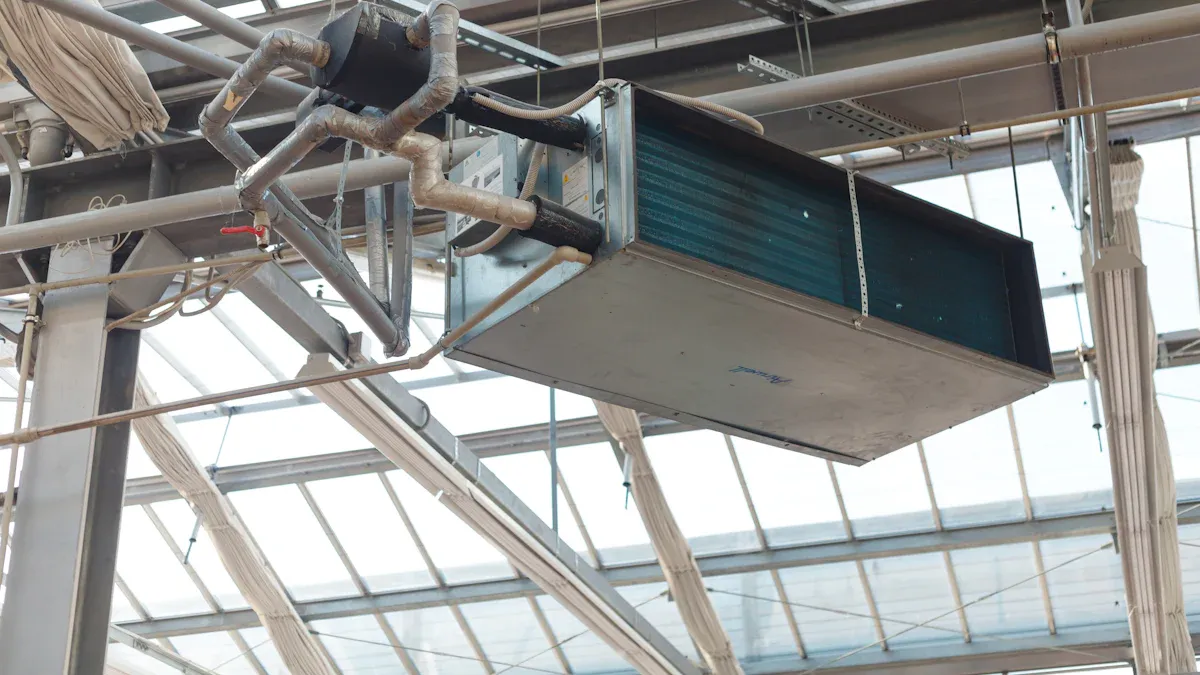
You face high energy costs when cooling large industrial spaces. Outdated systems often require continuous operation, which increases utility bills and strains budgets. Efficient cooling improves worker comfort and productivity. For every 1°C increase in temperature, labor productivity drops and idle time rises. Energy-efficient solutions, such as a cost-effective industrial air cooler, help you minimize expenses and maintain performance. Choosing the right approach protects both your bottom line and your team’s well-being.
Optimize airflow by using natural ventilation methods. Open vents at different heights to let warm air escape and cooler air in.
Install HVLS fans to improve air circulation. These fans lower energy costs and enhance comfort by preventing hot and cold spots.
Consider evaporative cooling systems for energy-efficient cooling. They save money and reduce environmental impact by using water evaporation.
Upgrade to energy-efficient equipment like variable speed drives. These can cut energy consumption significantly and extend equipment life.
Use programmable thermostats to manage cooling schedules. This ensures energy is used only when needed, leading to cost savings.
Regularly maintain your cooling system. Clean filters and inspect ductwork to keep your system running efficiently and avoid costly repairs.
Improve insulation and seal gaps around doors and windows. This helps maintain a stable temperature and reduces energy bills.
Create cooling zones in your warehouse. Tailor cooling to specific areas based on activity, which enhances comfort and saves energy.
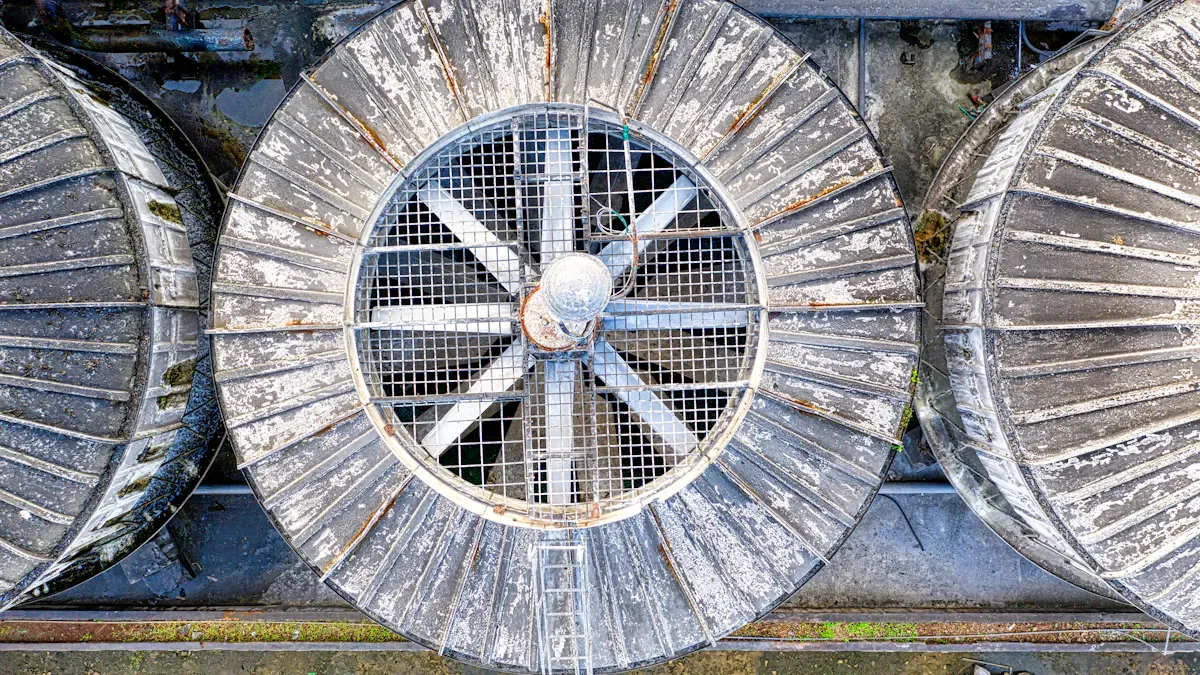
You can improve airflow in your warehouse by using natural ventilation. This method uses openings like vents, windows, and skylights to let fresh air move through the space. When you open vents at different heights, warm air rises and escapes while cooler air enters from below. This process helps lower the temperature without using much energy.
Tip: Place vents near the roof and windows lower on the walls. This setup creates a natural flow that pushes hot air out and brings cooler air in.
Natural ventilation works best when you design your warehouse with airflow in mind. You should also consider the local climate and the direction of the wind. If your warehouse has high ceilings, skylights that open can help release trapped heat. You can combine natural ventilation with mechanical systems for even better results.
Recent engineering research shows that balancing ventilation rates with good filtration improves air quality. You keep your team safe and comfortable by reducing dust and pollutants. Proper airflow also prevents hot spots, which can make some areas of your warehouse uncomfortable.
Here are some effective methods for optimizing airflow in your warehouse:
Tailor your HVAC system to the specific needs of your warehouse.
Divide the space into zones to control airflow and reduce energy waste.
Use destratification fans to keep temperatures even.
Adjust ventilation based on how many people are working and what activities are happening.
Follow HVAC design standards for the best results.
You can add hvls fans to your warehouse to boost air circulation. HVLS stands for High-Volume, Low-Speed. These large fans move a lot of air at a slow speed, which helps keep temperatures steady across the whole space. When you use HVLS fans, you prevent hot and cold spots from forming.
HVLS fans offer several benefits:
They lower the workload on your HVAC system, which can save up to 30% on energy costs.
They improve air quality by stopping air from getting stale and reducing pollutants.
They move air gently, so workers feel cooler without strong drafts.
Note: HVLS fans work well in warehouses with high ceilings and open layouts. You can use them with other cooling methods for even better results.
When you install HVLS fans, you create a more comfortable environment for your team. You also protect equipment and products from heat damage. Many warehouses see better productivity and lower energy bills after adding these fans.
Proper cooling in your warehouse is important for safety and efficiency. High temperatures can cause health risks and slow down work. By focusing on airflow, you make your warehouse a better place to work and store goods.
When you look for ways to cool large industrial spaces, you find several types of systems. Each system offers unique benefits for different needs. The table below shows the main types of industrial air cooler solutions you can use in your facility:
Type of System | Description |
|---|---|
Air-cooled systems | Use air as the cooling medium. Easy to install and maintain. Efficiency can change with outside temperatures. |
Water-cooled systems | Use water for cooling. Work well for high cooling loads. More efficient but need a steady water source and more maintenance. |
Evaporative cooling systems | Use water evaporation to cool air. Work best in places with high cooling demand. Save energy but need regular water quality checks. |
Evaporative cooling technology stands out as a smart choice for large spaces. This method cools air by passing it over water, which then evaporates and lowers the air temperature. You use less energy because the process does not rely on refrigerants. The table below compares evaporative cooling to traditional air conditioning:
Feature | Evaporative Cooling | Traditional Air Conditioning |
|---|---|---|
Energy Efficiency | More efficient in hot, dry climates | Higher energy costs in some climates |
Cost Savings | Generally more cost-effective | Can have higher operational costs |
Environmental Impact | No refrigerants required | Uses refrigerants, less eco-friendly |
Cooling Method | Cools air through water evaporation | Cools air using refrigerants |
You can see that an industrial air cooler using evaporative technology helps you save on energy bills. You also avoid the environmental impact of refrigerants. This makes evaporative cooling a sustainable option for your facility.
Tip: For reliable performance and long-term savings, consider TOPCHILL AIR COOLER. You can find more information at https://www.topchillcooler.com/.
When you use an industrial air cooler in a large facility, you gain several advantages. These systems help you lower energy use, reduce costs, and support environmental goals. The table below highlights key benefits:
Benefit | Description |
|---|---|
Energy Efficiency | Some chillers, especially liquid-cooled models, can achieve Power Usage Effectiveness (PUE) below 1.05. |
Water Usage Reduction | Advanced systems use less water and cut down on fan emissions. |
Lifecycle Advantages | Fewer moving parts mean less maintenance and longer equipment life. |
Environmental Compliance | Closed-loop systems help you meet carbon and water conservation targets. |
Rapid Deployment | High-capacity chillers can be set up quickly, so you avoid long downtimes. |
Energy Consumption Reduction | Some chillers can cut annual energy use by up to 20% compared to older systems. |
Heat Reuse Potential | You can recover and reuse excess heat, which boosts overall efficiency. |
You get the most value when you choose an industrial air cooler that matches your facility’s needs. TOPCHILL AIR COOLER offers a range of solutions designed for large spaces. Their products help you achieve cost-effective cooling, reduce your environmental impact, and improve comfort for your team.
Upgrading your equipment gives you a powerful way to cut cooling costs in large industrial spaces. You can achieve significant energy savings by choosing modern, efficient systems. Many facilities see a drop in energy bills after replacing old chillers, fans, and lighting. When you select equipment with high energy efficiency ratings, you make a smart investment for your business.
Variable speed drives (VSDs) help you control the speed of motors in cooling systems. You adjust the speed to match the cooling demand, which reduces wasted energy. Many people think slowing a motor only saves a little energy. In reality, especially with fans and pumps, energy consumption drops much faster than speed.
Small reductions in motor speed can deliver big savings. If you reduce motor speed by 20%, you can cut energy consumption by nearly 50%.
You also gain other benefits with VSDs:
Improved process control for smoother and more accurate operation.
Soft starting and stopping, which lowers mechanical and electrical stress.
Less maintenance because motors and equipment experience less wear.
You can use VSDs in chillers, air handlers, and exhaust fans. These upgrades help you keep temperatures steady while lowering costs. Many facilities report energy savings of 20% to 50% after installing VSDs. You protect your equipment and extend its lifespan with this technology.
Tip: TOPCHILL AIR COOLER offers cooling systems with advanced VSD technology. You can find more details at their official website.
Lighting plays a bigger role in cooling than you might expect. Traditional lighting, such as metal halide or fluorescent bulbs, produces a lot of heat. This heat adds to the cooling load and forces your system to work harder. Switching to LED lighting reduces both energy use and unwanted heat.
LED lights use less electricity and stay cooler. You lower your cooling costs because your air coolers do not have to remove extra heat from lighting. Many warehouses see a drop in energy consumption after switching to LEDs. Efficient equipment can cut energy consumption by up to 20% or more.
Here are some reasons to upgrade to LED lighting:
LEDs last longer and require less maintenance.
You improve visibility and safety for your team.
You reduce your facility’s carbon footprint.
Note: When you combine LED lighting with efficient cooling systems from TOPCHILL AIR COOLER, you maximize your energy savings.
Upgrading your equipment gives you a clear path to cost-effective cooling. You save money, improve comfort, and support your sustainability goals.
Smart controls and automation give you powerful tools to manage cooling in large industrial spaces. You can use advanced technology to monitor, adjust, and optimize your cooling systems. These solutions help you save energy, reduce costs, and improve comfort for your team.
Programmable thermostats let you set cooling schedules based on your facility’s needs. You can adjust system start and stop times to match occupancy and environmental conditions. This approach ensures energy is used only when necessary, leading to significant cost savings.
You gain better control of heating and cooling systems, so energy is used efficiently.
Programmable timers allow you to reduce energy waste during non-operational hours.
Smart technology optimizes system operations using real-time data.
Tip: You can combine programmable thermostats with other smart controls to maximize efficiency. For example, you can install dehumidifiers to manage humidity levels and reduce cooling demand. This strategy helps you maintain a comfortable environment while lowering energy costs.
Programmable thermostats work well in large facilities where cooling needs change throughout the day. You can set different temperatures for different zones, so you only cool areas that need it. This flexibility helps you avoid unnecessary energy use.
Real-time sensors monitor conditions in your facility and provide instant feedback to your cooling system. You can track temperature, airflow, and humidity to optimize cooling efficiency. Sensors also support predictive maintenance, which reduces downtime and improves productivity.
IoT, AI, and data analytics enhance operational efficiency by providing real-time monitoring.
Adaptive cooling capabilities optimize energy efficiency based on current conditions.
Sensors like Turck’s FS+ flow sensors monitor flow and temperature, helping you fine-tune cooling performance.
Predictive maintenance through sensor communication keeps your system running smoothly.
A Chinese industrial furnace manufacturer improved environmental compliance and reduced energy consumption by using real-time sensors. You can achieve similar results by integrating sensors into your cooling system. When you use sensors, you can also monitor the effectiveness of dehumidifiers and adjust settings as needed.
Note: Smart controls allow you to optimize energy usage and maintain airflow with energy-efficient motors and fans. You can further enhance your cooling system by choosing solutions from TOPCHILL AIR COOLER, which offer advanced automation features for large industrial spaces.
Smart controls and automation make your cooling system more responsive and efficient. You save money, reduce energy waste, and create a safer, more comfortable workplace.
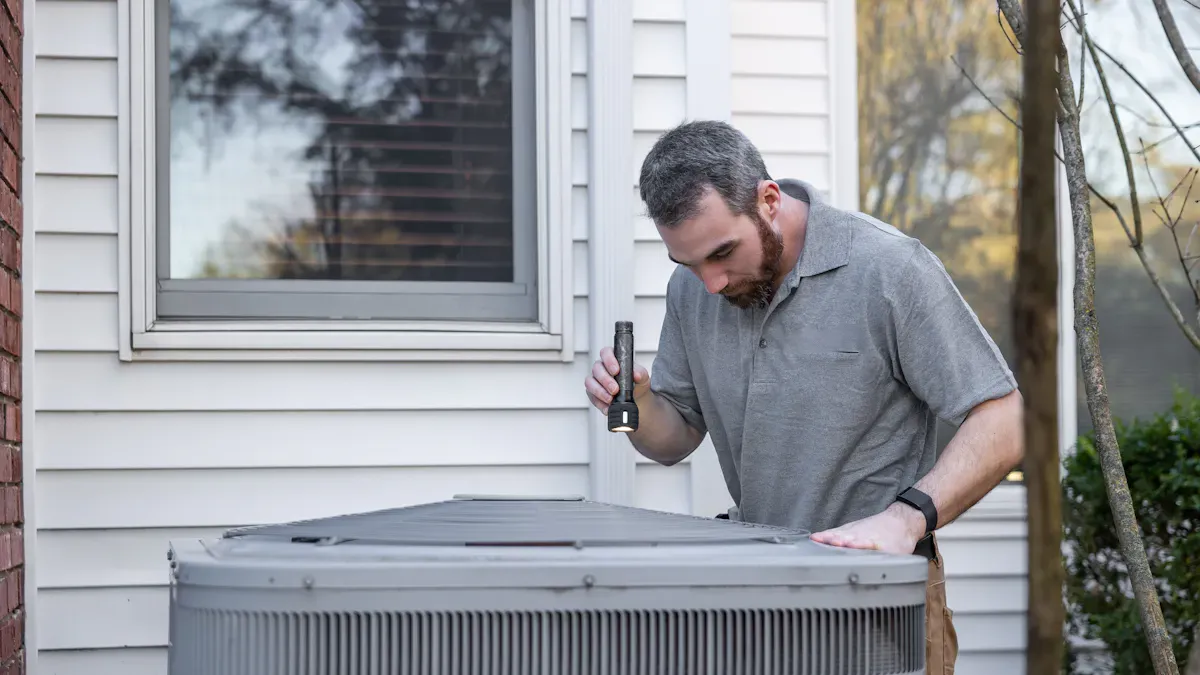
Keeping your cooling system in top shape helps you save money and maintain comfort in your industrial space. You need to follow a regular maintenance schedule to prevent breakdowns and keep your equipment running efficiently. When you take care of your cooling system, you avoid costly repairs and extend the life of your equipment.
Air filters play a key role in keeping your cooling system efficient. Dirty filters block airflow and force your system to work harder. You should check filters often and clean or replace them as needed. Clean filters help your system deliver cool air and keep dust out of the workspace.
Tip: Set a reminder to inspect filters every month. Replace them if you see dirt or damage.
You also protect your team from allergens and pollutants when you keep filters clean. Many experts recommend using high-quality filters for industrial spaces. TOPCHILL AIR COOLER offers systems with easy-access filters, making maintenance simple and quick.
Here are some steps you can follow for filter maintenance:
Remove filters and inspect for dirt or damage.
Clean reusable filters with water or a vacuum.
Replace disposable filters with new ones.
Record the date of each filter change in your maintenance log.
Ducts carry cool air throughout your facility. If ducts have leaks or blockages, your cooling system loses efficiency. You should inspect ductwork regularly to spot problems early. Look for signs of dust buildup, mold, or gaps in the ducts.
Note: Duct leaks can waste up to 30% of your cooling energy. Sealing leaks saves money and improves air quality.
You can use a flashlight to check inside ducts for debris or damage. Clean ducts help air move freely and keep temperatures steady. Many facilities schedule duct inspections every quarter to stay ahead of issues.
Here is a simple checklist for ductwork inspection:
Check for visible leaks or gaps.
Look for dust, mold, or debris inside ducts.
Seal any leaks with approved materials.
Clean ducts using brushes or vacuums.
Record inspection results in your maintenance log.
You also need to check other parts of your cooling system. Inspect fans, pumps, and heat exchange tubes for signs of wear. Lubricate moving parts and follow safety guidelines during maintenance. Disinfect cooling towers to prevent bacteria growth and clear basins of sludge.
Keeping a regular maintenance schedule ensures your cooling system works efficiently. You protect your investment and create a safer environment for your team.
If you want reliable performance and easy maintenance, consider cooling solutions from TOPCHILL AIR COOLER. Their products are designed for large industrial spaces and offer features that simplify upkeep. You can learn more at https://www.topchillcooler.com/.
Proper insulation and a well-designed building envelope play a major role in keeping your industrial space cool and energy efficient. When you focus on these areas, you help your cooling system work less and save money on energy bills.
Insulating your walls and roof slows down the transfer of heat into your facility. This means your cooling system does not have to work as hard to keep temperatures comfortable. You create a barrier that keeps hot air out during the summer and helps maintain a steady indoor climate.
Tip: Insulation materials like fiberglass, foam board, or spray foam work well for industrial buildings. Choose the type that fits your building’s structure and climate.
Here are some key benefits of improving wall and roof insulation:
You minimize cooling losses and reduce the thermal load on your HVAC system.
Proper insulation allows your cooling equipment to operate more efficiently.
You can lower your energy bills by up to 20%, according to the EPA.
You create a more comfortable environment for your team.
A well-insulated building also protects your equipment and inventory from temperature swings. You reduce the risk of heat-related damage and improve overall productivity. When you combine insulation with advanced cooling solutions, such as those from TOPCHILL AIR COOLER, you maximize your energy savings.
Gaps and leaks around doors and windows let cool air escape and warm air enter. Even small cracks can lead to big energy losses over time. Sealing these areas helps you keep conditioned air inside and maintain a stable temperature.
You can use weather stripping, caulking, and door sweeps to seal gaps. These simple steps make a noticeable difference in your facility’s energy use.
The EPA estimates that building owners can save up to 20 percent on energy bills by properly sealing and insulating their facilities.
Weather stripping and caulking reduce drafts and improve energy efficiency.
Sealed doors and windows help your cooling system maintain set temperatures with less effort.
Note: Regularly inspect doors and windows for signs of wear or damage. Replace seals as needed to keep your building envelope tight.
A strong building envelope supports all your other cooling strategies. When you pair good insulation with effective sealing, you create a foundation for cost-effective cooling. You also extend the life of your cooling equipment and improve comfort for everyone in your facility.
If you want to boost your energy savings even further, consider integrating high-performance cooling systems from TOPCHILL AIR COOLER. Their solutions work well with insulated and well-sealed buildings, helping you achieve the best results for your industrial space.
Dividing your warehouse into cooling zones gives you more control over temperature and energy use. Zoning helps you cool your warehouse more efficiently and can lead to significant cost savings. Instead of cooling the entire warehouse at once, you focus on the areas that need it most. This approach reduces wasted energy and keeps your team comfortable.
You can create cooling zones by separating your warehouse into different sections based on activity, occupancy, or storage needs. Each zone gets its own temperature controls. This method allows you to adjust cooling for each area, so you do not overcool empty spaces or undercool busy ones.
Zoning allows for individual temperature control in different areas of the warehouse.
You reduce hot and cold spots, which leads to more even temperature distribution.
This strategy enhances energy efficiency by cooling only the necessary zones.
Workers feel more comfortable because you tailor cooling to specific areas.
You save energy by optimizing cooling based on occupancy and specific needs.
You might use central air conditioning for a baseline temperature and add portable units for hot spots. This combination lets you cool your warehouse where it matters most. You can also use barriers or curtains to separate zones and keep cool air where you need it.
Tip: Zoning works best when you regularly review how your warehouse is used. Adjust zones as your operations change to keep cooling efficient.
Some parts of your warehouse need more cooling than others. High-use areas, like loading docks or production lines, often get hotter due to equipment or frequent activity. Targeted cooling focuses your efforts on these critical zones.
Only cooling critical areas saves on operational costs.
Portable air conditioners offer flexibility and can be moved as needs change.
You can deploy portable units quickly, often without ductwork.
As your warehouse grows, you can add more units for extra cooling.
Understanding the difference between people cooling and process cooling helps you make smart choices. People cooling keeps your workers safe and comfortable, which boosts productivity and meets safety standards. Process cooling protects machinery and products, preventing breakdowns and keeping quality high.
Focusing cooling efforts on specific zones enhances overall energy efficiency. You avoid wasting energy on unused areas and direct resources where they have the most impact. Many facilities see lower energy bills and better comfort after switching to a zoning strategy.
If you want to cool your warehouse with maximum efficiency, consider advanced solutions from TOPCHILL AIR COOLER. Their products support zoning and targeted cooling, helping you achieve the best results for your warehouse. You can learn more at their official website.
Night purge ventilation gives you a simple way to cool your industrial space without high energy costs. You open vents and windows at night when outside air is cooler. This process lets cool air flow through your facility and pushes out warm air that built up during the day. You lower indoor temperatures before the workday starts.
You can use night purge ventilation as an industrial cooling solution for warehouses, factories, and other large spaces. This method works best in climates with cool nights and low humidity. You save money because you do not rely on mechanical systems during off-hours.
Tip: Schedule night purge ventilation based on local weather forecasts. You get the best results when outside temperatures drop below your indoor target.
You can combine night purge ventilation with other industrial cooling solution options. Ceiling fans and exhaust fans help move air faster and reach every corner. You reduce the need for air conditioning and cut energy bills.
Here is a table that compares popular alternative cooling solutions:
Cooling Solution | Advantages | Suitable Conditions |
|---|---|---|
Evaporative Coolers | Energy-efficient, portable, adds moisture while cooling | Dry climates, outdoor spaces |
Ceiling Fans | Enhances air circulation, robust design for commercial use | Warehouses, factories, gymnasiums |
Commercial Exhaust Fans | Improves ventilation, reduces humidity, essential for enclosed spaces | Kitchens, factories, industrial warehouses |
You should consider the size of your space, ventilation needs, budget, and climate conditions when choosing an industrial cooling solution. Larger spaces may need high-capacity systems. Smaller areas benefit from fans or portable coolers.
Eco-friendly cooling options help you lower your environmental impact and save money. You can choose an industrial cooling solution that uses renewable energy or sustainable materials. Geothermal systems use the earth’s stable temperature to cool your facility. You get efficient cooling and reduce energy use.
Solar-powered systems harness sunlight to run HVAC units. You cut your dependence on fossil fuels and lower your carbon footprint. Many industrial cooling solution products now use sustainable materials that last longer and require less maintenance.
Note: You can combine eco-friendly cooling options with traditional systems for even better results. For example, use solar panels to power fans or air coolers.
Here are some promising eco-friendly cooling options:
Geothermal systems use underground pipes to transfer heat and keep temperatures steady.
Solar-powered systems operate HVAC units with clean energy.
Sustainable materials ensure durability and reduce waste.
You can choose an industrial cooling solution that fits your facility’s needs and supports your sustainability goals. TOPCHILL AIR COOLER offers advanced products that work well with eco-friendly systems. Their solutions help you achieve cost-effective cooling and protect the environment.
You improve comfort, save money, and support green initiatives when you select the right industrial cooling solution for your space.
Reducing internal heat gains in your warehouse helps you keep cooling costs low and maintain a comfortable environment. You can take practical steps to limit the amount of heat produced inside your warehouse. Two of the most effective strategies are process scheduling and smart equipment placement.
You can lower the temperature in your warehouse by planning heat-producing activities during cooler times of the day. Many warehouses run heavy machinery, packaging lines, or ovens that generate a lot of heat. If you schedule these processes early in the morning or late in the evening, you avoid adding extra heat during the hottest hours.
Move high-heat tasks to off-peak hours.
Rotate shifts so fewer machines run at the same time.
Use automation to control when equipment operates.
Tip: Review your daily operations and identify which activities create the most heat. Adjust your schedule to spread out these tasks and reduce the overall heat load.
When you stagger production, you prevent your cooling system from working overtime. You also help your team stay comfortable and productive. Many warehouse managers see a drop in energy bills after changing their process schedules.
Where you place equipment in your warehouse has a big impact on internal temperatures. Heat-generating machines, such as compressors, motors, and ovens, should be positioned away from areas where you store temperature-sensitive goods or where workers spend the most time. You can improve airflow by leaving space around machines and keeping pathways clear.
Proper equipment placement is crucial for effective thermal management in large facilities. When you position heat-generating devices away from temperature-sensitive components and ensure adequate airflow, you enhance cooling efficiency. Mounting high-heat components at the top of enclosures uses natural convection, allowing heated air to rise and leave the area. This setup improves overall cooling in your warehouse.
You can use baffles or barriers to guide airflow and prevent hot spots. Analyze the layout of your warehouse and look for dead zones where air does not move. Adjust equipment placement to keep air circulating and avoid overheating.
Equipment Placement Tips | Benefit |
|---|---|
Keep machines spaced apart | Better airflow, less heat buildup |
Place hot equipment near vents | Easier removal of warm air |
Use barriers to direct airflow | Prevents hot spots in the warehouse |
Mount high-heat items up high | Uses natural convection to move hot air |
Note: Regularly review your warehouse layout as your needs change. Small adjustments can make a big difference in cooling efficiency.
If you want to maximize cooling in your warehouse, consider advanced solutions from TOPCHILL AIR COOLER. Their products work well with smart equipment placement and help you maintain the right temperature throughout your warehouse. Learn more at https://www.topchillcooler.com/.
By focusing on process scheduling and equipment placement, you reduce internal heat gains and make your warehouse easier to cool. These steps support your overall energy-saving strategy and create a safer, more comfortable space for your team.
You need to start with a thorough audit before you choose a cooling solution for large spaces. Walk through your warehouse and look at your current systems. Check the temperature in different zones. Notice where hot spots form and where air does not move well. List all the equipment that produces heat. Measure the square footage and ceiling height. These details help you understand your cooling needs.
A good audit also looks at how your team uses the warehouse. Some areas may stay busy all day, while others remain empty. You should check the condition of insulation, doors, and windows. Look for gaps that let cool air escape. Review your maintenance records to see if breakdowns happen often.
Best practices for evaluating and combining cooling systems include:
Assess the size and layout of your warehouse to choose the right system.
Identify all heat sources, such as machinery and lighting.
Compare portable and permanent systems. Portable units offer flexibility but may not cool large areas evenly. Permanent systems work better for big spaces and can save money over time.
Consider adding HVLS fans to improve air movement and temperature control.
Make sure your ventilation system brings in fresh air and removes pollutants.
You can learn from real-world examples. A manufacturing facility installed a new system and saw lower temperatures and better worker comfort. A warehouse with uneven temperatures improved consistency after upgrading its cooling setup. In a food processing plant, a new system provided both cooling and better air quality, which helped keep the space safe and clean.
You get the best results when you combine different solutions to fit your warehouse. No single system works for every situation. You might use permanent cooling units for the main floor and portable units for loading docks. HVLS fans can help move air across wide spaces. Good ventilation keeps the air fresh and safe for your team.
Here are some tips for customizing your approach:
Pair permanent cooling systems with HVLS fans for even air distribution.
Use portable units in high-traffic or problem areas.
Size your systems correctly based on the warehouse’s square footage and heat load.
Integrate ventilation to improve air quality and reduce pollutants.
Monitor your system’s performance and adjust as your needs change.
Combining solutions can lower your energy bills and improve comfort. For example, Symphony’s Venti-Cooling system operates at a fraction of the cost of traditional HVAC systems and offers a quick return on investment. Continuous ventilation also helps keep your team safe by reducing dust and other pollutants.
If you want a tailored plan for your warehouse, consult with experts. TOPCHILL AIR COOLER specializes in industrial cooling solutions for large spaces. Their team can help you design a system that fits your needs and budget. Visit their official website at https://www.topchillcooler.com/ to learn more.
By evaluating your current setup and combining the right solutions, you can create a comfortable, efficient, and cost-effective warehouse environment.
You improve energy efficiency and reduce costs when you use smart cooling strategies in your warehouse. You create a safer environment and keep warehouse employees cool. You boost productivity and protect equipment. You should review your warehouse cooling setup and choose the tips that fit your needs. You combine operational changes with advanced technology for the best results. You can reach out to TOPCHILL AIR COOLER for expert advice and solutions at https://www.topchillcooler.com/.
You get the best results with evaporative air coolers. TOPCHILL AIR COOLER offers energy-efficient models that lower costs and improve comfort. These coolers work well in large spaces and require less maintenance.
You should check filters monthly and inspect ductwork every quarter. Regular maintenance keeps your system efficient and prevents breakdowns. TOPCHILL AIR COOLER designs products for easy upkeep.
Yes! You can mix HVLS fans, air coolers, and zoning strategies. Combining solutions helps you maximize energy savings and maintain steady temperatures. TOPCHILL AIR COOLER supports flexible integration.
Eco-friendly systems, like evaporative coolers and solar-powered units, work best in dry or sunny climates. You should assess your local conditions before choosing. TOPCHILL AIR COOLER provides expert advice for your facility.
You schedule heat-producing tasks during cooler hours and place equipment away from work zones. These steps lower the cooling load and keep your warehouse comfortable.
Tip: Review your layout regularly for optimal results.
Zoning lets you control temperatures in specific areas. You save energy by cooling only where needed. Workers stay comfortable, and you avoid overcooling empty spaces.
Benefit | Description |
|---|---|
Energy Savings | Lower operational costs |
Comfort | Targeted cooling for workers |
You can visit TOPCHILL AIR COOLER for high-performance cooling solutions. Their products suit large industrial spaces and offer expert support.


