Views: 0 Author: Site Editor Publish Time: 2026-07-19 Origin: Site


Inefficient heat exchange carries compounding financial and operational costs for industrial and commercial facilities. Baseline equipment specifications rarely guarantee real-world performance once a system goes live. Unexpected shutdowns for emergency maintenance disrupt critical production schedules and devastate facility profitability. Facilities often operate under the assumption that installed equipment will maintain its day-one performance rating indefinitely, ignoring the dynamic nature of thermal systems.
Minor deviations in operating conditions drastically reduce thermal transfer rates. Inadequate airflow, improper fluid dynamics, unstable feed stream characteristics, or unmanaged frost accumulation increase energy consumption and accelerate equipment wear. These variables create a cascading effect, forcing compressors and pumps to work harder to achieve the same cooling or heating output. Auditing and controlling specific operating parameters is necessary to maintain an energy efficient evaporator. Evaluating system conditions, mitigating operational risks, and optimizing output form the foundation of reliable thermal management.
Airflow and Velocity are Foundational: Adequate and uniform air distribution across the coil surface is non-negotiable for maintaining the rated capacity of any high capacity air cooler.
Frost Management Dictates Uptime: In sub-zero applications, precise control over entering air dew points and optimized defrost cycles prevents insulating frost layers that cripple thermal efficiency.
Steady-State Flow is Crucial: Even minor fluctuations in fluid dynamics or stream composition can destabilize an evaporator system, triggering fouling and severe drop-offs in heat transfer efficiency.
Material Integrity Sustains Performance: Operating in aggressive environments requires specific metallurgy; utilizing a corrosion resistant air cooler prevents surface degradation that otherwise impedes heat transfer.
Systemic Balance Over Isolated Fixes: Improving efficiency requires balancing temperature differentials, refrigerant flow rates, steam economy, and predictive maintenance protocols rather than over-indexing on a single metric.
Efficiency in heat exchange revolves around maximizing the overall heat transfer coefficient, commonly known as the U-value. This metric represents how effectively heat moves from the source to the sink across the tube and fin surfaces. Minimizing approach temperatures ensures the system operates as close to theoretical thermodynamic limits as possible. Optimizing compressor power directly influences the energy footprint of the entire refrigeration cycle. Standard industry metrics benchmark this performance across different applications.
Facilities track kW/ton to measure electrical input against cooling output. The Coefficient of Performance (COP) provides a direct ratio of useful heating or cooling provided to the work required. In process applications, evaporation rates and the steam economy ratio dictate operational viability. The steam economy ratio measures the pounds of water evaporated per pound of steam used. A higher ratio indicates better energy utilization. Field technicians must measure these metrics regularly to establish a baseline for normal operation.
Performance Metric | Optimal Range / Target | Indicators of Sub-Optimal Performance |
|---|---|---|
Approach Temperature | Low (close to design spec) | High approach temp indicates fouling or poor airflow. |
kW/ton | Low (efficient power use) | Spiking kW/ton suggests compressor overwork or coil blockage. |
Steam Economy Ratio | High (efficient steam use) | Low ratio indicates heat loss, poor vapor recompression, or scaling. |
Overall Heat Transfer (U-value) | High (rapid heat exchange) | Dropping U-value points to insulating layers like frost or oil carryover. |
Degraded performance directly inflates operational expenditures. Increased power draw from overworked compressors and fans drives up utility bills month over month. Extended processing times reduce overall facility throughput, limiting production capacity. In temperature-sensitive environments, poor heat exchange leads to unacceptable product loss and quality degradation. A walk-in freezer failing to maintain temperature can ruin thousands of dollars of inventory in hours.
Operational instability carries hidden costs that often exceed direct energy penalties. Frequent unscheduled shutdowns for manual descaling, cleaning, or coil repairs destroy production schedules. Every hour spent addressing a fouled Evaporator represents lost revenue and wasted labor hours. Maintenance teams forced into reactive repair modes cannot execute planned preventative maintenance, leading to further system degradation across the facility.
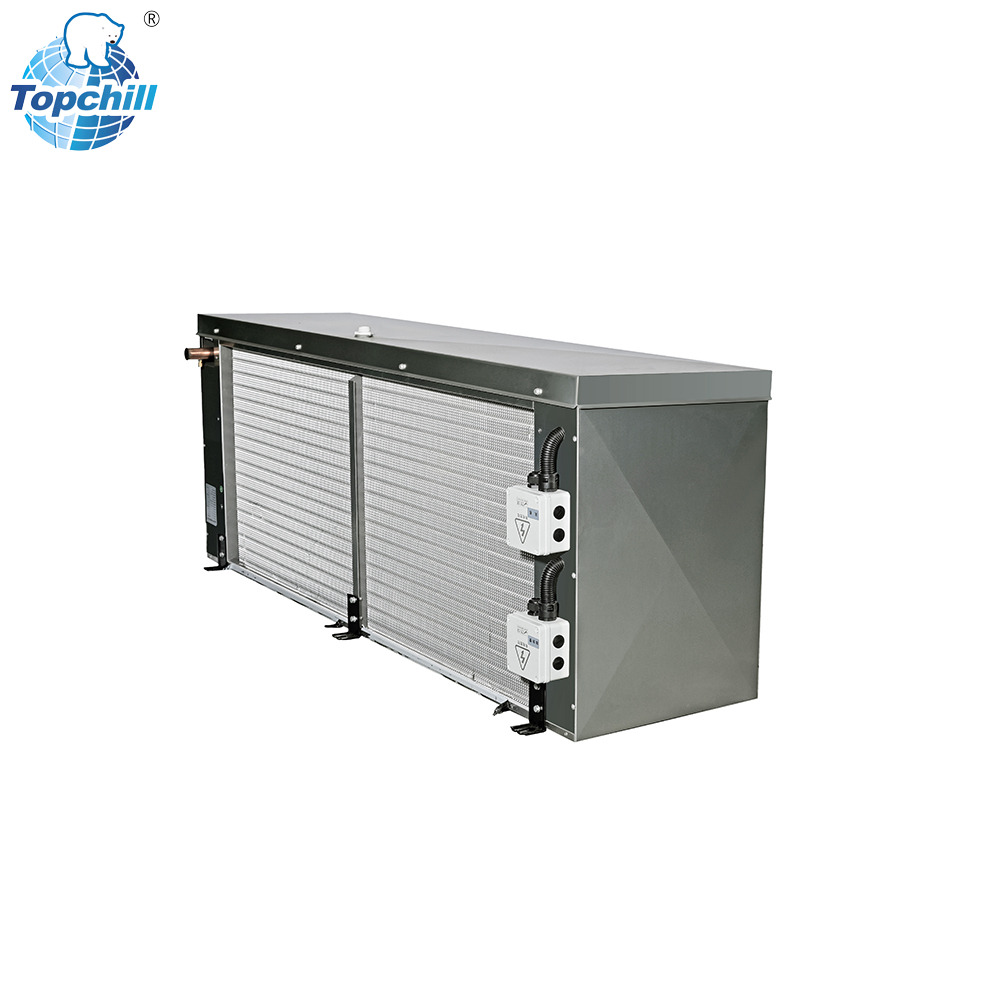
Air distribution across the coil dictates thermal transfer success. Face velocity impacts the convective heat transfer coefficient directly. Proper velocity breaks down the boundary layer resistance on the fin surface, allowing heat to transfer rapidly from the air to the refrigerant. If air moves too slowly, heat transfer stagnates, and the coil may freeze. If it moves too quickly, pressure drops increase unnecessarily, wasting fan energy and potentially blowing moisture off the coil into the conditioned space.
Operating a high capacity air cooler requires precise fan staging and static pressure management. Duct configuration must direct air uniformly across the entire coil face. Avoiding coil air bypass ensures all moving air actively participates in the heat exchange process. Baffles and blank-off plates must be installed correctly to force air through the fin pack rather than around it.
Measure face velocity at multiple points across the coil to identify dead spots.
Inspect fan blades and shrouds for damage or improper clearances that reduce airflow.
Verify that return air paths are clear of obstructions like stacked pallets or equipment.
Adjust fan speeds using variable frequency drives (VFDs) to match the actual load requirements.
The balance between the evaporating temperature and the entering medium temperature defines the Delta-T. A wider Delta-T increases capacity but forces the compressor to operate at lower suction pressures, reducing overall efficiency. A narrower Delta-T improves compressor efficiency and maintains higher room humidity, which prevents product dehydration in food storage applications. Finding the correct balance is necessary for optimal system performance.
Proper superheat settings keep the system stable. Expansion valve operations must meter refrigerant precisely into the coil. This prevents liquid slugging, which damages compressors mechanically. Accurate metering also maximizes the active surface area of the coil. If the valve underfeeds, a portion of the coil remains starved of liquid refrigerant, wasting heat transfer surface. If it overfeeds, liquid reaches the suction line, risking compressor failure.
Frost formation follows strict thermodynamic principles. Frost accumulates rapidly on the surfaces of a cold storage heat exchanger operating below freezing. This occurs when the entering air dew point temperature exceeds the coil surface temperature. Moisture in the air condenses and freezes on the fins. Frost acts as a powerful insulator, blocking heat transfer from the air to the refrigerant. It also restricts air passages, compounding the efficiency loss by reducing airflow.
Managing latent heat loads requires operational discipline. Executing demand-defrost controls initiates melting only when necessary, saving energy compared to rigid time-based defrost cycles. Mitigating frost-induced airflow restriction prevents the coil from becoming completely isolated from the refrigerated space. Defrost termination sensors must be placed in the coldest part of the coil to ensure all ice clears before the refrigeration cycle restarts.
Process chemistry and wastewater systems rely on steady fluid dynamics. Minor changes in feed rate, viscosity, and solute concentration alter the boiling point elevation. As concentration increases, the boiling point rises, requiring higher temperatures to maintain evaporation. Foaming disrupts vapor separation, causing liquid carryover into the vapor stream. These variables directly impact convective heat transfer within the tubes.
Compressor oil carryover acts as an insulating barrier on internal tube surfaces in refrigeration systems. Organic contaminants create similar fouling issues in process evaporators, degrading overall heat transfer. Maintaining optimal flow regimes is mandatory. Turbulent flow enhances mixing and heat transfer compared to laminar flow. Proper velocity prevents localized boiling dry, scaling, and severe tube fouling.
Operating pressures and vapor velocities influence steam economy in multi-effect setups. Lowering the pressure in successive effects allows boiling at lower temperatures, reusing latent heat from the previous effect. This cascading pressure setup maximizes the evaporation achieved from a single pound of motive steam. Proper venting of non-condensable gases is required to maintain these pressure differentials and prevent vapor binding.
Integrating Mechanical Vapor Recompression (MVR) and Thermal Vapor Recompression (TVR) systems drastically improves energy reuse. MVR uses a mechanical compressor to increase vapor pressure and temperature, allowing it to be reused as the heating medium. TVR utilizes high-pressure motive steam through a thermocompressor to entrain and compress low-pressure vapor. Maintaining precise suction and discharge pressure differentials optimizes this energy recovery, reducing reliance on fresh boiler steam.
Physical design elements interact directly with operating conditions. Tube diameter, fin spacing, and internal micro-grooving alter fluid and air behavior. Micro-grooving increases internal surface area and promotes turbulent refrigerant flow, enhancing heat transfer. Tighter fin spacing provides more external surface area but increases susceptibility to frost blockage and fouling.
Physical surface area has thermodynamic limitations. Simply increasing coil size yields diminishing returns if airflow distribution remains poor. If fluid velocities drop or steam quality degrades, the extra surface area provides no practical benefit. System design must match the intended operating environment. A coil designed for clean air will fail rapidly in a dusty industrial setting, regardless of its theoretical surface area.
Aggressive environments destroy standard equipment. High salinity, acidic off-gassing, or caustic cleaning protocols require specific metallurgy. Specifying a corrosion resistant air cooler prevents rapid surface degradation. Standard copper and aluminum offer excellent thermal conductivity but fail quickly in harsh conditions, leading to refrigerant leaks and system failure.
Material / Coating | Thermal Conductivity | Corrosion Resistance | Best Application Environment |
|---|---|---|---|
Standard Copper/Aluminum | Excellent | Low | Clean commercial refrigeration, standard HVAC. |
Epoxy Coated Fins | Good (slight penalty) | Moderate to High | Coastal areas, mild industrial off-gassing. |
Stainless Steel Tubes/Fins | Moderate | Very High | Food processing, caustic washdowns, heavy industrial. |
Titanium | Low to Moderate | Extreme | Highly acidic environments, specialized chemical processing. |
Lowering suction temperatures increases the temperature differential, boosting immediate cooling capacity. This conceptual trade-off carries a heavy penalty. Lower suction pressures force the compressor to work significantly harder, increasing the compression ratio. This reduces compressor efficiency and spikes overall system energy use. Operators must find the sweet spot where capacity meets demand without causing excessive electrical consumption. Chasing maximum capacity often ruins system-wide efficiency.
Investing in advanced controls yields substantial returns. Electronic expansion valves (EEVs) and Variable Frequency Drives (VFDs) on fans and pumps optimize performance dynamically based on real-time load conditions. Premium metallurgy prevents premature failure. These upgrades require higher initial capital expenditure compared to standard off-the-shelf units.
The lifecycle cost implications strongly favor the investment. Steam economy improvements and reduced maintenance intervals in industrial process applications quickly offset the initial purchase price. Long-term economy relies on durable, controllable equipment. A cheaper coil that requires replacement every three years costs far more than a premium coil that lasts fifteen years.
Altering operating conditions on legacy equipment introduces significant risks. Increasing fan speeds may cause structural vibration or exceed motor amp ratings. Changing refrigerants alters mass flow rates and operating pressures, potentially requiring new expansion valves and piping modifications. Altering feed concentrations can trigger unexpected scaling in process evaporators.
Pushing older systems beyond their original design limits risks liquid carryover or catastrophic pressure failures. Facilities must conduct a thorough system audit before implementing operational changes. This framework ensures the existing infrastructure can handle the proposed optimization strategies. Verify piping sizes, structural supports, and electrical capacities before modifying operating parameters.
Evidence-based maintenance schedules sustain optimal operating conditions. Relying on reactive maintenance guarantees unexpected shutdowns. Tracking system drift identifies problems early before they cause catastrophic failure. Technicians must monitor approach temperature trends and track pressure drops across the coil. An increasing pressure drop indicates fouling or frost buildup.
Log suction pressures and superheat values weekly to detect expansion valve drift.
Inspect coil surfaces monthly for localized fouling or uneven frost patterns that indicate airflow issues.
Perform regular chemical cleaning to remove scale and biological growth from tube surfaces.
Calibrate temperature and pressure sensors bi-annually to ensure control systems receive accurate data.
Analyze compressor oil samples to detect internal wear and maintain absolute fluid purity.
Initiate a baseline performance audit focusing on current flow rates, Delta-T, and energy consumption metrics.
Consult with thermal engineering specialists to identify hidden inefficiencies in ducting, piping, or control logic.
Upgrade maintenance standard operating procedures to focus on predictive metrics like pressure drops and approach temperatures rather than reactive repairs.
Install electronic expansion valves and variable frequency drives to gain dynamic control over refrigerant flow and air velocity.
A: The ideal Delta-T depends on the application. For commercial refrigeration, a Delta-T of 10°F to 15°F balances cooling capacity with compressor efficiency. A narrower Delta-T maintains higher humidity, preventing product dehydration, while a wider Delta-T increases moisture removal but forces the compressor to work harder.
A: Airflow dictates the convective heat transfer rate. Adequate, uniform face velocity breaks down the thermal boundary layer on the fins. Insufficient airflow reduces capacity and causes freezing, while excessive airflow increases pressure drops and fan energy consumption without proportional capacity gains.
A: Frost forms when the coil surface temperature is below freezing and the entering air dew point exceeds the coil temperature. Frost acts as an insulator, severely reducing heat transfer. It also blocks air passages, restricting airflow and forcing the system to consume more energy to maintain temperatures.
A: Key indicators include increased compressor run times, higher energy bills, and an inability to maintain setpoint temperatures. Physical signs include uneven frost patterns, excessive ice buildup, unusual pressure drops across the coil, and frequent high-temperature alarms.
A: In process applications, flow rate fluctuations alter fluid velocity and boiling dynamics inside the tubes. Low flow rates cause localized boiling dry and rapid scaling. High flow rates can cause liquid carryover into the vapor stream, reducing steam economy and contaminating downstream processes.
A: Upgrades are necessary when operating in aggressive environments like coastal areas with high salinity, chemical processing plants with acidic off-gassing, or food facilities requiring harsh caustic washdowns. Standard coils degrade quickly in these conditions, leading to leaks and severe capacity loss.