Views: 0 Author: Site Editor Publish Time: 2026-06-30 Origin: Site


Inefficient thermal rejection stands as the primary bottleneck in commercial and industrial refrigeration. Mismatched condenser configurations severely restrict system performance. Selecting the wrong airflow design directly triggers operational failures. Side-discharge and top-discharge units handle heat differently. Incorrect choices lead to short-cycling. They cause excessive energy consumption. They accelerate premature compressor wear. Commercial cooling ecosystems rely on diverse equipment. The broader family of commercial air-cooled condensers includes FNH, FNV, FNF, FNU, FNVB, and TP series. Selecting between the dominant FNH and FNV platforms remains essential for system optimization. Each design serves specific spatial and thermal demands. Engineers must evaluate these platforms objectively. You must analyze spatial constraints and capacity requirements. You must consider customizable coil configurations and lifecycle reliability.
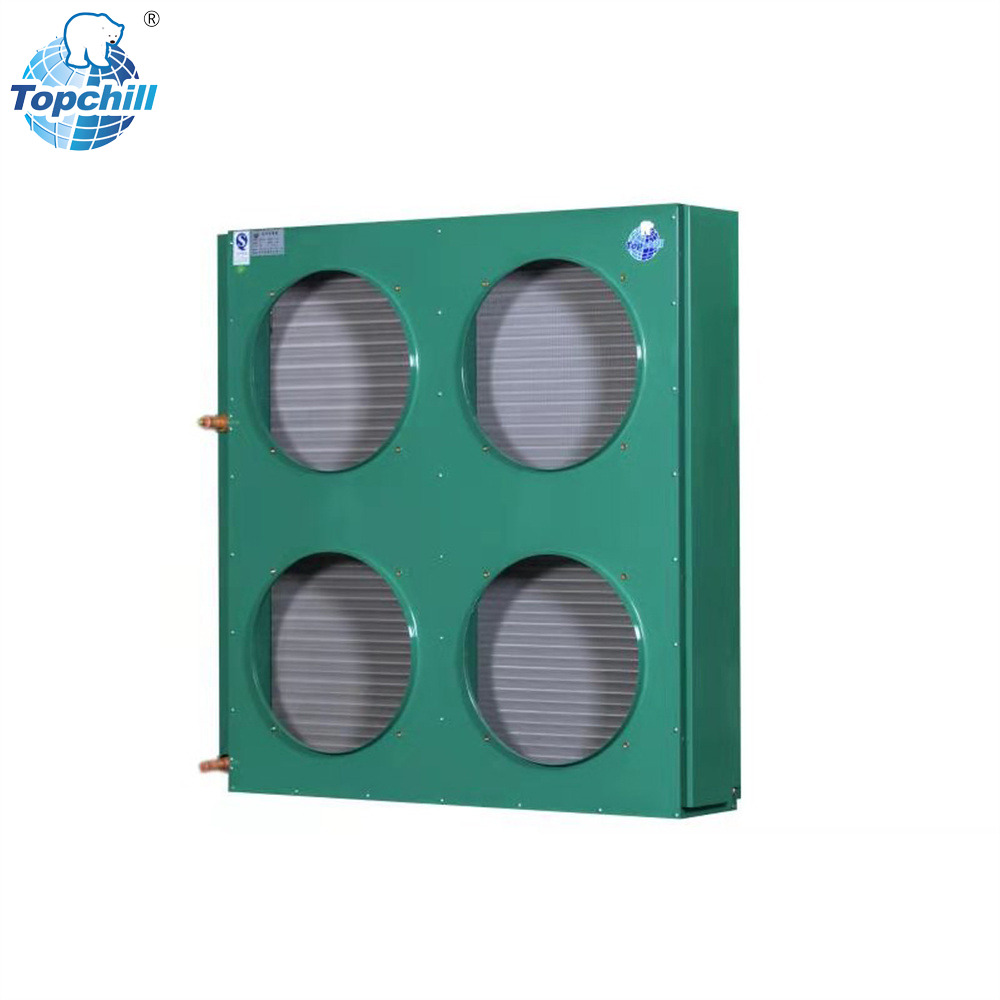
Defining success criteria for an air cooled heat exchanger requires balancing multiple factors. You must match required heat rejection capacity with site-specific constraints. Spatial limitations dictate physical dimensions. Environmental factors influence airflow efficiency. Compressor-side requirements determine operational staging. Proper refrigeration condenser selection prevents system failures. Field engineers know that a condenser is only as good as its airflow. Blocked intake or restricted exhaust ruins efficiency. You must evaluate the physical site before looking at capacity charts. Look at the prevailing winds. Check the distance to adjacent walls. Measure the available height.
Refrigeration systems reject heat absorbed from the cold room plus the heat of compression. The condenser must handle this total heat of rejection (THR). If the condenser cannot reject this heat, head pressure rises. High head pressure forces the compressor to work harder. This draws more amperage. It increases discharge temperatures. Eventually, the compressor oil breaks down. Mechanical failure follows shortly after. Choosing the right condenser geometry prevents this chain reaction.
The FNH Air-Cooled Condenser features a distinct structural design. It utilizes a horizontal coil orientation. Axial fans blow air horizontally through the fins. This side-discharge dynamic suits specific architectural layouts. The horizontal throw requires clear forward space. It prevents exhaust air from bouncing back into the intake. You must maintain at least one fan diameter of clearance on the intake side. The exhaust side needs even more room. If the hot air hits a wall and recirculates, capacity drops immediately.
Engineers specify this model for small-to-medium commercial refrigeration. It integrates well with indoor parallel compressor units. Facilities with ample horizontal clearance benefit from this design. It works perfectly under strict vertical height limits. Ground-level installations often utilize this profile to avoid blocking sightlines. Wall-adjacent mounting remains a common use case. Supermarkets often place these units on lower roofs. Convenience stores mount them on reinforced wall brackets.
Operational baselines for the FNH condenser include standard capacity ranges. Manufacturers offer multi-circuit configuration capabilities. This allows one condenser to serve multiple independent compressors. The units maintain compatibility with common synthetic and natural refrigerants. Coil circuitry adapts to specific pressure drop requirements. You can specify different fin spacings. A 2.1mm spacing works for clean environments. A 3.2mm spacing prevents rapid fouling in dusty areas.
The FNV condenser utilizes a V-shaped geometry. It features dual coils angled to maximize surface area. Top-mounted fans draw air through both sides simultaneously. They discharge the heated air vertically. This top-discharge dynamic creates a powerful thermal plume. It leverages natural heat convection to improve efficiency. Hot air naturally wants to rise. The vertical fans assist this natural movement. This prevents the hot air from lingering around the equipment yard.
This design serves heavy-duty industrial refrigeration. Remote rooftop cold room systems rely on this architecture. High-density installations require this vertical discharge. Footprint availability often dictates this choice. The V-shape packs massive heat transfer surface into a minimal ground area. It solves severe space constraints in urban industrial zones. Large refrigerated warehouses use banks of these units. Food processing plants rely on them for massive blast freezing loads.
The operational baseline focuses on maximized surface area. It delivers high-capacity thermal rejection. The vertical draft assists natural heat convection. This prevents hot air recirculation in crowded equipment yards. The V-bank configuration supports massive airflow volumes. It handles extreme peak summer loads effectively. You can pack multiple V-type units close together. As long as they have overhead clearance, they perform well.
Understanding the complete ecosystem helps narrow down choices. The FNH and FNV represent the core platforms. Other variants serve niche requirements. You will encounter these in specific field situations.
Comparing features to operational outcomes requires strict evaluation. We apply standard thermodynamic and aerodynamic principles. Each design dimension impacts field performance differently. You cannot simply look at a capacity chart. You must understand how the unit behaves in the real world.
Horizontal throw creates specific aerodynamic challenges. Side-discharge units face susceptibility to crosswind interference. Strong opposing winds stall fan blades. This reduces effective airflow across the coil. Risk of hot air recirculation increases near opposing walls. You must maintain strict clearance requirements. Unimpeded intake and exhaust zones remain mandatory. If you install an FNH unit facing the prevailing wind, head pressure will spike on windy days. The wind fights the fans. The fans lose.
Vertical plumes operate differently. The V-type design benefits from natural convective assistance. Hot air rises naturally. Top-discharge fans push this air upward. This provides superior resistance to horizontal crosswinds. It ensures absolute minimization of thermal short-circuiting. Multi-unit layouts rely on vertical discharge to prevent cross-contamination. The high-velocity vertical exhaust punches through crosswinds. It keeps the hot air away from the intake coils.
Spatial trade-offs dictate installation locations. Ground-level integration favors horizontal footprints. Side-discharge units require extensive lateral clearance. Rooftop integration favors vertical volume. V-type units require unobstructed overhead airspace. You must calculate available square footage accurately. A V-type unit might save ground space, but it requires a stronger support structure.
Coil customization applies to both platforms. Manufacturers support customized circuiting. Dual-circuiting serves multiple independent compressors from one chassis. Variable pass arrangements optimize internal pressure drops. You can specify fin spacing based on ambient debris levels. Wider fin spacing prevents fouling in dusty environments. Copper tube thickness can be increased for higher pressure refrigerants.
| Feature | FNH (Side Discharge) | FNV (Top Discharge) |
|---|---|---|
| Airflow Direction | Horizontal | Vertical |
| Footprint Efficiency | Moderate (Requires lateral clearance) | High (Compact V-shape) |
| Primary Application | Commercial, Low-height areas | Industrial, Rooftop, High-density |
| Crosswind Resistance | Low to Moderate | High |
| Maintenance Access | Direct ground-level access | Requires internal V-cavity access |
| Piping Complexity | Standard horizontal runs | Requires vertical risers and traps |
Peak ambient performance defines system reliability. Each model manages high summer temperatures differently. Insufficient airflow trips high-pressure controls. V-type units generally offer larger coil surfaces. They handle extreme ambient spikes better. Side-discharge units require careful capacity matching to avoid stalling. You must size the condenser for the absolute highest expected ambient temperature. Do not use average temperatures.
Staging and control options optimize partial-load efficiency. Integration of variable-speed EC fans improves performance. EC fans modulate speed based on head pressure. Traditional AC fan cycling simply turns fans on and off. EC technology provides precise head pressure control. Both chassis types accept EC fan upgrades. EC fans also reduce noise during low-load conditions. They save significant electrical power compared to AC motors.
Deploying remote condenser systems introduces physical challenges. You must address mechanical and logistical hurdles. Proper planning mitigates adoption risks. Field execution determines the success of the engineering design.
Side-discharge installation carries specific risks. Wall-mounting brackets require verified structural integrity. Vibration isolation prevents pipe fractures. You must calculate piping runs accurately. Remote indoor compressor connections demand precise oil return traps. Long horizontal pipe runs require careful sloping. You must pitch the discharge line downward toward the condenser. This prevents oil from draining back into the compressor head during off cycles.
V-type installations demand heavy engineering. The high center of gravity requires wind-load calculations. Structural roof-curb reinforcement remains mandatory. Crane rigging logistics complicate rooftop positioning. You must coordinate heavy lifts carefully. Point-load distribution on roof membranes requires architectural approval. You must install proper vibration pads under the mounting legs. The discharge piping must include an inverted trap if the condenser sits above the compressor.
Cleaning mechanics differ significantly between designs. Side coils offer straightforward ground-level cleaning access. Technicians can wash fins directly. They can use standard pump sprayers. They can comb bent fins easily. V-banks require structured maintenance access. Removable panels or internal catwalks allow entry. Technicians must thoroughly wash the inner V-coil faces. They must drag hoses up to the roof. They must work inside the V-cavity.
Environmental exposure impacts longevity. V-type designs naturally shield inner coil faces. They block direct sunlight and falling debris. Horizontal coils remain fully exposed to environmental impacts. They require protective hail guards. Louvers help deflect airborne debris. Regular inspection schedules prevent severe fouling. Cottonwood seeds and dust will plug a condenser coil rapidly. You must establish a strict cleaning schedule based on the local environment.
Directional sound projection dictates site placement. Side-discharge units project acoustic energy horizontally. This risks property-line noise violations in tight spaces. Sound waves travel directly toward adjacent structures. If you point an FNH unit at an office window, you will get complaints. You must orient the fans away from sensitive areas.
V-type units project sound vertically. They disperse fan noise upward. This directs sound away from surrounding ground-level occupied zones. Acoustic dampening materials further reduce compressor and fan noise. Variable speed fans lower noise during night operation. When ambient temperatures drop at night, EC fans slow down. This drastically reduces the acoustic footprint. It keeps the installation compliant with local noise ordinances.
Evaluating the long-term value of a condenser requires looking beyond the initial installation. You must consider energy efficiency and material lifespan. These factors determine the true operational success of the refrigeration system.
The larger heat transfer surface of the V-type condenser lowers compressor condensing temperatures. This directly improves the Energy Efficiency Ratio (EER) of the connected compressor rack. Lower head pressure means the compressor draws fewer amps. It runs cooler. It lasts longer. The energy savings from a highly efficient condenser accumulate rapidly. EC fan motors multiply these savings. They consume a fraction of the power used by standard AC motors during partial load conditions.
Side-discharge units can also achieve high efficiency if sized correctly. You must ensure they have unrestricted airflow. Any restriction increases fan power consumption and raises head pressure. Proper maintenance keeps efficiency high. A dirty coil forces the fans and the compressor to work harder. Regular cleaning is the most effective energy-saving strategy.
Coil metallurgy options dictate lifespan in harsh environments. Standard copper tubes with aluminum fins work well in clean, inland areas. Coastal installations require heavy corrosion protection. Salt air destroys standard aluminum fins in months. You must specify epoxy-coated fins for marine environments. Copper-to-copper configurations offer extreme durability but weigh significantly more.
Casing construction matters for outdoor installations. Galvanized sheet steel provides a strong baseline. Powder-coated finishes resist structural degradation. Stainless steel hardware prevents rust streaks and seized bolts. You must inspect the casing annually for paint chips or rust spots. Touch up any bare metal immediately to prevent structural failure.
The side-discharge condenser remains the pragmatic choice for medium-capacity projects. It fits height-restricted or strictly budgeted installations perfectly. The V-type condenser serves as the mandatory architecture for high-capacity systems. Space-constrained industrial installations rely on its compact footprint and vertical discharge.
To finalize your system architecture, execute the following steps:
A: The primary difference lies in airflow direction and structural configuration. The FNH is a side-discharge unit utilizing horizontal airflow. The FNV is a V-shaped, top-discharge unit utilizing vertical airflow, designed specifically for higher heat rejection density in smaller footprints.
A: Choose the V-type model for high-capacity requirements where ground space is limited. It is ideal for rooftop installations serving large cold rooms and environments requiring vertical sound dispersion to avoid ground-level noise complaints.
A: The FNF is a standard commercial side-discharge variant. FNU and FNVB models offer alternative footprint configurations for specific spatial limits. FNW or W-Type units scale up significantly to handle extreme heavy-industrial capacities.
A: Yes, both side-discharge and top-discharge models function exceptionally well as remote condensers. Successful integration requires correctly engineered refrigerant pipe sizing and properly designed oil-return traps to ensure compressor reliability.
A: Side-discharge units offer simpler, direct horizontal access for exterior cleaning. V-type units require access to the internal V-cavity for thorough washing, though their angled design offers better natural structural protection against falling debris.
A: Selecting an undersized or poorly ventilated condenser causes elevated head pressures. This leads directly to high compressor discharge temperatures, rapid oil breakdown, and eventual premature mechanical failure of the compressor.


