Views: 0 Author: Site Editor Publish Time: 2026-04-11 Origin: Site


Selecting a refrigerant for a blast freezer is no longer just an engineering footnote. It is the single most critical factor dictating a facility's compliance timeline, energy overhead, and operational continuity. The impending industry shift driven by the AIM Act and the Kigali Amendment aggressively targets high-GWP chemicals. These mandates make legacy refrigerants like R404A completely obsolete. Relying on them now turns your existing refrigeration infrastructure into a severe financial liability.
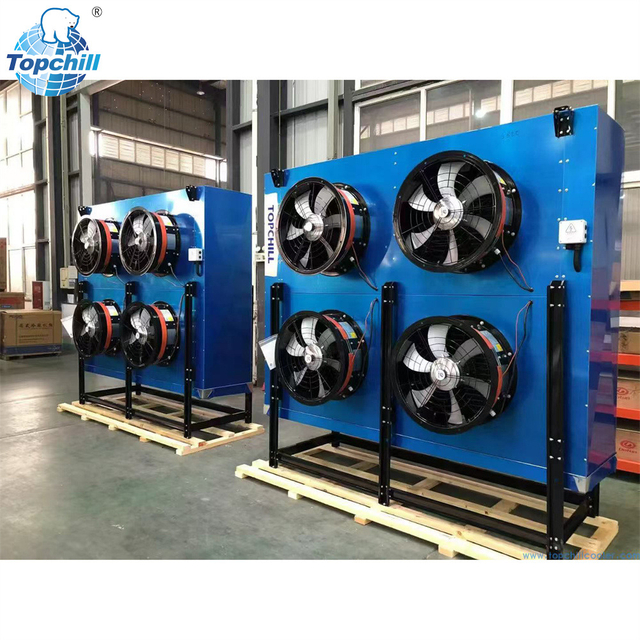
This regulatory pressure requires a pivot to advanced, compliant equipment. We view systems like the Rapid-Cooling Blast Freezer Air Cooler TIF as a benchmark for modern, high-efficiency freezing. By choosing the right low-GWP refrigerant, you directly accelerate cooling times and prevent costly product drip loss. Ultimately, you will learn how this transition optimizes your total cost of ownership (TCO) while future-proofing your production line.
Regulatory Hard Stop: Global mandates strictly prohibit retrofitting old R404A systems to use new A2L/HFO refrigerants; complete system replacement is the only compliant path.
The Big Three Alternatives: Modern industrial blast freezers rely primarily on R290 (Propane), CO2 (R744), or A2L (HFO blends like R-454A) to achieve deep freezing.
Safety vs. Efficiency: While newer refrigerants carry mild flammability ratings, advanced modular engineering and sealed systems reduce incremental fire risk to statistical zero while boosting energy efficiency by up to 10%.
TCO Realities: Upfront procurement costs for compliant, modern systems are 15%–40% higher, but long-term ROI is recovered through lower energy consumption and drastically reduced compliance penalty risks.
The food processing industry faces a massive business problem regarding hydrofluorocarbons (HFCs). For decades, operations relied heavily on R404A to achieve deep-freeze temperatures. However, R404A carries a Global Warming Potential (GWP) of nearly 4200. Regulatory bodies worldwide are aggressively phasing out these high-GWP gases. If you keep operating legacy equipment, you expose your facility to skyrocketing maintenance costs. Because manufacturers produce less R404A each year, procurement prices surge. Eventually, non-compliant operations face heavy fines and forced shutdowns.
Many facility managers assume they can just swap out the old gas. You must understand the strict "no retrofit" reality. Environmental agencies strictly prohibit modifying old equipment to accept next-generation refrigerants. Why? New refrigerants operate under entirely different pressure thresholds and require specialized safety mechanisms. A legacy compressor simply cannot handle the thermodynamic properties of modern, low-GWP alternatives without risking catastrophic failure.
You also need to account for procurement urgency and manufacturing lead times. Compliance deadlines—such as the crucial January 1, 2026 cutoff in many regions—are based on installation and operational readiness. They do not care when you signed the purchase order. Given current supply chain bottlenecks, waiting to upgrade poses a critical risk to your operational continuity.
Common Mistake: Delaying hardware replacement because legacy systems "still work." By the time you attempt to buy new equipment closer to the deadline, lead times may exceed 12 months, leaving your facility non-compliant and vulnerable to penalties.
To navigate this transition, you need to evaluate the specific chemical profiles dominating today's market. When engineering a Rapid-Cooling Blast Freezer Air Cooler TIF, manufacturers typically build their systems around one of three core refrigerant categories. Each offers distinct thermodynamic advantages.
R290 boasts an ultra-low GWP of just 3 and a zero Ozone Depletion Potential (ODP). Engineers consider it an exceptional choice for self-contained, modular systems. It delivers unmatched thermodynamic efficiency, dropping temperatures rapidly with minimal energy input. However, regulators enforce strict charge-limit regulations per circuit. Because it is highly flammable, manufacturers design these units with multiple isolated circuits rather than one massive central charge.
CO2 has a GWP of 1, making it the ultimate future-proof baseline. We see CO2 applied extensively in large-scale commercial setups. When planning a CO2 layout, you must choose between Direct Expansion (DX) and Pumped systems. DX systems offer significant space-saving and economic advantages, especially in footprint-restricted facilities. They require less initial capital and smaller plant rooms compared to massive pumped CO2 racks.
Hydrofluoroolefins (HFOs), such as R-454A and R-454C, serve as the perfect middle-ground transition choice. ASHRAE classifies them as "A2L," meaning they feature low toxicity and low flammability. They strike a balance between energy efficiency and manageable safety requirements. These blends work exceptionally well for large, distributed commercial systems where switching entirely to R290 or CO2 proves structurally or financially impossible.
Refrigerant Comparison Chart
Refrigerant | GWP Score | Safety Class | Best Application Scenario |
|---|---|---|---|
R404A (Legacy) | ~3922 - 4200 | A1 (Non-flammable) | Obsolete. Phased out globally. |
R290 (Propane) | 3 | A3 (Highly Flammable) | Modular, self-contained blast freezers. |
CO2 (R744) | 1 | A1 (Non-flammable) | Large commercial plants, DX layouts. |
R-454A (A2L) | 239 | A2L (Low Flammability) | Distributed commercial refrigeration. |
We must tackle the primary buyer hesitation head-on: flammability. Moving from inert R404A to A2L or A3 refrigerants makes many safety officers nervous. However, understanding implementation realities and modern risk mitigation strategies quickly puts these fears to rest.
Modern engineering isolates risks effectively. Manufacturers do not simply pump flammable gas into an old chassis. They utilize cartridge-style modular designs and hermetically sealed containment. If a leak occurs, the system restricts the volume of escaping gas to an absolute minimum. Furthermore, compliant units feature automated leak-detection sensors. If these sensors detect a drop in pressure or gas in the air, they immediately trigger fail-safe ventilation fans and engage shut-off valves.
You should also look at the actuarial reality. Decades of European adoption prove these systems are exceptionally safe. Europe currently operates millions of active commercial units using R290 without incident. Industry safety precedents show that when engineered correctly, the perceived risk drastically outweighs the actual statistical incidence. Researchers often cite the incremental fire risk of modern R290 systems as low as 0.001%.
Best Practice: Schedule bi-annual calibration for all automated leak-detection sensors. Routine maintenance ensures your fail-safe ventilation protocols activate instantly, keeping your flammability risk at a statistical zero.
When you evaluate blast freezers, you must connect refrigerant thermodynamic properties directly to actual food processing outcomes. A top-tier system aims for one critical metric: dropping core temperatures from +70°C to -18°C within a standard 240-minute window.
High-efficiency refrigerants power these rapid-cooling curves. They allow your products to bypass the bacterial danger zone (4°C–60°C) instantly. This rapid phase transition prevents macro-ice crystal formation inside the food. Macro-crystals tear cellular walls, causing cellular "drip loss" upon thawing. By locking in moisture with micro-crystals, you minimize this drip loss. Since most food processing operations sell products by weight, preventing moisture loss directly protects your profit margins.
To justify the upgrade, we must compare CapEx versus OpEx. Yes, you will face a realistic 15%–40% premium on initial hardware procurement. This premium covers the enhanced ventilation, robust compressors, and safety valving required for A2L and R290 handling. However, you offset this initial hit rapidly.
Energy Gains: Modern refrigerants offer roughly a 10% operational efficiency gain, heavily reducing monthly electricity bills.
Sourcing Costs: You eliminate the massive premium costs associated with sourcing phased-out legacy refrigerants.
Yield Protection: Lower drip loss translates directly into higher sellable yield per batch.
Procurement teams need a skeptical, outcome-focused evaluation framework when comparing blast freezers. Do not rely solely on sticker prices. Use this specific checklist to interrogate your suppliers.
Assess Operational Uptime: Ask about continuous run times before mandatory defrost cycles trigger. How does the specific refrigerant and evaporator combination handle aggressive frost build-up? Systems that require constant manual defrosting destroy production schedules.
Demand Product Specificity: Ensure the cooling curve is fully programmable. Meat, seafood, and baked goods possess entirely different moisture and fat densities. Your controller must adapt airflow and refrigerant expansion rates to match the specific thermal load of your product.
Verify Modularity & Maintenance: Determine what happens during a breakdown. Can your local technician swap out the refrigerant module within hours? If the design requires specialized hazmat technicians and leads to weeks of downtime, you should look for a more modular alternative.
Choosing a blast freezer refrigerant is no longer just an HVAC engineering detail. It represents a boardroom-level compliance and TCO decision. Hanging onto legacy systems exposes your business to regulatory fines, bloated energy bills, and unpredictable downtime. By embracing low-GWP solutions like R290, CO2, or A2L, you secure long-term operational efficiency.
Take these actionable next steps immediately:
Audit your current inventory's age, refrigerant type, and GWP classification to identify immediate vulnerabilities.
Request a customized TCO analysis from an integration specialist, factoring in your specific utility rates and historical drip loss data.
Secure manufacturing queue slots now to avoid industry-wide bottlenecks as the 2026 regulatory deadlines approach.
A: No. Due to flammability and pressure differences, regulatory bodies require purpose-built equipment with integrated safety shut-offs and specific ventilation standards.
A: Both R290 and CO2 (R744) offer excellent thermodynamic properties capable of hitting the 240-minute (+70°C to -18°C) standard, but performance ultimately depends on the pairing of the refrigerant with the specific unit's airflow and compressor design.
A: While the refrigerants themselves are often cheaper and more efficient than legacy HFCs, the systems require routine calibration of leak sensors and automated ventilation components to maintain compliance and safety.